RPGreats now has a Discord! Come on in to talk about game music, games in general, submit reviews or just hang out!
Showing posts with label 2009. Show all posts

Monday, April 15, 2024

Dragon Age: Origins

Mass Effect was just awful - an utterly boring slog that cribs elements of other, better science fiction works while adding no unique twists of its own.  But I had at least a little hope for Dragon Age.  While BioWare was never very good at world building or making a "role-playing experience", surely they could at least recapture the challenging tactical gameplay, interesting characters and captivating narratives of the old Infinity Engine games, right?  Well, it was an RPG on a console in 2009 - a time period when people valued pretty cutscenes and online functionality gimmicks over gameplay or requiring any thought to complete - so you can guess how well it went.  Rather than having 60+ classes, numerous pieces of equipment, a vast array of potions, scrolls and spells and countless potential character builds to experiment with, you get... 3.  Yep, it's the old Fighter/Thief/Mage trifecta with boring, linear skill trees to determine what slightly different tactics you can employ, in theory at least. In practice combat mostly consists of slow boring rounds of Rockem Sockem Robots, with everyone trading blows until one side falls and getting healed to full immediately after if you win.  No stakes, no tension, hardly any tactics and no fun.  Christ, even Diablo II, released nearly a decade prior, had far deeper combat and character building than this, and even Diablo 1 had more character choices if you factor in the Hellfire expansion pack. The plot is utterly predictable dark fantasy fare, pitting the humanoid races against the "Darkspawn", a blanket term for zombies/orcs/ogres/goblins/every other stock fantasy jobber ever ripped from the pages of Tolkien.  The elves are smarmy magical tree huggers, the dwarves are smarmy nonspiritual architects, humans are short-lived, combative and naive and looked down on by the other two.  You've seen it all hundreds of times, and it's given no new twist here to keep it firmly under the umbrella of laziness painted up as homage.  Even D&D had long since moved away from these tiresome, restrictive tropes well before Dragon Age was a thing, so there's no excuse for it here.

The writing continues to suck major ass in the same way Mass Effect's did, just aping plot points from better stories, winking at its own lame clichรฉs (not caring that simply calling attention to a clichรฉ doesn't make it less of one), and cramming in everything you need to know via huge stretches of exposition that read more like a car manual than conversation.  Every character with more than eight lines of dialog rattles off smarmy dialog in the exact same arrogant tone, as though being condescending and having an arsenal of platitudes on deck at all times in order to appear smart is going to carry them through life in lieu of practical knowledge and personal connections they don't ever care to develop.  I'm sure the Internet Debate Club bros who wrote this and spend all their free time performatively "owning" their straw man accounts with this exact same pomp are just as fun to interact with in real life, too.  Don't expect any decent world building either because, of course, it's all relegated to boring encyclopedia entries you get to exit out of the gameplay completely if you want to peruse; after all, we wouldn't want to risk losing that lucrative audience of thirteen-year-old boys who have the attention span of hamsters and only care about chasing the arrow to get to more monster bashing and titties and cheevos to prove they're real manly men!  The game also just screams "desperate moneymaking scam" because as you play there's constant popups about its dozens of DLC releases - nearly all of them being short, unsatisfying hour-long quests they're trying to milk $5 or more apiece out of.  Yeah... all the fanboys still whingeing on about Oblivion's horse armor can officially piss right off, because at least Bethesda had the courtesy to not pester me about buying it every three minutes.

Dragon Age: Origins is shallow, derivative, ruthlessly boring and completely full of itself, but that's the entire point of it existing.  There was never a thought spared by anyone involved for making a decent game, just for milking a few dollars out of nostalgia for the D&D-clone RPGs that came before it while investing as little time and mental energy as they could get away with.  Alongside other overhyped '00s/early '10s stinkers like Bioshock, Dishonored, Dead Space, Witcher, Mass Effect, Dark Souls and especially Halo, it's just another example of a company cashing in on platform bias - shamelessly copycatting things computer games had already done brilliantly years earlier, stripping out any trace of intelligence or depth they had to make them 'broadly accessible', painting them up with soulless HD graphics and selling it as the next big cultural revolution to early teenagers too young to know they're being served a lame knockoff and fanboys too in love with their corporate gods to care.  It only becomes worse when you consider BioWare once worked on a few of those great games they're now making soulless clones of.  They used to have genuine passion and talent for telling stories, writing great nuanced characters and coming up with clever challenges to overcome, and now they're needy sellouts who can't function without constant reassurance of how sacrosanct they are through the glowing press and awards EA buys for them.  A hard fall from grace for a once-prestigious name, Dragon Age ended any hope I had of BioWare ever being good again.


Developer: BioWare
Publisher: Electronic Arts
Released: 2009
Platforms: XBox 360, PC, PlayStation 3

Wednesday, January 3, 2024

Dissidia Final Fantasy

While the Final Fantasy franchise has ventured out into numerous other genres over the years, its first foray into fighting games (as guest characters in Dream Factory's Ehrgeiz) was viewed as lackluster by many; it was a pretty mediocre fighter in the first place, but the characters were also mostly just reskins of existing characters and had no presence in the storyline (not even unique endings), so it wasn't a particularly interesting new angle to see them from.  Dissidia was initially intended as a fighting-based offshoot of the Kingdom Hearts franchise, though it was later changed to focus exclusively on Final Fantasy characters, its cast eventually expanding to incorporate characters from every game in the franchise to that point.  Rather than being a one-on-one fighter focused on execution and combos though, it was more of a blend of an RPG and an arena combat game similar to Virtual On.  Players maneuver around large, open arenas, interacting with objects in the environment to move faster or trigger traps that hinder their opponents, and of course go on the offensive themselves with a plenty of flashy attacks and weapons.  In addition to a health bar one also has a stat called "Brave" which determines how much damage their attacks deal; using a circle button attack steals Brave from the opponent, while a square-button attack deals damage to the opponent's health, emptying their Brave  in the process if it lands, though it will quickly refill.  If one is completely drained of Brave by an attack they will be at a significant disadvantage - not only can they not harm their opponent until they get some Brave back, but their opponent will get a substantial boost in Brave themselves.  In addition, an EX Gauge gradually fills as the player takes or deals damage or collects items about the field, and once filled they will be able to transform and become significantly stronger.  While in EX state they can to unleash a powerful "EX Attack" by landing a blow and then correctly pressing a number of quick-time inputs, while their opponent can reduce the damage they take by performing correct inputs of their own.  The RPG element comes in between battles, with characters gaining stats, levels and randomized equipment to utilize in future bouts.  These can also be used in two-player competitive matches, or if one wishes, they can instead play the "Arcade Mode" which strips out all the RPG elements to balance characters out as much as possible.  While not a particularly deep game and the story mode layout is a little drab, Dissidia does have plenty of visual flair (especially for the PSP platform) and the story mode has plenty of service for long-time franchise fans, with a lot of familiar characters, plot points, items and music to experience.  It's also the first time many of the characters depicted have been presented in 3D with full voicework, so that's also a nice touch for fans of the pre-10 Final Fantasies.


Developer: Square Enix
Publisher: Square Enix
Released: 2009
Platforms: Playstation Portable

Saturday, April 2, 2022

Puzzle Quest Galactrix

Puzzle Quest was a low-key hit in 2007, combining a match-three puzzle game with elements of turn-based strategy games and RPGs in surprisingly effective fashion, and it was popular enough to appear on almost every platform of the time.  Two years later a spinoff game set in a 4X-style space setting would appear, and unfortunately, it did not fare nearly as well.  The game now used a hexagonal grid with variable gravity depending on whether fights took place in orbit or in space (with the former causing new pieces to slide in from the top while the latter would cause them to come from whatever direction was closest to the board's edge) and reworked mechanics to have ship shields and weapons.  It is because of the new layout, however, that the game becomes an exercise in sheer frustration.  Clearing one combo in the center of the board can - and frequently will - cause new pieces to slide in and set off huge chain reactions that refill one player's shields (basically free health regeneration - something the original implicitly avoided), inflict massive damage to their opponents and give them more mana to do more of the same, and will frequently grant an extra turn on top, so every fight feels less like a battle of strategy and more like a roll of the dice to see who can set off a battle-deciding mega chain first.  The game adds diplomacy and crafting systems that use similar board mechanics too, which just results in more of the same frustration, and the fact that one's only decent means of making money is winning fights to get resources to sell makes it a grind-heavy game to boot.  Galactrix stands as proof that tampering with a simple, but effective formula can be disastrous.

Developer: Infinite Interactive/Aspyr Media
Publisher: D3 Publisher
Released: 2009
Platforms: Nintendo DS, Playstation 3, Xbox 360, PC

Nostalgia

An original RPG offering from Matrix on the DS sounded like a promising idea.  After all, they were behind the Alundra series and several remakes for the Final Fantasy and Dragon Quest franchises, so they clearly have an eye for what makes RPGs work.  But what makes an RPG function and what makes one distinct and memorable are two very different realms of expertise.  Like many, Nostalgia's developers don't seem to recognize that the appeal of classic RPGs was not in looking a certain way or adhering to rigid design customs even to the detriment of the gaming experience, but because they made efforts to stand out from the pack. Whether a strong presentation or an engrossing storyline or gameplay that felt more streamlined while losing none of the depth, they all stood out in their own ways; old and new RPGs alike are scarcely remembered for going through the motions. Hell, even long-running formulaic franchises like Mario, Zelda, Mega Man, Castlevania and Dragon Quest have to add new twists in every now and then and maintain a high quality standard to stay relevant.  Nostalgia never got that memo, proving its dated design philosophy right away with all-too-frequent random encounters, unengaging mash-A-to-win battles and the all time low bar for introductory quests, killing rats in a switch-flipping sewer maze level.  But even if you somehow still keep playing after that, the lack of any decent story hooks, interesting characters or anything else to do other than more tiresome monster-bopping quests in the same vein quickly made me put this one down and never look back.  Nostalgia certainly isn't the word I would choose for this title; maybe they should have gone with "Ennui" instead.  Or perhaps "Blasรฉ".

Developer: Matrix Software/RED Entertainment
Publisher: Ignition Entertainment
Released: 2009
Platforms: Nintendo DS

Legend of Zelda: Spirit Tracks

 A sequel to Phantom Hourglass and utilizing the same engine and touch screen control setup.  The concept this time is an interesting one - Zelda accompanies you throughout the journey as a disembodied spirit, and can possess certain enemies to fight strong foes for you or solve certain puzzles, which I thought was a pretty cool gimmick and a nice flip on the played out damsel-in-distress scenario (as well as an odd parallel to the cartoon series from the 80s).  Sadly, the rest of the game fares much less well, with dragging pacing overall, some very irritating dungeons and an element I absolutely despised - the titular Spirit Tracks.  As in the previous game, you plot a route on the touch screen and then move down it, but along the way you have to switch tracks to avoid demonic train enemies that will kill you on contact (and hope you don't just go down another track that leads you right into the jaws of another one).  These appear between every dungeon and only get longer and more convoluted as you go, and making contact with one of the enemy trains results in an immediate death and forces you to start over.  I absolutely hated doing these segments, and got only about two dungeons in before I ended up facing another one and quickly decided I never wanted to play the game again.  Never, ever again.

Developer: Nintendo
Publisher: Nintendo
Released: 2009
Platforms: Nintendo DS, Wii U (Virtual Console)

Friday, April 1, 2022

The Dark Spire

 A game that draws heavy inspiration from old-school Dungeons and Dragons and the Wizardry series, which was a common thing in the early days of computer gaming but a relatively rare sight for the Nintendo DS (about the closest thing to mainstream success the first person dungeon crawler genre saw there was the Etrian Odyssey series, and even that remains pretty niche).  Dark Spire certainly sets itself apart in some ways, though, with an eye-catching visual style blending shadows, expressive character art and vivid flat colors, creating an aesthetic somewhat reminiscent of an old comic book (though you do also have the option to utilize a more minimal style directly inspired by Wizardry).  You're also at least afforded a tutorial to explain the basic mechanics to you, and the game has a pretty sharp sense of humor throughout, but other than that, this is very much an old-school RPG - pick your classes and races, slowly make your way through a huge labyrinth, and be prepared to be beaten up by monsters and killed by traps every step of the way.  Even the game's developers were very aware of this, recommending that you make your own maps on graph paper to keep track of where everything is (particularly as the in-game mapping system is very minimal and somewhat inconvenient to use).  It's become relatively rare and expensive nowadays, but if you have the itch for an old-school punishing dungeon dive and you can spare the expense, it's one you may wish to check out.


Developer: Success
Publisher: Atlus
Released: 2009
Platforms: Nintendo DS

Borderlands

Gearbox is a company steeped in controversy for a number of shady business practices and subpar products, but before all of that started up they made a few well-respected Half-life expansions and ports and, eventually, an original IP of their own in Borderlands.  A first person shooter co-op experience with some Diablo-like elements, placing heavy emphasis on building up one of four characters with unique skill trees and randomized loot in the form of guns with various properties - some beneficial (like added elemental damage) and others comically useless (guns that explode when you reload them).  While ultimately nothing spectacular, Borderlands' irreverent "space redneck" atmosphere, demented character designs and co-op for up to four players made it a pretty fun game overall.


Developer: Gearbox Software
Publisher: 2K Games
Released: 2009
Platform: Playstation 3, XBox 360, PC, OS X, Playstation 4, XBox One, Switch

7th Dragon

7th Dragon is pretty well-known name among RPG fans despite never being localized, probably helped by the prominent names on its staff; it's produced by Rieko Kodama (of Phantasy Star and Skies of Arcadia fame) and directed by Kazuya Ninou (director of Trauma Center and the original Etrian Odyssey).  As one would expect from the latter name, the gameplay is strictly old-school and very tough - grinding, spending skill points wisely and bringing a good supply of items to combat damaging enemies and status effects is absolutely essential.  Especially as dungeons are packed to the brim with HP-sapping flowers that can only be overcome through constant healing or having certain skills equipped.  Fortunately, some charming chibi characters and high-quality artwork, as well as a great soundtrack from the legendary Yuzo Koshiro, help to keep the experience fresh and playable even as it repeatedly pummels you into submission.  It is a bit of a shame that Sega chose to not localize this one for other territories (especially in light of numerous other successful retro-styled RPGs on the system), but there is a fan translation available for those looking for a challenging dungeon crawl.


Developer: ImageEpoch
Released: 2009
Publisher: Sega
Platform: Nintendo DS

Tuesday, April 28, 2020

Shin Megami Tensei: Devil Survivor

A spinoff of the long-running Shin Megami Tensei franchise that combines elements of turn-based tactical and traditional RPGs.  But is this a successful fusion of gameplay elements, or does Devil Survivor fail to live up to scrutiny?


The first game in the series to be featured on the Nintendo DS, Devil Survivor was one that a lot of fans got excited for, myself included.  Having become a fan of the series with Nocturne and later Persona 3 and 4, it seemed like they were on a roll with this series and its relatively newfound popularity in the west.

When I played it, I certainly wasn't let down, either.  The game opens with its usual dark mood, punctuated with some kickass metal tunes and some foreboding scenes laying the groundwork for what is to come.  As per series norms, it's another grand plot involving demons being summoned into our world via a computer app, somewhat reminiscent of the early games on the Famicom and Super Famicom.  However, there are clearly some more modern elements worked in - the game takes place in modern-day Japan and definitely shows it, with the characters' cell phones and apps playing a prominent role in both the story and the gameplay.  Another plot point seems to draw inspiration from the anime/manga series "DeathNote"; namely a clock above every players' head, showing how many days they have left to live, with the players' choices and actions able to alter that number.

Devil Survivor's gameplay is an odd beast too.  While it appears to be a grid-based tactical RPG at a glance (and it is), there's quite a bit more going on underneath the hood.  The player controls up to four human characters as individual units, but each of them can command up to two demons to fight alongside them.  Approaching and attacking an enemy will put you into a single turn of a more traditional turn-based RPG combat system, with both sides picking their actions in advance and then carrying them out, then cutting back to the overhead grid view and tallying any experience earned from defeating foes afterward.  The center character in each formation (always a human for the party) is designated as the leader; defeating them will instantly remove the unit from the field, though you will get considerably less experience than if you defeat the two side-characters first.

A major strategic element comes in the form of the Extra Turn system. As in games like Nocturne and Persona, units (both friend and foe) can take part in a second turn after if they meet certain conditions - dodging an enemy attack, hitting their elemental weakness, or landing a critical hit with a physical attack, to name a few.  Only characters who earned a bonus turn on their first one can partake in this second round; the rest simply stand by while this plays out.  Ranged attacks are handled in the same way, though if one is attacking from out of the other party's reach, only they will actually get turns (and usually won't earn extra turns, even if they hit weaknesses or land criticals).

Other elements of the series have a new twist put on them, too.  The familiar element of recruiting demons returns, albeit in a different form - rather than negotiating with them in person, you go to a shopping app on your character's phone and purchase them off of an eBay-like website through timed auctions.  Bidding aggressively can cause other bidders to drop out, while closer races may come down to the wise, causing everyone still in the running to have to make one final bid once time expires, with the demon going to the highest bidder.  Some variation exists even between demons of the same type - others with a higher star ranking may have bonus stats or extra moves to utilizes, while weaker ones can be purchased for cheaper but have lower stats.

As in Nocturne, customizing your party is a huge part of the game's strategy - learning to minimize your party's potential weaknesses and having a good variety of your own skills to exploit enemy weaknesses and heal your own demons is essential to success.  Demons come pre-loaded with their own skills, though one can customize them to a degree via the series' usual fusion system - combining two or more demons together to create a new one with some abilities and stat bonuses from the old.  Human characters learn skills too, though in a different form - before combat starts, a character must mark a demon with a skill they want and then defeat them over the course of the battle; by doing so, they will "crack" that skill and permanently add it to the party's repertoire. However, only one person in the team can equip a particular skill, so some pre-planning is required to get the most out of them.  The game contains no items or equipment, either, so making the most of your skills - particularly HP and MP-restoring ones - is mandatory to complete the game.

Per series standards, Devil Survivor certainly pulls no punches with its difficulty, either.  Many battles have added objectives, like protecting civilians or preventing fleeing characters from escaping the field, and one critical in the wrong place can quickly put an end to your efforts there.  Missing essential skills, particularly in longer battles, can force you to reset and try again, losing a lot of progress.  But more than anything else, boss battles in the game are utterly hellish.  Even the first major boss, Beldr, is a nightmare, having a ranged attack that damages everyone on the field and heals himself and being completely immune to all damage, save for one Strength-driven attack that only the protagonist can use after a certain plot point.  You almost never get to fight him alone, either, as defeating all of his accompanying demons on the field will just cause more to be summoned, quickly overwhelming you unless you defeat him quickly.  It only gets worse from there, too, so being absolutely on-point, well-equipped and having powerful demons at your side every step of the way is essential to win.  One can back out and go to certain "free zones" to grind levels if needed, but this tends to become very tedious after a while as experience gains quickly plummet when fighting weaker foes, and as they likely won't offer you any new skills to crack it, only helps to a point anyway.

Devil Survivor, while not the first game to combine Shin Megami Tensei with the turn-based strategy genre, is probably its best effort, really emphasizing the elements of the series in the format well.  As usual, its choice-driven narrative with palpable effects (determining what characters will ultimately survive and which of several endings you will earn) give it plenty of replayability.  However, its punishing difficulty and often frustrating design make it one that may turn off a lot of less-experienced fans.  If you want a real challenge, pick it up, but if you want something to kick back and relax with, this definitely isn't the one for you.


Developer: Career Soft
Publisher: Atlus
Platform: Nintendo DS, Nintendo 3DS
Released: 2009, 2011
Recommended version: The updated release for the 3DS (Overclocked) adds some player-friendly improvements such an easier difficulty setting and a compendium that allows the player to recover previously-used demons (at a cost).  More demons and skills are added too to further complement particular play styles, and the story is expanded, adding an 8th day to the proceedings as well as voice-over for all of the story scenes.

Wednesday, January 9, 2019

Kingdom Hearts: 358/2 Days

The Kingdom Hearts franchise has its first outing on the Nintendo DS platform, changing its format to a mission-based one while expanding the franchise's storyline once again.  But does it prove to be an entertaining game, or is this an entry you can safely skip?


Kingdom Hearts: 358/2 Days (Pronounced "Three Five Eight Days Over Two") is the first entry in the Kingdom Hearts franchise to be released for a portable game system, as well as the first to utilize multiplayer-driven gameplay, putting as much emphasis on its co-op Mission Mode as it does on its storyline.  Up to four players can join together to complete missions and collect items which could be transferred back to the story mode for use there, and even in solo play, it afforded the player an opportunity to play as several characters from the franchise.  The most prominent of these were all of the members of Organization XIII, villainous characters featured prominently in previous entries Kingdom Hearts II and Chain of Memories.  A few others could be unlocked by completing certain missions and achieving certain ranks; namely Donald, Goofy, King Mickey, Sora and a version of Roxas that dual-wields Keyblades, as well as a new character to this game named Xion all became playable via this method.

Both story and mission modes take on a distinctly different format from earlier games in the series, largely taking part in the same handful of environments, though with differing areas closed off and different sets of mission parameters between them.  Whether that's finding marked places on the map, defeating certain types of enemies, or just taking on challenges like surviving for a minute against an aggressive horde of Nobodies, this is a game based around completing levels and earning ranks much more than a traditional RPG.  Compounding this, your party members also vary from mission to mission, either being controlled by the AI, and you have essentially no room to customize them or what actions they will take.  And only after completing a certain number of new missions will new ones unlock and allow you to progress through the story.  Getting high enough ranks will make new items available at the Moogle Shop, as well as unlock some new abilities for your character to make later missions easier.

I found this to be a rather disappointing turn for the series, especially since Kingdom Hearts sold itself on exploring the various Disney worlds, encountering their characters and uncovering numerous hidden secrets within them.  Most of that is gone in 358/2, with the only real remnant being the opportunity to find a number of hidden chests in any given mission.  Keyblades do return as well, albeit in the form of "Gears" that must be placed on the ability panel (more on it in a bit) and offer at least a bit of variety to one's combat strategy, such as doing more damage with midair attacks or bolstering magic damage.

Panels are a new system in place to affect character growth, and a relatively creative one at that.  Essentially, the player is given a grid with fifteen slots (with more being unlocked as the game progresses) and they can fill these slots with a number of abilities, items or spells.  Equipping an ability such as Block or Dodge will allow the player to use it freely, while Item and Spell panels are one-use items that will be removed from the grid (and one's inventory) after a single use.  Some panels take up more than one slot on the grid, though the player can fit other panels within the blank slots on that panel to give added effects; attaching a power panel to a Gear panel, for instance, will boost the attack power of that Gear.  Many of said panels are earned through missions, though the player also has the ability to build custom ones at the Moogle Shop by trading in various crafting items they find on missions.  This can prove to be cumbersome, though, as the player has a limited inventory and they can run out of available space, leading to them having to frequently manage their ivnentory mid-mission.  Strangely, one's experience levels also take up slots on the grid; if no Level panels are placed, they will effectively stay at level 1, so the player does often end up having to use a substantial portion of their grid space just to keep pace with enemies they encounter.

What it comes down to is that 358/2 Days is primarily built as a multiplayer action-RPG, allowing up to four players to team up, beat missions and upgrade their characters for later play sessions, that happens to have an offline mode with a storyline - not unlike Phantasy Star Online before it.  It works relatively well as a co-op game, but not so much as a single player experience; I quickly found myself getting bored of seeing the same locations and performing the same handful of short objectives over and over again just to progress the story slightly.  Fortunately, the PS4 compilations contain all of the cutscenes from 358/2, so you can simply watch that if you just want to catch up on the plot without having to play through 200+ similar levels.


Developer: h.a.n.d.
Publisher: Square Enix
Platform: Nintendo DS
Released: 2009
Recommended version: 358/2 days is only available on the Nintendo DS.  While it is listed on the Playstation 4 compilations, it's not playable there; it simply contains the cutscenes from the game edited into a roughly four-hour movie.

Tuesday, January 1, 2019

Torchlight

A spiritual successor to the long-neglected Diablo franchise worked on by a few of Blizzard North's former developers, Torchlight set out to recapture its magic while working in elements to bring it up to modern standards.  But does Torchlight succeed in bringing back the fast-paced lootfest style of fun, or is this just another forgettable take on the format?


Since Diablo's explosion of popularity in the mid-90s and its even more popular sequel in 2000, numerous imitators have tried to cash in on the format - Westwood had Nox,  Microsoft had the Dungeon Siege trilogy, Interplay had Baldur's Gate: Dark Alliance ...hell, even Raven Software and Marvel got in on the format to a degree with the X-Men Legends games and the Ultimate Alliance series.  So, it was little surprise that Torchlight would attract attention, given both the prevalence of the genre and the fact that some members of Blizzard North helped bring it to life.

It is clear from the start that Torchlight was built to be a spiritual remake of the first Diablo in a number of ways.  The overall setup is similar - a town besieged by corrupted monsters coming from an underground mine - and even the three playable classes are analogous to the original Diablo's - Berserker, Alchemist and Vanquisher are roughly equivalent to the Warrior, Sorcerer and Rogue, respectively.  Some elements of Diablo 2 do appear as well though, like the item crafting system (to a more limited degree) and the three skill trees per character that allow for vastly different character builds and give a significant amount of variety and replayability.  For example, Vanquisher builds can be centered on ranged weapons, melee weapons and defensive spells to bolster their relatively low HP, or simply setting traps for the enemy.  Spells are not exclusive to any one character class, however - similar to the first Diablo, any character can learn and use them, though some builds are geared more strongly toward using them than others (the Vanquisher, for example, gets a Mastery skill for spells that boosts their effects and lowers MP cost).  Some other welcome changes are present as well, such as being able to reuse slots in armors (by destroying the gems in them) or simply recover gems and reuse them in other armors (which requires destroying the armor itself).

A clever new feature in Torchlight is the pet system.  Similar to the NPC followers in Diablo 2, the protagonist is always accompanied by a pet that can fight alongside them, given limited equipment and spells, and even pick up and carry loot.  Better yet, the player can send their pet back to town to cash in any items in their inventory, saving the player some work of having to go back to town and sell it manually.  Of course, this does put the player at a temporary advantage for a couple of minutes of time while the pet makes the trip, but as it allows for uninterrupted gameplay, it's generally worth it.  One also has the ability to pass on a single item from an older character to a newly created one, serving as a "New Game Plus" of sorts.

Other efforts have been made to give the game more replay value too.  In addition to the randomized loot that is a staple of the series, a new dungeon called the "Shadow Vault" is unlocked after the game is completed once.  This is essentially an endless randomly-generated dungeon, complete with random quest objectives given out by two NPCs standing outside its entrance.  The PC version is also quite moddable, with the developers releasing a versatile tool called TorchEd that allows players to test out dungeon chunks they create in real-time, as well as letting them create new models, animations and even quests to give the game more content.

In spite of all its successes, though, Torchlight does have a major stumbling block; namely that it has no multiplayer of any kind.  Online co-op doesn't exist, and even local play isn't an option; this is strictly a one-player game.  While Torchlight does its best to provide a lot of content, it is a bit odd to see a genre built on the multi-player experience not have any option for it.  Probably little surprise, then, that this was one of the most highly touted features of its sequel.

In short, Torchlight is a spiritual successor game that follows in Diablo's footsteps in many ways, including being overshadowed by its sequel, which had more features and generally was a smoother experience on the whole.  Still, it is worth a look for fans of action-RPG lootfest games, as its smooth interface, aesthetics reminiscent of Warcraft III, surprisingly good voiceover and a strong soundtrack that draws more than a few cues from its inspiration make it a polished and enjoyable adventure regardless.


Developer: Runic Games
Publisher: Runic Games, Perfect World, Encoure inc, JoWooD Entertainment, Microsoft Studios
Platform: PC, OS X, Linux, XBox 360
Released: 2009, 2010, 2011, 2012
Recommended Version:  The computer versions are the best choice here, as they offer modding support that adds huge amounts of new content to the game - fan made classes, dungeon levels, quests, enemies and more can all be added to expand the core experience.

Monday, July 10, 2017

SaGa 2: Goddess of Destiny (Final Fantasy Legend 2 remake)

Square's reimagined version of the second SaGa game makes several tweaks to the original.  But is there enough of a change here to warrant another look, or is this an example of a "remake" that serves as little more than a glorified paint-job?


SaGa 2 ("Final Fantasy Legend 2" outside of Japan) was the logical followup to the first; the original game proved to be a runaway success due to its timely release on the Game Boy platform, so a sequel was inevitable.  So one year later came the second game in the series, which did away with several of the annoying traits of the original (such as the limited lives system) while introducing a few more of its own.

One improvement comes in the game's class system.  While the familiar human, robot and mutant races return, they have seen some overhauls.  Humans now gain stats from combat, which makes them a much more viable (and less expensive) class to use than in the original.  Mutants are largely unchanged, gaining and losing abilities at random (though you do have a degree of control over that now - the last slot on the menu is the volatile one; you can swap skills into other slots if you wish to keep them) and gaining statistics through combat, though at a somewhat slower rate than humans.  Monsters are also relatively unchanged, though the DS remake allows them to carry over abilities between forms (changing from a Medusa to another monster type will sometimes let them carry over the Stone ability, for example).  There is also a new class introduced in the form of "Robots", whose stats and abilities are entirely governed by the equipment they use - equipping armor will boost their defense and HP, for example, while equipping weapons will boost their other stats depending upon the type.  Equipping them with a weapon or shield will also immediately cut its total uses in half, but unlike other characters, they can restore these charges by resting at an inn.  They are also innately immune to most status effects, but owing to their low Mana, tend to be vulnerable to magic.  They're effective tanks and powerful fighters, but you can't let them do all the damage or you'll severely gimp the rest of your party (and be left in a bad spot later on when enemies start spamming powerful magic).  You'll have to do quite a bit of grinding in this game, unlike the first one.

The game's storyline centers around the players gathering the 77 Magi (or "Relics" in the DS version), which are said to be ancient artifacts that grant their bearers special powers, and which some have abused to become new gods.  The player can also utilize Magi to some effect - some grant bonuses to stats when equipped (such as increased Strength or resistance to a particular element) while others simply serve as a means to complete puzzles - one allows the player to see in a bright dungeon, for example.  The DS version expands upon this by adding several new functions to the player's repertoire as they find Relics - the ability to dig for treasures on the world map, see enemies on the minimap, destroy weak walls to find treasures, and avoid damage from lava tiles to name a few.  This does add a nice sense of progression to the game as the skill set expands, as well as encouraging exploration by letting the player return to earlier areas to find items they couldn't reach on their first visit.

Following up on this, the leveling system seems to have been overhauled somewhat.  Namely, the player must now use items that correlate to a given stat in order for that character to receive gains.  Using agility-based weapons now boosts Speed, using strength-based weapons boosts Strength, and so on.  Somewhat unintuitively, equipment that boosts one's stats also stunts their growth, so grinding is best done without any stat-boosting armor or Magi equipped.  One must also face enemies that are relatively on par with the party in terms of overall strength to receive gains, so grinding against weak enemies is not an option either.  But even with all of this in mind, the random nature of stat gains can make these sessions extraordinarily long and frustrating.

A welcome change in the DS version of the game is the elimination of random encounters.  The Game Boy version of SaGa 2 was even more notorious than the first with its encounter rate, with battles against huge groups of enemies occurring very frequently, sometimes as little as every single step the player takes.  The DS version trades this in entirely in favor of visible enemies on the map, allowing the player to avoid them.  This does carry a risk, however, as if a player narrowly avoids an enemy but gets touched by another one, all of the nearby enemies will join in the combat as well, which can at times result in the player facing upwards of twenty enemies in a single fight.  And should they be faster than your party or get a surprise attack... well, you're generally reloading your last save, no matter how strong your party is.

As in the first SaGa game, the overall balance of this one leaves something to be desired.  Absorb spells still do massive damage, and any enemy with a full-party attack skill is a massive threat for much of the game owing to the lack of full-party healing options.  Encountering a group of enemies with such skills is pretty much an immediate death sentence as well, particularly late in the game when they do several hundred points of damage apiece.  Training one's speed to keep ahead of enemies, as well as having enough hard-hitting enemy group skills/spells, quickly becomes an essential part of the overall strategy, as the late game essentially boils down to "whoever gets the first turn wins".

The DS version does attempt to address this balance in a few ways, notably with the addition of a sidequest is added where the player can find the eight Muses over the course of the adventure.  One can also gift them with items they find (generally in hidden chests), which will grant them substantial bonuses to "MP" and allow them to unlock more powerful attacks to use.  One can also unlock the Arena of the Dead, which allows them to face more powerful versions of previous bosses in order to gain levels and items.  Completing the Nasty Dungeon and talking to the character that appears outside will put the player into a battle with very powerful enemies; completing this unlocks the Opaca of Souls, which pits the player against several powerful groups of enemies in a row, with victory granting numerous powerful and rare items.

MP is another new mechanic in the DS version.  After rescuing some of the Muses, the player can venture to the Castle of Fate in order to purchase Threads of Fate themed after emotions - Love, Hate, Strife, Friendship and so on.  Using these allows two of your characters to unite their attacks together for additional damage (slightly similar to the combo system from SaGa frontier), and will also affect the relationships between your party members, which in turn can unlock new events and sidequests that will allow the player to find extra items.  Clever use of these in battle can also allow players to break the usual turn order in order to defeat problematic enemies; for example, if one character gets a turn before an enemy group, they can use a unite attack to allow a second character's attack as well, and the bonus damage may just be enough to allow them to defeat that enemy group before they deal out massive damage that turn.

While SaGa 2 on the DS does make some improvements over its predecessor by adding new features and eliminating random encounters, it's essentially still the same game at its core.  The difficulty and overall balance remain very uneven, there is still a heavy emphasis on stat-grinding, and the added mechanics and areas mostly feel like they were simply added to give the game some token new content rather than well-integrated new features that enhance the overall experience.  Fans of the original will probably find something to like in the new content Goddess of Destiny provides, but if you found the original game too frustrating, this one probably won't do a lot to change your mind.


Developer: Racjin
Publisher: Square Enix
Platform: Nintendo DS
Released: 2009 (in Japan)
Recommended version: N/A

Tuesday, March 14, 2017

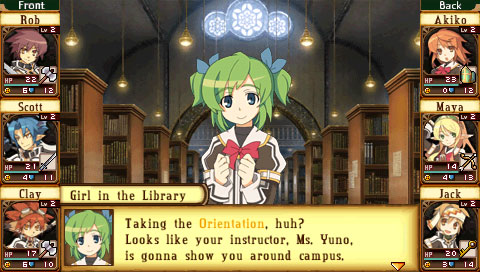
Black Sigil: Blade of the Exiled

Black Sigil makes no secret of what it is - a game very much inspired by numerous 16-bit RPGs, especially those of the Super Nintendo era and Squaresoft's offerings in particular.  But does this 2009 RPG stand on its own, or is it simply another forgettable "homage" game with nothing to distinguish itself?


Developed by small studio Graffiti Entertainment (mostly known for producing low-tier PC titles) and published by Studio Archcraft (known for publishing... well, Black Sigil: Blade of the Exiled), Black Sigil is both companies' first attempt at a proper Japanese-style RPG on a mainstream gaming platform.  But while Black Sigil is a competent game in most respects, it also has a major problem that many "homage games" fail to recognize - that simply duplicating the aesthetics, format and gameplay of what came before will not make your new game an instant hit.

Case in point, Black Sigil makes a strong first impression with its sprite work, which perfectly captures the style of RPGs from the 16-bit era, almost to a fault.  The main character's sprites look very similar to that of Chrono Trigger's (particularly his running animation), and many of the background elements look like they came straight from later 16-bit Square RPGs.  It all looks good and honestly ends up being the game's strongest suit, even if it feels borderline plagiaristic at times.

The music and sound design, on the other hand, feels very bare-bones and basic.  While none of it is particularly annoying, there's really nothing to distinguish it either; tunes are simply adequate for conveying something of a mood for their particular area or, at worst, just providing something for the player to listen to other than dead silence.  Sound effects are equally bland, seemingly just there to provide sound effects for a given attack or action and nothing more.

Far less desirable, however, are some of the other ill-regarded elements of the era that quickly creep into the experience.  Much of the NPC dialog in the game is either generic or outright annoying, constantly trying to get cheap laughs and undermining any sense of drama the central narrative is hoping to build up.  The game is heavily centered on tedious grinding, with even basic equipment requiring several dozen battles to save up enough money to afford (which also isn't helped by the dragging pace of the combat system).  Dungeon design encapsulates the laziest elements of the period, with dungeons simply being lengthy corridors and every dead end the player encounters leading to a treasure chest.  The pacing in the game is also quite bad; combat drags even at the fastest settings and all-too-frequent random encounters make getting almost anywhere a drudgerous affair.

Combat in the game attempts to incorporate elements of RPGs of the era as well, doing so with at least some success.  The games it most closely resembles are the Lunar series on the Sega CD, with most characters being forced to physically approach enemies before they can attack with their weapons.  Spells and skills have areas of effect as well, targeting either a single enemy, a radius that can hit multiple enemies in close proximity to one another, or all monsters on the field, and knowing when to use which proves to be a key part of the strategy, at least in theory.  In practice, however, Black Sigil lacks any of the polish or challenge that made Lunar's combat so memorable.  I won almost every fight by simply spamming the Attack command because my normal attack generally defeated any enemy I encountered in a single hit.  And if it didn't, a simple weapon upgrade was all it took to get me to that point.

The game also just feels very utilitarian as a whole, with far more thought put into providing a lengthy experience rather than one meant to captivate the player and keep them interested in seeing what will happen next.  Generic "kill the boss monster" quests are commonplace, and when paired with the aforementioned slow combat and grinding, this simply makes the entire Black Sigil experience feel very by-the-numbers and uninspired, as if the developers were only interested in providing thirty-plus hours of gameplay for the sake of it, rather than making those thirty hours memorable or fun in the slightest.

In the end, Black Sigil is a game painted up to look like several beloved classic RPGs while making virtually no attempt to distinguish itself from them, even replicating elements that are now largely viewed as outdated and flawed just to push home that image.  It completely fails to recognize that a large part of what made games like Final Fantasy and Phantasy Star and Chrono Trigger such outstanding achievements for their era was not simply their aesthetics and gameplay, but the fact that they had innovated to get to where they were.  They stepped away from the heavy grind and minimalistic aesthetics of their forebears and delivered a more fast-paced, movie-like experience with captivating characters, thought-provoking narratives, creative worlds to explore, and aesthetics and gameplay engineered to match that feel in every respect.  But more importantly, they pushed limits to deliver visuals and music previously thought impossible on their hardware and used ingenious twists on old mechanics to make the gameplay feel fresh and new, yet familiar enough to appeal to long-time fans.  Until more indie developers recognize that and take their own steps to break away from the norm, we're sure to get a lot more of these generic "homage" games that are destined to be just as quickly forgotten as Black Sigil was.


Developer: Studio Archcraft
Publisher: Graffiti Entertainment
Platform: Nintendo DS
Released: 2009
Recommended version: N/A

Tuesday, February 14, 2017

Class of Heroes

Class of Heroes bills itself as a classic first-person dungeon crawler, and they certainly put a lot of effort into making the experience feel like just that.  But does this title manage to distinguish itself from the rest in a long-running line of similar games, or does it just fade into the background immediately?


Back in the early to mid 1980s, technology didn't really allow for a lot in the way of storytelling and narrative in games; "Role Playing Games" instead were mostly reliant on providing a lengthy, complex and challenging gaming experience to hold the player's attention, with an emphasis on obscure puzzles, difficult enemy encounters and first-person dungeons that all but required the player to draw out their own maps on graph paper.  This style of gameplay has persisted in one form or another throughout the entire history of video games, and Class of Heroes fills that niche once again with an exacting homage to games like Wizardry in many fronts.  The player has a choice of ten races to create characters in (each with their own unique abilities, stat balance and affinity with other races) and numerous classes to work with as well - some relatively mundane (the usual fighter, mage, thief and cleric combinations) and others a bit more niche - Alchemists aid with item crafting by increasing item drops and being able to identify rare items, for example, whilst Psychicers can use any weapon from the back row, and Samurais can hit an entire row of enemies at the same time.  As with the early RPGs, any class can be taken up by any race, though there are obvious disadvantages to making weaker races take up the reigns as a physical fighter, or stronger races becoming a magic-using class.

The rest of the game is just as by-the-numbers in most respects.  There is very little in the way of an overall story or character narrative, with the only hints of it being in small quests given to you by various characters.  Quests themselves are mostly generic affairs, usually tasking the player to either find items, craft a specific item or defeat a specific foe in the depths of a given dungeon.  Not all of these are are as simple or straightforward as they appear, either; one of the earliest quests you get is to craft a slingshot out of "wood chips", which I didn't find any of until at least 3-4 dungeons into the game.  It's all a bit of a shame, really, as the game has some interesting lore behind its races and an overall cute and charming visual style for its characters, which just made me wish there was more of an emphasis on exploring the game's environment and interacting with its various races and cultures.

As per the standards of these games, Class of Heroes' main emphasis is in its dungeons - navigating mazes full of traps, puzzles and frequent encounters with enemies, some of which can be enormous in scale (with upwards of 15 enemies for the player to fight at a time).  However, this does also afford Class of Heroes a slightly interesting twist in comparison to most dungeon crawlers - while the dungeon maps themselves are not randomly generated, they are shuffled around randomly with each visit, which makes for a slightly different experience each time the player enters one.  Each dungeon floor is also symmetrical with screen-wrapping (exiting the edge of a map puts them on the opposite side), and when the player navigates their way through one, they unlock gates which quickly allow them access to the floor's exit on subsequent visits, which makes navigating already-cleared floors much faster.  This definitely helps when the player simply wants to get to another town or quickly access a floor they've already cleared to complete a quest.  Combat animations in the game also goes by relatively quickly, which makes mundane encounters a bit less of a slog.

However, despite its efforts to speed up the more commonplace and mundane elements of the game, Class of Heroes is a timesink by design - an exacting homage to old school dungeon crawlers like Wizardry and Might & Magic with very little emphasis on story and characters, instead making way for huge amounts of dungeon exploring, item crafting and battling monsters, with your only real motivation being to power up your forces, complete new dungeons and take on greater challenges.  If you're a big fan of that style of gameplay this should be right up your alley, but if you're not, the sheer grind that Class of Heroes has to offer will probably get tiresome quickly.


Developer: Acquire, Zero-Div
Publisher: Atlus, PQube (PC/Switch)
Platform: Playstation Portable, PC, Switch
Released: 2009, 2024
Recommended version: All versions play pretty much identically, though the Switch and PC versions are more readily available nowadays.  The only noticeable difference with the newer versions are a few name changes and tutorial messages added to explain the game's basic mechanics.

Sunday, September 25, 2016

Demon's Souls

Souls is a franchise that prides itself on its challenge, but can gameplay that is overly difficult and cryptic for the sake of it make for a compelling experience, or just a drudgerous and frustrating one?


From Software has had a hand in the RPG genre longer than most people know, primarily because their earlier forays into the genre were small cult classics at best.  First was the King's Field series for the Playstation, a series of first-person RPGs that prided themselves on their minimal storytelling, difficult combat and immersion factor, taking place in a first person perspective and having only the barest minimum of user interfaces and load times.  Then there were the Lost Kingdom games on the Gamecube, an equally plot-sparse series had the player battling monsters with spells and summoned monsters activated via collected cards.  But by far their best known and most beloved outing in the genre is the Souls franchise, a spiritual successor to King's Field that carries on in much the same vein - deliberately destitute and overly difficult and vague just for the sake of being so.  So what makes Souls such a runaway success while From's earlier outings in similar format were generally regarded as lackluster and mediocre at best?  Well, there are many differing theories, but as someone who played a couple of From's earlier games in their heyday and found them just as underwhelming as audiences and critics of the era did, I personally think Souls' success boils down to one thing: marketing.

Yes, marketing.  Even the most unimpressive of games can be an immortal 10/10 golden amazing classic for the ages if you just pitch it right.  Being a successful AAA developer is no longer about creating an outstanding game that stands out for its ingenious design and success in execution, but simply hyping every game of yours that comes down the pipe as though playing it a glorious, transcendent experience on par with achieving nirvana.  Especially when the biggest publishers out there can leverage any review score they want under threat of pulling their advertising, thereby putting gaming press outlets in the difficult spot of either lying to their readers or losing out on a considerable portion of their revenue. And given the choice between having a greatly reduced income or lying to your face, the overwhelming majority of people are going to choose the latter; hell, I probably would too.

It's for that reason that I believe the Souls franchise's popularity ultimately has little to do with its quality and far more to do with its marketeers hyping it up as something infinitely greater and more important than a mere piece of electronic entertainment media, ensuring that any real gamers out there are not just compelled to purchase half a dozen copies, play them constantly and master every nuance of their gameplay to a T, but to say that anyone who doesn't for any reason is a godless heathen who deserves only hatred and harassment.  It must be working too, as praise for the series is nearly unanimous among both critics and gamers and it continues to sell copies with estimated figures well into the millions.  But as a jaded gamer burned by hype too many times to count and who discards nearly all game marketing, sales figures and professional reviews as a barometer of quality, is there anything beyond the veil to appeal to me?  Well, let's take a look and find out.

For a start, I can say that the aesthetics of the game are thoroughly unappealing; environments are almost uniformly gray or pitch black, with only the occasional brown or garish yellow-toned area appearing to break up the monotony (if only slightly).  The lack of sound design also doesn't help its case there, with many areas being just a decibel above dead slient.  Which would be fine if this game were a stealth-driven one or even placed emphasis on a survival horror element, requiring the player to gauge enemies' locations by subtle sounds and avoid them as part of its strategy.  However, that's clearly not what they were going for when they designed Demons' Souls; the game is almost entirely combat driven, with nearly all enemies staying still and perfectly silent until you're well within their attack range.  The minimalistic aesthetics, lack of any ongoing narrative and large, mostly empty environments just end up making Demon's Souls' world design feel very empty and more than a bit boring, especially when the game debuted on a system that sold itself on its fifty-gigabyte storage medium and technology that could make games look and feel like big budget Hollywood movies.  But don't try to bring that up within earshot of its fans; its developers clearly intended it to be set in a post apocalyptic world, so complaining about the game world being dull and empty means you "just don't get it"!  And don't you dare think of drawing negative comparisons to other post-apocalyptic games like Shin Megami Tensei, Fallout or Terranigma for having generally better design and plenty of interesting elements to see and interact with in spite of their bleak settings, because that just means... (thumbs through the Book of Knee-jerk Mantras Every Real Gamer Knows By Heart)... you're biased! (Page 19)

Also not helping with my overall investment is the stage design as a whole.  Stages as a rule are far too long, stretching on for upwards of thirty minutes, and there are barely any hidden secrets and nary a checkpoint in sight until you defeat a boss, meaning that one death sets you all the way back to the start with nothing to show for your effort.  This, paired with the high damage your character takes and the level designers seemingly priding themselves on turning every area into a big game of hide-and-seek with enemies and deathtraps, quickly causes the experience to devolve into a long, tiring ordeal of trial and error.  Which only gets more frustrating when taking an innocuous wrong turn somewhere can easily put you face-to-face with high-powered enemies that can eliminate you in one hit, or when you simply have to sprint through an area while pursued by a dragon that can reduce your life bar to nothing unless you begin running between its cycles at the exact right moment, ducking and weaving between monsters and obstacles in the interim with absolutely perfect precision.  Only to make it to the end, immediately be bum-rushed by at least four more enemies and probably die instantly.  But remember, if you complain about this being tedious or unfair in the slightest... you're a fake gamer! (Page 33)

The mediocre stage design would perhaps be a bit more tolerable if the game featured decent combat, as that seems to be the primary feature it sells itself upon.  But alas, they even managed to fumble that by making the combat as unintuitive and clumsy as possible.  From the slippery movement to the slow, sweeping swings that leave you wide open to the lock-on system that always seems drawn to the most distant enemy in the area to the fact that you're never told what equipment is better or worse than your current gear to having your attacks stop dead when they hit a wall (a limitation the enemies do not possess), every encounter and design element seems specifically geared to put you at a disadvantage, seemingly just as a cheap way to cover for the fact that you're fighting the same two or three enemy types over and over again in any given stage.  The lack of any ability to pause the game only further compounds this, as does the fact that the game's touted online functionality allows other players to enter your game when far above your own level and one-shot you for no real purpose other than a cheap laugh and some free souls.  To the best of my knowledge, there is no way to disable this functionality short of completely disabling your system's LAN connection, which also causes the current game session to immediately end and all of your progress to be lost.  As for the boss battles... well, I hope you enjoy grinding for hours and hours, because without allocating thousands of souls to your stats and equipment in exactly the right fashion, you'll often enter a boss fight only to get stomped in a handful of seconds, well before you figure out any kind of timing for their attacks or strategy to counteract them.  Which means redoing that entire 35-minute trek once again for another shot at it.  Isn't that lovely?  But again, complaining about this tiresome slog in any way means... you're too stupid to understand Miyazaki's genius and a failure at life and probably have a tiny peepee and multiple birth defects too, etc etc. (Page 4)

Now, even in spite of all that I've mentioned so far, were the game just reliant on the tried-and-true method of powering up your equipment to even the odds, analyzing enemy patterns and exploiting the openings therein as the path to victory, I could possibly give it a pass; after all, that's what games like Mega Man and Shin Megami Tensei and Bayonetta sell themselves on, and those are some of my favorite games of all time.  But what pushes Demons' Souls over the edge and squarely into "insufferable" territory, at least for me, is how bureaucratic it all feels.  If you want new equipment, you not only have to farm souls, but you have to collect random drops from enemies, and even then there's really no guarantee that your new gear will be any better than your old one; it could swing slower, drop your defenses into the toilet, or just be plain weak.  Once you find a weapon you like, that's only the beginning - now you have to grind even more souls and items to buy upgrades and improve that weapon's level and get it up to snuff so it can carry you through a few more stages.  Which quickly devolves into pure frustration as nearly all of the weapons' maximum levels are reliant on seeking out obscure, hidden lizard enemies with no guarantee to spawn, creeping up on them, and killing them before they flee into a corner and bury themselves, not to be seen again for several in-game hours. Some items can also only be found when a particular world's tendency is "light" or "dark" enough, which involves completing certain quests or defeating invading players while avoiding dying at all, with the game providing no clear indication as to what a stage's current Tendency is. And of course, you'd better make sure not to skip the shopkeepers' text or absentmindedly nudge the stick slightly too far in the wrong direction while you're in a dialog with them, lest they become righteously offended and shut down any chance of you ever using their services again for the rest of the game.  Powering up in Demon's Souls is frustrating, tedious and just plain unfair in many respects, and when it's such an integral part of the game and the genre as a whole, that's pretty much unforgivable.

In the end, Demon's Souls, the franchise it spun off from, and the sequels it continues to spawn all seemingly take pride in how dated and clumsy their design is, emphasizing rote memorization and grinding, obscure and unintuitive mechanics, nonsensical puzzles, tedious story fragment hunting in place of an actual narrative (as if their hack writing is even worthy of reading at all, let alone worth being pieced together after a long and tedious scavenger hunt) and questionable design decisions on the whole.  All so they can claim that their product is an experience crafted for only the "exceptional" (a deliberately vague phrase for all flavors of bigots to latch onto) and that those who complete it are the "elite few" (ditto), regardless of how many hundreds of thousands of people have confirmably played it from start to finish.  For those wise to the power of marketing and performative bullshit, though, Demon's Souls is an obtuse and arduous affair whose only appeal lies not with those who consider themselves "gamers" or "RPG fans" of any skill level, but with those who feel they have something to prove about themselves and whatever elitist, anti-other ideologies they subscribe to by making their entire personalities revolve around trophy lists and Reddit post counts.  What a fucking farce.


 Hey guys, I blasted through this tedious shit in a week using the Fextralife guide and managed to sell it back to GameStop before the trade value dropped!  I'm the 374,289th person to do that and there's over 3 billion gamers in the world so that that means I'm an elite gamer!  I'm officially your better!  WORSHIP MEEEEEEE

Developer: From Software
Publisher: Atlus
Platform: Playstation 3
Released: 2009
Recommended version: N/A