RPGreats now has a Discord! Come on in to talk about game music, games in general, submit reviews or just hang out!
Showing posts with label Rating: ✩. Show all posts

Monday, May 11, 2026

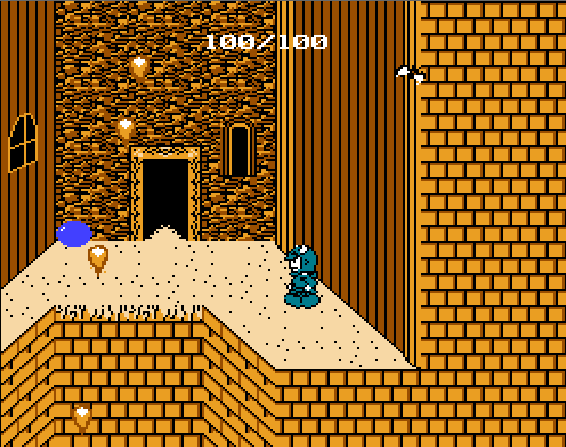
Märchen Veil

Initially released on Japanese computers in 1985, Märchen Veil got a Famicom Disk System port in 1987, combining it and its sequel together into one game.  Visually and design-wise it's a bit reminiscent of other early Famicom action-RPGs, though the one that immediately came to my mind was Deadly Towers - not exactly a great start.  Moreso because the very first thing I did was walk into what looked like a rock formation only to learn it was a cliff face; I fell off and died instantly, forcing myself to restart and sit through the opening cutscene again.  Speaking of cutscenes, there are quite a few of them throughout the game, and they're fairly elaborate for the time period, with animation and scrolling dialog to tell its story.  (Fittingly, the game's title roughly translates from German as "Folktale Veil".)  The gameplay and animation is rather slow and choppy, with one button giving you a stubby jump and the other swinging your sword, which also fires out gear-like projectiles.  Defeating enemies causes them to drop fairies, and collecting enough will extend your maximum health.  Health itself can only be restored by destroying certain obstacles in the environment.  Puzzles are also pretty cryptic, requiring a lot of wandering around and trial and error, and items aren't always obvious in their use until you just take a leap of faith at whatever obstacle currently stifles your progress and hope it gets you across; for example, the cape lets you fly while boots let you cross certain types of terrain.  There are eight stages in total to experience in Märchen Veil, but given how primitive and unintuitive it is, I can't imagine the game had too many dedicated fans even when it was new, let alone in a post-Zelda world.


Developer: System Sacom
Publisher: Sunsoft
Released: 1987
Platform: Famicom Disk System

Tuesday, January 21, 2025

Mirai Shinwa Jarvas

A relatively early action-RPG for the Famicom, and it's built on a surprisingly unique concept - as the titular Jarvas, you're actually the lone survivor of a nuclear holocaust and go back in time to well before the atomic era to conquer the entire world, averting humanity's extinction in the most heavy-handed way possible.  The game is relatively full-featured for the time period, with the player able to change between multiple job classes, a pretty lengthy campaign, a rather large world map with numerous sub-maps, and a lot of sub-quests to complete to earn gold, which you must do as random enemies on the map do not drop money when defeated.  You also have a Fame stat that increases as you win duels, which you must do in order to recruit troops to open castles so you can overthrow each continent's rulers (and no, they don't provide you any aid in battle whatsoever).  That said, design-wise it's a bit of a trainwreck - it's buggy, slow paced, has very poor hit detection, it's easy to wedge the game into an unwinnable state by picking a quest you can't finish yet (you can only take one at a time and can't cancel quests without actually completing them), and it's extremely slow and grindy.  Oh, and forget trying to play as a magic user; as in old Dungeons and Dragons you start with one spell that barely does any damage, and your physical stats are so pathetic that one or two hits from basically anything will knock you dead.  It is at least notable for being the first Famicom RPG to use a battery backup to save games; prior to this games either relied on a tape recorder peripheral, rewritable floppy disks or just using a password system, and its general "western-ness" with a focus on sidequests, army battles (such as they are) and being able to change character classes are all relatively novel for the time and the platform.  Unfortunately being one of the first often means it's also one of the worst, and this is definitely no exception.

Developer: Taito
Publisher: Taito
Released: 1987
Platforms: Famicom

Tuesday, September 24, 2024

Bioshock Infinite

Infinite is more of the same braindead pew-pew crap gameplay as the original Bioshock, but instead of objectivism and libertarianism it's got Ken Levine's strawmannified, both-sidesing takes on American jingoism and race relations and time travel and parallel universes and dehumanization that's too cowardly to actually say anything; after all, every true artist (and their publisher) will tell you that diminishing any hint of a message or moral stance in your work is a small price to pay to score just a few more sales from that lucrative demographic of white supremacists.  And it's all brought to you at the cost of Ken's company and hundreds of his coworkers' jobs and well-being because the gaming press has hyped him up as some infallible heaven-sent visionary for so long that he's started believing it himself.  (Ironic, then, that he sees absolutely no parallels between himself and his story's villain, a normal guy who becomes a self-proclaimed prophet so he can exploit people he sees as inferior for personal gain.)  But I will admit, seeing a popup about how "not all confrontations need to be solved with violence" after an unavoidable shootout in broad daylight that left about 56 of my assailants dead was pretty goddamn funny; at least until I learned that it wasn't meant to be and it was an earnest attempt at incorporating "player choice" and "morality" into the proceedings, which - surprise - makes literally no difference to how the story plays out anyway.  I also guessed the big plot twist about 20 hours before it came (seriously, we've all seen Fight Club by now, quit ripping it off) so the whole thing is just a completely boring waste of time with no payoff.  Ken Levine really is the perfect example of someone too in love with the sound of his own voice to realize he's not saying anything novel, intelligent or even entertaining; it's just hot air that only entertains himself and his fanboys who are desperate to be as big of a successful hack as he is one day.


Seriously Ken, you worked on Thief: The Dark Project and System Shock 2, two of the greatest video games of all time; eat a slice of humble pie and start working on quality projects again, not self-indulgent garbage like this...

Developer: Irrational Games
Publisher: 2K Games
Released: 2013
Platforms: XBox 360, PlayStation 3, PC, Mac OS X, Linux

Friday, June 21, 2024

Tecmo Secret of the Stars

A game I remember seeing in Nintendo Power but never really paid much attention to even as my interest in RPGs steadily grew over the years.  After asking around about the worst SNES RPG and having the name come up multiple times, though, I had to see if it really was as bad as so many people claimed.  While I'm still not quite convinced it's the worst, I can say with certainty that it is pretty dang bad.  First, despite having the look and sound design of a very early 16-bit effort, this game came out in mid-1995 in North America.  By then the RPG genre had evolved dramatically from its humble origins and several big names like Lunar, Final Fantasy VI, Phantasy Star IV, Earthbound and Shining Force were making waves on 16-bit platforms; hell, even Chrono Trigger was only a month away at the time of its launch, ensuring Secret of the Stars would be forgotten almost immediately.  In terms of design and writing the game feels like a Final Fantasy's outlandish fantasy elements and the irreverent bent of the Mother franchise, but done completely wrong on both parts.  First, the setting is stock fantasy fare with a few sci-fi elements blended in, like a less interesting Wizardry or Might and Magic, and the plot is about as generic as they come, with your central characters out to unlock their hidden potential and defeat an alien threat to their world; hell, the whole thing is outright spelled out for you in the opening moments of the game.  An interesting, but ultimately underutilized, element is that you're given two separate parties to control and can swap between them at any time - the Aqutallion, consisting of the five main characters destined to destroy the great evil, and the Kustera - a secondary group that cannot advance the plot or even directly aid the other party, instead just opening the occasional pathway for them or venturing through filler dungeons to acquire powerful treasures for the Aqutallion team to use.  Then you throw in a spotty translation that cripples any attempts at humor or character building, an atrocious encounter rate, a combat system with minimal strategy, the narrative constantly being interrupted for inane item searches and tons of mandatory, unskippable grinding, and you've got a pretty unpleasant experience on every front.  The 16-bit era was a great time for RPGs, but Tecmo Secret of the Stars ranks among the worst it had to offer; just play any of the other great classics of the era and let this turd remain buried.


Developer: Tecmo
Publisher: Tecmo
Released: 1995
Platforms: SNES

Monday, April 15, 2024

Dragon Age: Origins

Mass Effect was just awful - an utterly boring slog that cribs elements of other, better science fiction works while adding no unique twists of its own.  But I had at least a little hope for Dragon Age.  While BioWare was never very good at world building or making a "role-playing experience", surely they could at least recapture the challenging tactical gameplay, interesting characters and captivating narratives of the old Infinity Engine games, right?  Well, it was an RPG on a console in 2009 - a time period when people valued pretty cutscenes and online functionality gimmicks over gameplay or requiring any thought to complete - so you can guess how well it went.  Rather than having 60+ classes, numerous pieces of equipment, a vast array of potions, scrolls and spells and countless potential character builds to experiment with, you get... 3.  Yep, it's the old Fighter/Thief/Mage trifecta with boring, linear skill trees to determine what slightly different tactics you can employ, in theory at least. In practice combat mostly consists of slow boring rounds of Rockem Sockem Robots, with everyone trading blows until one side falls and getting healed to full immediately after if you win.  No stakes, no tension, hardly any tactics and no fun.  Christ, even Diablo II, released nearly a decade prior, had far deeper combat and character building than this, and even Diablo 1 had more character choices if you factor in the Hellfire expansion pack. The plot is utterly predictable dark fantasy fare, pitting the humanoid races against the "Darkspawn", a blanket term for zombies/orcs/ogres/goblins/every other stock fantasy jobber ever ripped from the pages of Tolkien.  The elves are smarmy magical tree huggers, the dwarves are smarmy nonspiritual architects, humans are short-lived, combative and naive and looked down on by the other two.  You've seen it all hundreds of times, and it's given no new twist here to keep it firmly under the umbrella of laziness painted up as homage.  Even D&D had long since moved away from these tiresome, restrictive tropes well before Dragon Age was a thing, so there's no excuse for it here.

The writing continues to suck major ass in the same way Mass Effect's did, just aping plot points from better stories, winking at its own lame clichés (not caring that simply calling attention to a cliché doesn't make it less of one), and cramming in everything you need to know via huge stretches of exposition that read more like a car manual than conversation.  Every character with more than eight lines of dialog rattles off smarmy dialog in the exact same arrogant tone, as though being condescending and having an arsenal of platitudes on deck at all times in order to appear smart is going to carry them through life in lieu of practical knowledge and personal connections they don't ever care to develop.  I'm sure the Internet Debate Club bros who wrote this and spend all their free time performatively "owning" their straw man accounts with this exact same pomp are just as fun to interact with in real life, too.  Don't expect any decent world building either because, of course, it's all relegated to boring encyclopedia entries you get to exit out of the gameplay completely if you want to peruse; after all, we wouldn't want to risk losing that lucrative audience of thirteen-year-old boys who have the attention span of hamsters and only care about chasing the arrow to get to more monster bashing and titties and cheevos to prove they're real manly men!  The game also just screams "desperate moneymaking scam" because as you play there's constant popups about its dozens of DLC releases - nearly all of them being short, unsatisfying hour-long quests they're trying to milk $5 or more apiece out of.  Yeah... all the fanboys still whingeing on about Oblivion's horse armor can officially piss right off, because at least Bethesda had the courtesy to not pester me about buying it every three minutes.

Dragon Age: Origins is shallow, derivative, ruthlessly boring and completely full of itself, but that's the entire point of it existing.  There was never a thought spared by anyone involved for making a decent game, just for milking a few dollars out of nostalgia for the D&D-clone RPGs that came before it while investing as little time and mental energy as they could get away with.  Alongside other overhyped '00s/early '10s stinkers like Bioshock, Dishonored, Dead Space, Witcher, Mass Effect, Dark Souls and especially Halo, it's just another example of a company cashing in on platform bias - shamelessly copycatting things computer games had already done brilliantly years earlier, stripping out any trace of intelligence or depth they had to make them 'broadly accessible', painting them up with soulless HD graphics and selling it as the next big cultural revolution to early teenagers too young to know they're being served a lame knockoff and fanboys too in love with their corporate gods to care.  It only becomes worse when you consider BioWare once worked on a few of those great games they're now making soulless clones of.  They used to have genuine passion and talent for telling stories, writing great nuanced characters and coming up with clever challenges to overcome, and now they're needy sellouts who can't function without constant reassurance of how sacrosanct they are through the glowing press and awards EA buys for them.  A hard fall from grace for a once-prestigious name, Dragon Age ended any hope I had of BioWare ever being good again.


Developer: BioWare
Publisher: Electronic Arts
Released: 2009
Platforms: XBox 360, PC, PlayStation 3

Tuesday, February 21, 2023

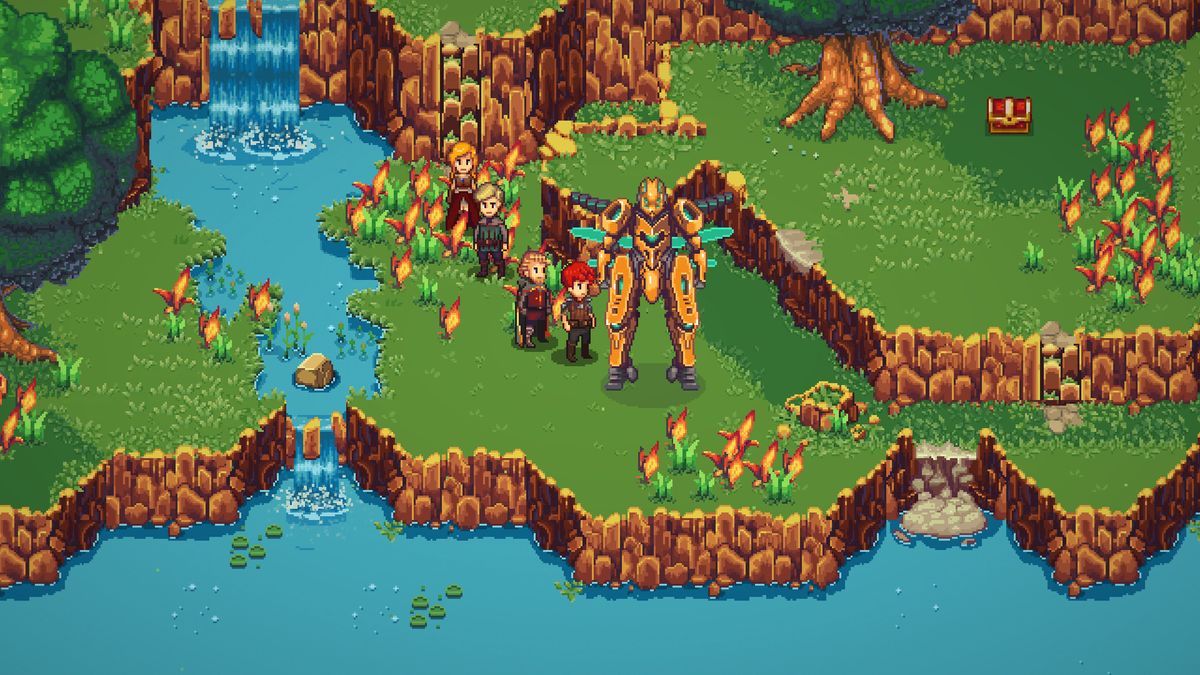
Chained Echoes

Have you ever read an awful fanfic where every bit of prose is incredibly terse to hide the writer's limited vocabulary and every line of dialog is comprised entirely of clichés and cutesy turns of phrase and references because it's all shat out by a 14-year-old who thinks getting a hundred views means they're now God's gift to the art of writing?  Well, Chained Echoes does something nobody ever asked for and brings that lovely brand of inflated ego to the world of gaming.  Don't expect it to provide any decent characterization whatsoever, because every single one is just dropped into the narrative with two sentences laying out their motivations and personality traits in plain text, and that's pretty much all the development they ever get.  Guess what: it was a lazy way to establish character in Final Fantasy VI 28 years ago, and it remains so today.  The difference is that VI transcends its stock characters and storyline on the merits of its gameplay variety, brisk pacing with minimal grinding, top-notch presentation and moments of ingenious atmosphere and cinematography that set a standard for years to come, whereas Echoes just brands itself as a 'callback' so it never has to make any effort to stand out.  Likewise, the whole script is a mishmash of plot points, scenes and characters from smarter, better games like Chrono Trigger, Final Fantasy and Xenogears with no thought spared for narrative cohesion or logic whatsoever.  Its design sensibilities are firmly trapped in dated cliché too; there are tons of time wasting click-on-everything-to-find-the-arbitrary-plot-flag segments, dungeons that only exist to pad the runtime with tedious overlong corridors rather than provide any decent puzzles or interesting battles, mountains of dry exposition to explain all its 'deep' concepts, and huge labyrinthine towns with nobody and nothing interesting to interact with; just bland NPCs who wander randomly and repeat inanities forever.  Battles move fast yet still feel monotonous and slow, constantly pitting you against damage-sponge enemies that take dozens of special move hits to kill.  You automatically get healed to full after every battle too, which removes any element of resource conservation.  The only thing that saves the combat system from being completely brainless is a meter that fills as you deal damage; you do more when it's in the green and take more when it climbs into the red, but all this means is that rather than spamming your strongest attack until you win, you just find one effective attack/defend/heal pattern and spam it until you win.  

Chained Echoes might look and sound a bit better than a stock-asset RPG Maker game, but at its core that's exactly what it is - another trite, hackneyed outing made to milk nostalgia for 'the classics' with no appreciation of what makes them such. It never once improves on or puts any new twist on the elements present in its inspirations, and there's no satire, subversion or even self-awareness about any of the tropes it retreads, just empty imitation.  It heaps on bad dialog trying much too hard to sound witty and profound and hopes you won't notice that there's no original thought on display anywhere in the whole game; just smug hackery masquerading as a tribute to what came before.  Like so many 'homage' games it fails to recognize that '90s RPGs got popular not from having a particular look or vibe, but because they improved on their predecessors and dared to break new ground in the realms of gameplay design, character building and storytelling.  Hell, there's a good reason Final Fantasy VII is still a classic and XIII is regarded as a cruel joke.  Final Fantasy VII integrated a fantastic cutting edge presentation, some creative new gameplay mechanics, high concept storytelling and memorable characters into a format that, up to this point, was very formulaic and starting to get stale, and it did it all without ever coming across as pretentious.  It respected its audience's intelligence by leaving them with some interesting mysteries and moral quandaries to consider and letting its fantastic, layered characters carry the story rather than shovel-feeding you dry exposition to make sure you 'get' the creators' vision.  There's good reasons the game still resonates with audiences to this day.  By contrast XIII is the prime example of developer arrogance, thinking shiny textures and flashy animations will carry them to more fan acclaim in spite of a lack of effort on every other front.  Cardboard cutout characters, dumbed down inane gameplay, countless plot holes, a terribly presented story and grating, twee dialog through it all.  It's the worst kind of insult to not just its parent franchise, but to the fans that made it a hit in the first place.  That's why Chained Echoes fails too - it's another smarmy self-proclaimed 'genius' thinking you owe him the same respect as the creators of the classics simply because he made a cynical carbon copy of their work.  'Respect' of course meaning piles of money and little gold statues for their shelves, because material wealth and popularity and prestige are the only things people like this think hold any true value.  And of course, more is always better; having a bigger portfolio and more fans yes-men and trophies of your "conquests" always means you're got more talent and intelligence and morality than all of your 'competitors' with less, right?

Instead of rewarding more plagiarism by yet another visionary who claims they're going to "save" the RPG genre by making it even more sterile and stagnant, just play some of the games it's blatantly stealing from instead; nearly all of which are still available today for well under this game's $30 price point.  Or if you want some fun, strongly written, well-paced and mechanically polished indie RPGs that actually pay tribute to the classics while doing much to set themselves apart too, play Symphony of War, Ikenfell, Deltarune or Sea of Stars instead.  But hey, at least this game's title is apt for a game with design sensibilities chained to the worst kind of proud mediocrity and a plot that's an echo of scripts from much better games of the past.


Developer: Matthias Linda
Publisher: Deck13 Spotlight
Platform: PS4, PS5, PC, Linux, Max OS, XBox One, XBox Series, Switch
Released: 2022

Friday, December 2, 2022

Mortal Kombat Mythologies: Sub-Zero

Mortal Kombat of course needs no introduction; a popular '90s fighting game franchise that combined martial arts, monsters and magic, it quickly became a fan favorite for its unique comic book flair and for having tons of hidden secrets for players to unlock.  It also drew plenty of controversy for its over-the-top violent finishing moves and mid-match bloodletting, and was almost singlehandedly responsible for the creation of the Entertainment Software Rating Board and their content rating system that appears on every video game released to this day.  Mortal Kombat Mythologies: Sub-Zero was presumably intended to be the first of a sub-franchise that would have expanded the series' lore and storytelling, though its poor critical reception (as well as the dismal failure of another spinoff game, Mortal Kombat Special Forces) quickly put a damper on those plans.  It isn't difficult to see why the game flopped after only a few minutes of playing it, either; essentially, they attempted to take a fighting game engine and incorporate platforming, puzzle solving and RPG-style levels and boss fights into it, and the end result was - to put it charitably - disastrous.  Enemies all have the same strange AI as the 2D Mortal Kombat games, which is to say they're either braindead easy or read every input from your controller and instantly counter it until you're dead.  Every level is laden with platforming puzzles and traps that either eat a huge chunk of your health or (much more frequently) just kill you instantly, and avoiding them is a pain owing to the fact that the screen doesn't scroll until you're roughly 2/3 of the way from the edge.  Each level is also a convoluted maze where enemies can attack at virtually any time, and you have to hit a button to turn Sub-Zero around to face them every time they come from behind or jump over you (and lord help you if enemies attack from both sides at once).  The RPG element also feels lazily implemented - you get points for defeating enemies and unleashing combos, and reaching certain thresholds unlocks more special moves, including Sub-Zero's freeze blast; that's right, you don't even start the game with the character's signature move.  Boss fights are downright nightmarish too, often requiring extremely niche tactics to even hit them, let alone whittle down their enormous life bars, and they can generally kill you in only a few hits (which you often cannot block).  You do get items that restore health, boost your attack/defense or grant temporary invincibility, but these are so few and far between and the combat is so frequent that they barely provide any help, and if you die and have to restart a boss battle after using some, they don't come back.  Just an amazingly frustrating and poorly-planned experience on every front.  Hell, when there's secret codes to give yourself 999 lives and unlimited health powerups and even that barely makes it more tolerable, you know your game is in serious trouble.  The only highlight of the whole mess are the live action cutscenes, which showcase some truly cheesy acting and special effects, and it's almost worth suffering through the aggravation just to watch them.  Almost.


Developer: Midway Games, Avalanche Software
Publisher: Midway Games
Platform: Playstation, Nintendo 64
Released: 1997, 1998

Monday, May 30, 2022

Lord of the Rings, Volume 1 (1994)

Interplay's 1990 adaptation of Lord of the Rings for various computer platforms was a pretty decent one for its time, taking the skill-based roleplaying element of games like Wasteland, having an engine and game world somewhat similar to Ultima VI, and being a relatively faithful adaptation of the books besides.  The 1994 SNES game of the same name is a much different beast. largely exhuming the RPG elements of the original in favor of a more action-driven experience.  In fact, it seems to draw some inspiration from 1993's Secret of Mana, allowing up to five players to join in the action via the SNES's Multitap peripheral and battle their way across Middle Earth.  But while I'm admittedly no big fan of Secret of Mana,  I can say that is a much superior experience to this one - the rather drab world design of the computer game carries over here, meaning you'll be wandering through an awful lot of dull, indistinct corridors (and enormous dungeons comprised of the same) on the way to your goals.  The story is also padded out to the point of inanity with dull fetch quests, and even the gameplay itself is bland - there's no new equipment to earn and only a few utilitarian items to find, and no means by which to revive fallen allies - once a character is dead, they're gone for good.  The whole thing is pretty tedious and not very fun - even moreso if you're playing alone, where you have to put up with lousy party AI that runs headlong into danger and dies almost immediately (also a common problem in Secret of Mana, I found; but at least in that game you could resurrect your dead comrades).  Even some detailed graphics and wonderfully-realized music and ambient sounds for the hardware can't salvage it, making it a game that was pretty quickly forgotten in its time and is downright dire compared to modern action-RPG outings.  Which may also explain why Volume 2 never got a console adaptation.


Developer: Interplay Productions
Publisher: Interplay Productions
Released: 1994
Platform: SNES

Monday, May 16, 2022

Advanced Dungeons and Dragons: Heroes of the Lance

Released on computers as part of SSI's "Silver Box" line, Heroes of the Lance is a loose adaptation of the DragonLance series of novels inspired by the eponymous D&D modules, and a relatively unique take on the D&D format, focusing on real time action rather than turn-based strategic combat.  It's decent enough for a 1988 computer game, especially in a period where computers were still generally considered "business machines" and thus side-scrolling action gameplay like this was pretty novel (if not particularly well-suited to the hardware), but its 1991 NES port is a heavily derided game on the platform.  The ugly graphics, irritating music and stiff controls didn't endear it too much to fans of side-scrolling action games like Super Mario Bros, while RPG fans were let down by the absence of narrative and the general lack of depth to the game's combat and dungeon crawling.   Despite being an action game everything is still centered around dice rolls, so it's not a matter of skill-based attacking and evading; instead, you mostly just stand toe-to-toe with your enemies and hold down the A button to swing at each other until one of you dies.  You can attack at range with a bow and arrow or spells, but they're also governed by dice rolls and pretty ineffective besides, so there's little point.  Disarming traps is solely a matter of having the right character in the front of your party (or taking the hit - they rarely do much damage anyway), and the only real variety comes when you have to cast Protection From Evil to defend yourself from particularly spammy enemies.  Oh, and it's also possible to make the game unwinnable - if Goldmoon (or another character carrying her staff) drops into a pit, you're done; that staff is the only thing that can kill the final boss.  But most insulting of all is its length - while it takes place in a fairly large and convoluted maze, once you know the route to go through and how to counter the few curveballs it throws at you, you can beat the whole game in under ten minutes.  Even for masochistic fans of bad games, it's too short, easy and lacking in nuance to even provide any ironic entertainment value.  Hell, it hardly even seems worth the effort to pan it on my nerdy site about RPGs; everyone who knows of the NES port is already aware it's a sucky game that's widely regarded as one of the worst on the platform, and I don't have much to add other than to confirm it really is bad, but not in any interesting way; it's just another very lackluster port of a semi-popular computer game.  Unappealing, lame and entirely forgettable, NES Heroes of the Lance is a lousy experience no matter what angle you come at it from.


Developer: US Gold, Natsume (NES)
Publisher: Strategic Simulations, US Gold, Pony Canyon
Released: 1988, 1991
Platform: Amiga, Amstrad CPC, Atari ST, Commodore 64, FM Towns, MS-DOS, MSX2, NEC PC-8801, PC-9801, NES, Sega Master System, ZX Spectrum

Saturday, May 14, 2022

Deadly Towers

One of the first NES RPGs to ever be localized, it's also one that's a common target for caustic reviewers, beginning with internet comedian Seanbaby famously deriding it as the worst NES game ever made.  That's a bit hyperbolic, of course - there are far worse NES games out there.  But that doesn't mean Deadly Towers is some kind of hidden gem; it earns pretty much all of the criticism it's gotten.  Each of the game's towers is an enormous, convoluted maze with a room count well into the triple digits, with nearly every screen looking extremely similar and being packed to the brim with monsters.  To make matters worse, you're a rather large target, and virtually every screen has you taking a cheap hit from an enemy as soon as you enter and/or features ledges you can easily fall or get knocked off of, resulting in instant death.  Even the game seems to be aware aware of this as each death immediately dispenses a password and then, upon pressing Start, you're immediately dropped back at the start of the game, retaining all the powerups and gear you'd collected save for your money (which is reset back to 50).  It's also easy to stumble into invisible warps that take you to new areas (and even some 'beneficial' items do this), making navigation even more of a pain.  Combat is extremely basic - you can throw a single sword at a time and you're completely defenseless until it hits an enemy or goes offscreen.  This means defeating enemies is just a matter of getting up next to them and spamming your sword until they die or, for bosses, finding a safe spot to stand and then spamming away.  Upgraded swords behave the same, just traveling faster and doing slightly more damage, so there's virtually no variety to the combat.  The graphics are serviceable for a 1986 Famicom game, if rather uninspired, and the music is decently composed, though the fact that the tracks are so short and reset to the start every single time you enter a new room means you'll get tired of them quickly.  As bad as the game is, though, I'll at least cut it a little bit of slack - Japanese RPGs and action-based ones in particular were still in relative infancy at the time, most early examples of the genre tended to be pretty rough, and the vast majority of them pre-1987 or so are only worth a quick look nowadays as historical curios.  Only a little bit, though - after all, Deadly Towers came out several months after Dragon Quest and The Legend of Zelda did in Japan and a month after Zelda's debut in the US.  As for which of these games are still worth playing through today and which are only of interest to gaming historians or sheer masochists, well, that's a no-brainer.

Developer: Lenar, Tamtex
Publisher: Irem, Broderbund
Platform: NES
Released: 1987

Saturday, April 2, 2022

YIIK: A Post-Modern RPG

 YIIK is a game that clearly wanted to be seen as something profound, but mostly just feels like a series of comically misguided mistakes.  Combat utilizes timed button presses and minigames akin to games like Paper Mario and Undertale, but ends up being so drawn-out and arduous (normal enemy fights can easily exceed twenty minutes in length, to say nothing of bosses) that you'll get tired of it very quickly.  Its protagonist, allegedly a "flawed person you'll come to like on his journey" does no such thing, mostly coming off as a manipulative sociopath who never even thinks twice about all the damage he does, let alone attempts to make amends or become a better person in the end.  The story is Persona 4 crossed with the worst kind of I-read-the-CliffsNotes-version-of-Nietzsche-and-now-I'm-above-it-all shlock, with droning walls of badly acted, redundantly worded purple prose that try so desperately to sound smart and poignant and are mostly just grating and self-indulgent.   But what really sours the milk for me is the creator's attitude.  His reaction to criticism of the game was to simply attack its detractors, claiming that "video games are for babies" and that they just aren't smart/mature enough to understand his big important masterwork and whatever 'profound message' he imagines it contains.  No guy, we get it; unlike you, though, we recognize it as yet another piece that calls itself 'revolutionary' and 'poignant' when it's shamelessly derivative, self-aggrandizing and lacks any genuine appreciation of the other works it's clearly cribbing from.  You've fallen into the same trap as every other dollar store visionary, completely disregarding the ingenuity and passion behind games you allegedly admire and instead saying "Wow, this sure is popular; if I make a knockoff of it to serve as a vehicle for my own hobby horses and disingenuous moralizing, then I'LL be regarded as a genius too!".  Too bad you also forgot that for every knockoff game that breaks even, there's at least a dozen that are quickly discarded and forgotten.  Persona itself even has some perfect examples; you sure as hell don't hear anyone talking about Mind Zero or Tokyo Xanadu or Conception these days, do you?  (And to further cement my point: all of those games are less than ten years old.)

Oh, and as the TV Tropes page for YIIK points out, this isn't the only time the author has embarrassed himself like this.  He even had the gall to make a protagonist of his previous title (Two Brothers) soapbox for him in this one, dismissing poor reviews leveled toward that game and not even bothering to acknowledge the fact that the brunt of player complaints stemmed from it clearly being unfinished and containing numerous game-killing bugs that he simply never bothered to fix.  It's one thing to make lousy products, but it's another altogether to write off even the most earnest of criticism and be a giant baby about the fact it exists.  I hope that in time the author will learn a lesson in humility and how to take critique in stride, and that one day he'll be able to parlay that into creating something good from a place of genuine passion, but it's abundantly clear that won't be happening anytime soon.  In the meantime, don't bother spending money to have your intelligence insulted by someone aiming way above their station; that should be free.


Developer: Ackk Studios
Publisher: Ysbryd Games 
Released: 2019
Platforms: PC, MacOS, Playstation 4, Switch

Underworld Ascendant

Underworld Ascendant got people buzzing at the time of its announcement, and it isn't hard to see why.  An officially licensed sequel to a cult classic DOS franchise (the Ultima Underworld spinoff series) from a company founded by Looking Glass and Irrational Games alumni and later joined by legendary developer Warren Spector; how could it go wrong?  Well, the answer turned out to be "releasing a very buggy, unfinished disaster with clumsy collision and physics, graphical bugs aplenty (with models often stretching into indecipherable masses of polygons) and a save system that puts the player back at the start of a level, regardless of their progress".  This, plus just generally feeling amateurish and poorly-optimized, with memory leakage, uneven framerates and frequent crashes emblematic of amateur-led Unity games, makes Underworld Ascendant a cautionary tale about the risks of crowdfunding and coasting on residual prestige.  There has since been a patch released to attempt to fix some of these problems, but as far as I'm concerned, it's too little, too late; if you want a good cerebral dungeon crawl you have plenty of better options than to wait for this one to maybe possibly reach the realm of "passable" one day.  Like the classic Ultima Underworld games whose legacy Ascendant irrevocably tarnishes. 

Developer: Otherside Entertainment
Publisher: 505 Games
Released: 2018
Platforms: PC, macOS, Linux, Playstation 4

Lunar: Dragon Song

 This one held some promise for fans of Game Arts and especially the cult classic Lunar series, especially at a time when the newly-released Nintendo DS was still looking for a good RPG to its name.  Japan Art Media had previously contributed to the Lunar remakes on the Playstation, as well as the surprisingly decent (if not amazing) GBA remake of the first game, so surely they'd have what it takes to make a worthwhile sequel to the series, right?  Well, sadly, that ended up not being the case.  This is in no small part due to the game trying to reinvent the wheel when it came to mechanics.  Running to avoid monsters lowers the party's HP, which rather defeats the purpose of doing so in the first place.  One can choose to earn items or experience from battles (though, for no adequately explained reason, you only get one or the other at a time - never both).  Equipment breaks with repeated use and money is rather scarce, so even keeping your party equipped is a major issue.  But perhaps most frustratingly, the movement-based strategic combat of Lunar is replaced with a simple turn-based system, and one cannot even target enemies of their own volition - they simply pick an attack and the game selects for them, which takes a huge strategic element out of combat and simply turns it into a long sequence of spamming attacks.  The party has also been downsized to three characters - half that of the two mainline entries - which is just a bit baffling.  Even the plot holds little of interest, with some downright dopey writing, tons of tedious backtracking, bland characters that don't have anything particularly memorable about them (especially compared to the first two Lunars), and a plot which is just a poor retelling of the first game's with no fresh twist put upon it.  Among RPG fans, Lunar: Dragon Song is synonymous with squandered potential, and given that its predecessors are regarded as genre classics, it's all the more disappointing for it.

  
Not since the writings of the great Stephenie Meyer have we seen such well-realized characters!

Developer: Japan Art Media
Publisher: Marvelous Interactive, Ubisoft, Rising Star Games
Released: 2005
Platforms: Nintendo DS

Legend of Zelda: Tri Force Heroes

Yep, it's another attempt at a multiplayer Zelda, this time for the 3DS.  That effectively mitigates the boneheaded design flaw of the original (being a console game yet requiring handheld systems and link cables to play), but it has some screwups of its own; like only being able to play single player or three players, but having no option for two.  Aside from that, it's basically the same experience as Four Swords, being stage-based, linear and full of simplistic combat and puzzles - mostly based around stacking atop one another and tossing each other over gaps or up onto ledges.  There is an attempt in adding some replay value with a plethora of unlockable costumes for your Links, but it adds little to the longevity of the game unless you're a die-hard completionist.  It might be a bit of fun with two friends, but overall it's a short, lackluster and generally forgettable game that ranks among the series' worst.  There were plenty of better co-op games out there before the 2010's rolled around, so this one just felt dire by 2015.


Developer: Nintendo/Grezzo
Publisher: Nintendo
Released: 2015
Platforms: Nintendo 3DS

The Last Story

Final Fantasy was on a rocky road for a good while after the turn of the millennium; Squaresoft merged with Enix following significant financial difficulties and many of their biggest names split from the company over the next few years; most prominently Hironobu Sakaguchi, Final Fantasy's creator.  It certainly didn't help that the company's first forays into HD gaming - The Last Remnant and Final Fantasy XIII - were underwhelming messes that left a sizable portion of their fanbase feeling disappointed and betrayed.  That left a perfect opening for Sakaguchi's new company to reclaim his crown with a big budget high-quality RPG release, so he did just that, right?  Well... no.  If Lost Odyssey was a poor man's Final Fantasy X (which was already a craptastic game, by the way), this one is the poor man's Final Fantasy XIII, trying way too hard to be 'cinematic' and forgetting all about important elements like gameplay and competent writing.  With clunky, poorly explained and confusing mechanics, 100% railroaded progression, awful party AI, a messy narrative with countless plot holes,  a thoroughly obnoxious and unlikable central cast compounded with terrible acting every step of the way, and tons of lag and framerate issues due to being shoehorned onto aging Wii hardware, it's just a wretched experience all around.  But, being codeveloped by the team that brought us amazing classics like Ju-On: the Grudge, Vampire Rain and Bullet Witch, is that really a surprise?  If you're wondering why Mistwalker has mostly moved into making low-stakes mobile games and Sakaguchi is only spoken of fondly in the past tense nowadays, well, look no further.


Developer: Mistwalker, AQ Interactive
Publisher: XSeed Games
Released: 2012
Platforms: Wii

Friday, April 1, 2022

Fallout 76

Fallout 76 is a game that has been quagmired in negativity from the word "Go", lacking the immersion of previous Fallouts by replacing all human NPCs with robots who dispense quests in the most sterile fashion imaginable, generally buggy design prone to frequent crashing, and preorder bonuses being fulfilled with much cheaper merchandise than was promised.  That, plus rampant and nearly-unchecked player cheatingsecurity breaches in Bethesda's support system, an immensely overpriced in-game microtransaction system and a much-derided premium service that costs another $100 a year atop the already enormous price gouging present, have only worsened its image further, leading to it being known as one of the most cursed games of the modern era.   

But beyond the storm of corporate meddling, is there a worthwhile game to be found?  Well, I suppose that all hinges on how much you enjoyed Fallout 4.  76 is essentially that with a mediocre multiplayer element tacked on, letting you explore a vast world, complete story quests at your leisure and build your own settlements, to either ally with other players against the odds or get into turf wars with them (if you can find a group that's willing to play fair and not just resort to readily-available cheating tools).  Subsequent patches have also reintroduced some humanoid NPCs, improving the game's immersion factor, and the underlying storyline is decent if unremarkable, giving you something to stay motivated in the course of all your extra-curricular settlement building and player interaction.  However, it retains many of the same problems Fallout 4 had, too.  Nothing you do ever feels like it makes much of a significant change in the world, and it really doesn't, as it's only ever acknowledged by other players - usually at the barrel of a gun while they try to tear down your buildings in search of profit.  The crafting system itself is arbitrary and makes little sense, particularly as half the things you build provide no tangible benefit and the system itself lacks some very common-sense things you'd expect to be included.  There's a certain overhanging frustration in the fact that you can build laser turrets, water purifiers and nuclear reactors out of trash you find laying around a ruined office building, but still can't build a functional vehicle because the game's still running on a code base that's over two decades old at this point (and with their shareholders pulling the chain and demanding profits RIGHT NOW, it's unlikely they'll have the time or resources to adopt a new engine anytime soon).

76's premise is a good one - an open-world free-for-all where you can shape the wasteland to your will - but like Fallout 4 before it, the execution falls several steps short.  Fallout is a free-roaming RPG franchise beloved by fans for its immersive storytelling and design, and online open-world sandbox shooters are known for their fast-paced, yet strategic gameplay; when 76 takes a mediocre storyline and pastes a half-baked version of Fortnite on top of it, it just becomes a lesser version of two well-established genre staples that doesn't end up pleasing fans of either.  That, plus all of the aforementioned unsavory elements of its launch and the subsequent money-making scammery associated with it, make it a game I simply can't recommend to anyone.


Developer: Bethesda Game Studios 
Publisher: Bethesda Softworks
Released: 2018
Platforms: Playstation 4, XBox One, PC

Saturday, May 16, 2020

Octopath Traveler

It's amazing to me how Square continues to make high quality games with modern sensibilities that get snubbed simply for being such, yet when they commission low-effort, barely playable and never enjoyable faux-retro games that bring nothing new or interesting to the table year after year, they consistently get rewarded with praise and high sales.  Octopath Traveler is yet another example of that, mashing low-resolution 2D sprites into a 3D environment with pixelated textures and overblown blurring shaders to create an overly busy mishmash of elements that is neither appealing for fans of retro RPGs nor pleasing to look at in the slightest.  You can't even admire the (admittedly decent) spritework because the colors are consistently washed out or undersaturated by the harsh lighting, and every combat sprite and action is accompanied by dozens of incredibly distracting 3D models and lighting effects.  Even navigating around towns is a pain since everything more than a few inches away from center screen becomes a darkened blurry soup; this might just be the world's first video game simulation of glaucoma.  Gameplay is no better than the hideous graphics; badly acted, poorly written dialog scenes drone on for ages, every fight is a damage sponge filled slog that takes far too long to finish (boss fights last thirty minutes at minimum) and constant random encounters only further add to the agony.  Fill the rest with a juvenile tone, shallow characterizations, clichéd storylines and grind-heavy character building that drags beyond belief, and you have a truly wretched experience.  

I already know the apologist fanboys will try to derail criticism of Octopath's hacky writing and design shortcomings by calling it an 'homage' to the RPGs of the 16-bit era and asserting that it's 'unfair' to judge it by modern standards.  I say that's bunk.  An homage shows respect to its source material and strives to showcase the things that make it exceptional; Octopath just uses the label as an excuse to trot out tired, dated clichés and design tropes of the past, and only serves as a reminder of why they should have stayed there.  The writers and designers never spared a thought for innovating or improving on what came before, just copying, and the end result is just what you'd expect - a tired, tedious experience with a layer of smug complacency that makes it all the more insulting.  So instead of wasting your time on a cynical imitation, just play a few of the actual standout JRPGs of the 16-bit era instead, like Chrono Trigger, Dragon Quest III and V, Final Fantasy V and VI, Super Mario RPG, Phantasy Star IV, Breath of Fire, Terranigma, Illusion of Gaia or Earthbound.  Or if you want some modern games that celebrate everything great about their predecessors while doing much to set themselves apart too, play Undertale, Dragon Quest XI S, Ni no Kuni II, Divinity: Original Sin II, XCOM 2, Indivisible, Bloodstained, Valkyria Chronicles 4 or Prey.  Either way though, leave Octopath to be forgotten alongside the other yearly dozens of imitation retro games made by content mills like Acquire who say they love retro games, but only really love the easy sales they get by saying that.

Developer: Square Enix/Acquire
Publisher: Square Enix
Released: 2018
Platforms: Switch, PC, Stadia

Sunday, May 20, 2018

Hoshi wo Miru Hito

An obscure Famicom-exclusive RPG released only in Japan, overshadowed by other releases of its year in Final Fantasy, Phantasy Star and Dragon Quest II.  But does Another's only entry to the genre prove to have some merit, or is this one mostly forgotten for a reason?


I do my best to find something positive in each game I review; even if I don't personally enjoy playing it, there is usually at least one element I can point to and say "well, at least this was decent".  But with that in mind, I feel I can safely say that Hoshi wo Miru Hito (which translates to "Stargazers" or, more literally, "Those who look at the stars") is a rare example of a game that I can find no redeeming qualities in whatsoever.  I make this claim without hyperbole - Hoshi is a fundamental failure of game design in almost every way it possibly can be.

It doesn't take long to see a few of its flaws, either. The rigid tile-based and overly busy visuals give the game a very messy and cluttered look that isn't appealing to look at in the slightest. That, paired with the wretched music that seems to hit a shrill note every other second and loops every twenty seconds or so, puts a bad taste in your mouth right out of the gate.

But unappealing aesthetics are only the tip of the iceberg of Hoshi wo Miru Hito's badness.  The game's design as a whole also shows several glaring flaws from the outset; there is no introductory sequence to get the player acquainted with the game's plot or setting (being entirely relegated to the manual - and inaccurate to boot), and the first town in the game, while only a step to the left of the starting point, is not visible on the map.  The game attempts to justify this by saying that it's a town of psychics who are masking their presence from the outside world, which in itself isn't a terrible idea; Zelda II actually features a very similar puzzle at one point in its story, requiring the player to decipher some clues and acquire an item to reach it.  However, having an invisible town as the first major location in the game - one's only refuge from a hostile world in its early hours - is an astonishingly boneheaded move.

But even putting that aside, the game as a whole is replete with amateurish flaws in almost every respect.  Unlike virtually other game of this type, the player begins with no equipment or money whatsoever, forcing them to fight monsters with their fists and pray they survive long enough to buy some equipment and items.  This proves to be a problem in itself as, owing to a bug, the first weapon the player can purchase actually lowers their attack power, making them all but worthless until it is replaced. Weapons also cannot be unequipped unless a new weapon is purchased, and once it does, the old weapon is discarded immediately, never to be seen again.  Reselling weapons - another staple of the genre - is out as well, as you don't get any of your money back once you upgrade your equipment.

I use the term "pray" in regards to the combat, because it too proves to be messily-designed to the point of inanity.  Again discarding a common RPG trope, there is almost no difficulty progression to the game's encounters - right from the get-go, it is possible to meet enemies well above the player's level who can easily stomp them into the dirt, or hit them with a paralyzing technique that has a 100% success rate, doesn't fade on its own, and can only be cured with a spell or relatively expensive item (both of which are out of reach at the start of the game).  There is no Run command and no immediate "Game Over" when all of the playable characters are incapacitated, either, which means that if the player encounters either of these enemies, they're forced to either slowly watch them whittle down their HP to nothing or just reset the game.

But even if one manages to endure all of that, the dungeon crawling experience proves to be just as incompetently handled.  Not only do the ridiculously difficult encounters continue into them, but keys aren't handled in the traditional RPG sense either.  Instead, the player must purchase expensive key cards to open each door they encounter, which are strictly one-use items.  Should you run out of them mid-dungeon, you can easily become trapped with no means of escape, forcing you to reset the game once again.  But more baffling is the fact that items required to finish the game aren't placed in traditional RPG chests, or even visually indicated at all - instead, the player steps on an unmarked space on the dungeon and the item is automatically added to their inventory, with the only clue to this occurence being a small sound effect (which, considering how bad the music is, can be easily missed if you mute your television or just aren't paying enough attention).

These on their own are all bad, but not deal-breakers, per se; one could theoretically adapt to them and make their way through the game in spite of its serious problems.  However, some embarrassing and, dare I say, amateurish flaws further mar the experience.  The most noticeable of these is the player's atrocious move speed, which causes them to move about the maps at a glacial space (roughly two tiles every second - ridiculously slow even compared to other contemporary games).  The battle screen inexplicably truncates the last digit from the playable characters' HP meters, leading to confusing moments like having 5 HP, taking 18 damage, and being left with 3.  There is no way to back out of a combat menu once a player enters it, committing them to use an item or spell if they go into that one by mistake (and if they don't have one to use, they end up wasting a turn).  Exiting any location in the world, regardless of where it is, puts you back at the game's starting point, which results in a lot of unnecessary and frustrating backtracking when you're trying to advance through the game in any kind of logical fashion.

But Hoshi wo Miru Hito's most egregious and fatal flaw has nothing to do with its gameplay itself, but with a fundamental aspect of the genre as a whole.  The game utilizes passwords to save the player's progress through the game; an outdated design element even at the time of its release as games were rapidly moving into battery or disk backup solutions as a means to mitigate player frustration.  But even if the player copies down the password perfectly and puts it in after they die, and no matter where they saved or how far in the quest they'd gotten, they restart at the beginning of the game at level 0.  Oh, they might not have to find a few items or visit some key locations again, but they have to restart the entire game-spanning process of building up their character from scratch again, hoping all the while that a random encounter doesn't wipe them out and set them back to zero.  I cannot stress enough how much tedium, length and sheer frustration this adds to the game experience; it essentially turns the entire game into a very long test of luck, rather than any legitimate skill, problem-solving or patience, and I'd honestly be amazed if anyone has ever completed it without utilizing cheats or save-states.

In all honesty, there's not much I can say to conclude this review that hasn't already been said about Hoshi wo Miru Hito; it's a frustrating, poorly-planned experience with a number of grievous flaws, but its broken save system is easily the worst of all, rendering the game all but unbeatable in its unmodified form.  I should note, however, that in spite of everything, the game is a small cult hit in Japan, inspiring several improvement patches that, among other things, fix a few of the more egregious bugs, improve the graphics to more Famicom-esque standards and put in a functional save system that even tracks the player's equipment and levels.  There is even a full fan remake for the PC, released for free, which polishes up the game to modern standards in every respect and even includes a proper final boss battle - something else conspicuously absent from the original game.  So, while I can personally see no good in this mess, there are clearly some gamers out there who can.


Developer: Another
Publisher: HOT-B
Platform: Famicom
Released: 1987
Recommended version: N/A

"Stargazer", the fan remake of Hoshi wo Miru Hito (currently only available in Japanese)

Thursday, June 1, 2017

Phantasy Star Gaiden

A Japanese-exclusive Phantasy Star title, released exclusively for Sega's Game Gear.  But were western gamers missing out on a hidden gem, or is this one spinoff game that should just be left in obscurity?


Anyone with a serious interest in JRPGs at least knows about Sega's Phantasy Star franchise.  It proved to be a hit on the Master System and had three Sega Genesis sequels which brought a lot of innovations to the table and had a highly imaginative setting with some dark themes, giving some unique flair to what was at the time a pretty niche genre.

In the four-year gap between Phantasy Stars 3 and 4, however, Japan got a slew of unique additions to the series that most westerners were unaware of until many years later.  There was Phantasy Star Adventure, a point-and-click adventure title with some light RPG elements which told a side-story occurring at roughly the same time as Phantasy Star II.  There were also the Phantasy Star II Text Adventures, a series of eight games in the same vein that gave slightly more back-story to the eight playable characters of Phantasy Star II and expanded that game's setting.  Finally, there was Phantasy Star Gaiden, an off-shoot of the first game (though it's not evident at the start) taking place aboard the space colony of Copto and following the adventures of two new characters - Alec and Mina - as they try to prevent the return of the evil being Cablon.

That's all good, but the game is hampered right out of the gate by some dated design decisions.  First, the game is easily the most grind-heavy of any of the Phantasy Star titles, requiring the player to spend significant amounts of time fighting enemies in order to gather enough gold to upgrade equipment.  While this was relatively standard (and even excusable) in RPGs of the 1980s, it was beginning to be phased out by the time the '90s rolled around, as technology was beginning to allow for lengthier games without having to rely on artificial ways to lengthen the experience.  Even the Final Fantasy Legend (SaGa) games on the Game Boy downplayed grinding in favor of randomized stat and character growth, so to see it in a 1992 game is a bit disappointing.

The game also suffers from uneven difficulty on the whole, with some later dungeons actually having lower-level enemies than the ones that came before them.  This left me frustrated on more than one occasion, as I had to spend a substantial amount of time grinding to survive one area, only to enter the next and be confronted by much weaker enemies than I'd defeated previously, which strikes me as lazy/bad design in general.  Game balance in the game overall leaves something to be desired, particularly in the later dungeons, where the length of the dungeon and the overall difficulty of the enemies is engineered to deplete the player's resources and leave them unable to defeat the boss, no matter how much they level up beforehand.  It got to the point where I just took to filling up my inventory with battle-escaping items and using them every time I got into a fight so that I could conserve my resources for the bosses.

Disappointingly, the game also regresses to the original Phantasy Star game's design in many ways.  The party is limited to three characters (Mina, Alec and a third character who appears as the story dictates) and enemies appear in groups of two at most.  Granted, screen space on the Game Gear is limited, but at a time when Phantasy Star III had five-character parties and the Game Boy had RPGs that allowed for a four-player party and sizable enemy groups of 3-5 enemies, it makes the more powerful platform feel surprisingly limited in comparison.

In the end, Phantasy Star Gaiden fails to live up to the quality standards of its namesake, providing a very mediocre RPG experience with little to distinguish it other than its name and a few elements of its setting.  It may have been a passable, if unremarkable, attempt at a portable RPG in 1992, but as technology grew and standards for the genre vastly expanded with a series of major hits in the early to mid `90s, Gaiden was destined to be forgotten.  This, paired with the fact that it seems to have been retconned out of canon with Phantasy Star IV's plot being reworked over its development period, means that this is a title whose sparse scraps of value will only be seen by the most die-hard fans of the series.


Developer: Japan System Supply
Publisher: Sega
Platform: Game Gear
Released: 1992
Recommended version: N/A

Sunday, September 25, 2016

Demon's Souls

Souls is a franchise that prides itself on its challenge, but can gameplay that is overly difficult and cryptic for the sake of it make for a compelling experience, or just a drudgerous and frustrating one?


From Software has had a hand in the RPG genre longer than most people know, primarily because their earlier forays into the genre were small cult classics at best.  First was the King's Field series for the Playstation, a series of first-person RPGs that prided themselves on their minimal storytelling, difficult combat and immersion factor, taking place in a first person perspective and having only the barest minimum of user interfaces and load times.  Then there were the Lost Kingdom games on the Gamecube, an equally plot-sparse series had the player battling monsters with spells and summoned monsters activated via collected cards.  But by far their best known and most beloved outing in the genre is the Souls franchise, a spiritual successor to King's Field that carries on in much the same vein - deliberately destitute and overly difficult and vague just for the sake of being so.  So what makes Souls such a runaway success while From's earlier outings in similar format were generally regarded as lackluster and mediocre at best?  Well, there are many differing theories, but as someone who played a couple of From's earlier games in their heyday and found them just as underwhelming as audiences and critics of the era did, I personally think Souls' success boils down to one thing: marketing.

Yes, marketing.  Even the most unimpressive of games can be an immortal 10/10 golden amazing classic for the ages if you just pitch it right.  Being a successful AAA developer is no longer about creating an outstanding game that stands out for its ingenious design and success in execution, but simply hyping every game of yours that comes down the pipe as though playing it a glorious, transcendent experience on par with achieving nirvana.  Especially when the biggest publishers out there can leverage any review score they want under threat of pulling their advertising, thereby putting gaming press outlets in the difficult spot of either lying to their readers or losing out on a considerable portion of their revenue. And given the choice between having a greatly reduced income or lying to your face, the overwhelming majority of people are going to choose the latter; hell, I probably would too.

It's for that reason that I believe the Souls franchise's popularity ultimately has little to do with its quality and far more to do with its marketeers hyping it up as something infinitely greater and more important than a mere piece of electronic entertainment media, ensuring that any real gamers out there are not just compelled to purchase half a dozen copies, play them constantly and master every nuance of their gameplay to a T, but to say that anyone who doesn't for any reason is a godless heathen who deserves only hatred and harassment.  It must be working too, as praise for the series is nearly unanimous among both critics and gamers and it continues to sell copies with estimated figures well into the millions.  But as a jaded gamer burned by hype too many times to count and who discards nearly all game marketing, sales figures and professional reviews as a barometer of quality, is there anything beyond the veil to appeal to me?  Well, let's take a look and find out.

For a start, I can say that the aesthetics of the game are thoroughly unappealing; environments are almost uniformly gray or pitch black, with only the occasional brown or garish yellow-toned area appearing to break up the monotony (if only slightly).  The lack of sound design also doesn't help its case there, with many areas being just a decibel above dead slient.  Which would be fine if this game were a stealth-driven one or even placed emphasis on a survival horror element, requiring the player to gauge enemies' locations by subtle sounds and avoid them as part of its strategy.  However, that's clearly not what they were going for when they designed Demons' Souls; the game is almost entirely combat driven, with nearly all enemies staying still and perfectly silent until you're well within their attack range.  The minimalistic aesthetics, lack of any ongoing narrative and large, mostly empty environments just end up making Demon's Souls' world design feel very empty and more than a bit boring, especially when the game debuted on a system that sold itself on its fifty-gigabyte storage medium and technology that could make games look and feel like big budget Hollywood movies.  But don't try to bring that up within earshot of its fans; its developers clearly intended it to be set in a post apocalyptic world, so complaining about the game world being dull and empty means you "just don't get it"!  And don't you dare think of drawing negative comparisons to other post-apocalyptic games like Shin Megami Tensei, Fallout or Terranigma for having generally better design and plenty of interesting elements to see and interact with in spite of their bleak settings, because that just means... (thumbs through the Book of Knee-jerk Mantras Every Real Gamer Knows By Heart)... you're biased! (Page 19)

Also not helping with my overall investment is the stage design as a whole.  Stages as a rule are far too long, stretching on for upwards of thirty minutes, and there are barely any hidden secrets and nary a checkpoint in sight until you defeat a boss, meaning that one death sets you all the way back to the start with nothing to show for your effort.  This, paired with the high damage your character takes and the level designers seemingly priding themselves on turning every area into a big game of hide-and-seek with enemies and deathtraps, quickly causes the experience to devolve into a long, tiring ordeal of trial and error.  Which only gets more frustrating when taking an innocuous wrong turn somewhere can easily put you face-to-face with high-powered enemies that can eliminate you in one hit, or when you simply have to sprint through an area while pursued by a dragon that can reduce your life bar to nothing unless you begin running between its cycles at the exact right moment, ducking and weaving between monsters and obstacles in the interim with absolutely perfect precision.  Only to make it to the end, immediately be bum-rushed by at least four more enemies and probably die instantly.  But remember, if you complain about this being tedious or unfair in the slightest... you're a fake gamer! (Page 33)

The mediocre stage design would perhaps be a bit more tolerable if the game featured decent combat, as that seems to be the primary feature it sells itself upon.  But alas, they even managed to fumble that by making the combat as unintuitive and clumsy as possible.  From the slippery movement to the slow, sweeping swings that leave you wide open to the lock-on system that always seems drawn to the most distant enemy in the area to the fact that you're never told what equipment is better or worse than your current gear to having your attacks stop dead when they hit a wall (a limitation the enemies do not possess), every encounter and design element seems specifically geared to put you at a disadvantage, seemingly just as a cheap way to cover for the fact that you're fighting the same two or three enemy types over and over again in any given stage.  The lack of any ability to pause the game only further compounds this, as does the fact that the game's touted online functionality allows other players to enter your game when far above your own level and one-shot you for no real purpose other than a cheap laugh and some free souls.  To the best of my knowledge, there is no way to disable this functionality short of completely disabling your system's LAN connection, which also causes the current game session to immediately end and all of your progress to be lost.  As for the boss battles... well, I hope you enjoy grinding for hours and hours, because without allocating thousands of souls to your stats and equipment in exactly the right fashion, you'll often enter a boss fight only to get stomped in a handful of seconds, well before you figure out any kind of timing for their attacks or strategy to counteract them.  Which means redoing that entire 35-minute trek once again for another shot at it.  Isn't that lovely?  But again, complaining about this tiresome slog in any way means... you're too stupid to understand Miyazaki's genius and a failure at life and probably have a tiny peepee and multiple birth defects too, etc etc. (Page 4)

Now, even in spite of all that I've mentioned so far, were the game just reliant on the tried-and-true method of powering up your equipment to even the odds, analyzing enemy patterns and exploiting the openings therein as the path to victory, I could possibly give it a pass; after all, that's what games like Mega Man and Shin Megami Tensei and Bayonetta sell themselves on, and those are some of my favorite games of all time.  But what pushes Demons' Souls over the edge and squarely into "insufferable" territory, at least for me, is how bureaucratic it all feels.  If you want new equipment, you not only have to farm souls, but you have to collect random drops from enemies, and even then there's really no guarantee that your new gear will be any better than your old one; it could swing slower, drop your defenses into the toilet, or just be plain weak.  Once you find a weapon you like, that's only the beginning - now you have to grind even more souls and items to buy upgrades and improve that weapon's level and get it up to snuff so it can carry you through a few more stages.  Which quickly devolves into pure frustration as nearly all of the weapons' maximum levels are reliant on seeking out obscure, hidden lizard enemies with no guarantee to spawn, creeping up on them, and killing them before they flee into a corner and bury themselves, not to be seen again for several in-game hours. Some items can also only be found when a particular world's tendency is "light" or "dark" enough, which involves completing certain quests or defeating invading players while avoiding dying at all, with the game providing no clear indication as to what a stage's current Tendency is. And of course, you'd better make sure not to skip the shopkeepers' text or absentmindedly nudge the stick slightly too far in the wrong direction while you're in a dialog with them, lest they become righteously offended and shut down any chance of you ever using their services again for the rest of the game.  Powering up in Demon's Souls is frustrating, tedious and just plain unfair in many respects, and when it's such an integral part of the game and the genre as a whole, that's pretty much unforgivable.

In the end, Demon's Souls, the franchise it spun off from, and the sequels it continues to spawn all seemingly take pride in how dated and clumsy their design is, emphasizing rote memorization and grinding, obscure and unintuitive mechanics, nonsensical puzzles, tedious story fragment hunting in place of an actual narrative (as if their hack writing is even worthy of reading at all, let alone worth being pieced together after a long and tedious scavenger hunt) and questionable design decisions on the whole.  All so they can claim that their product is an experience crafted for only the "exceptional" (a deliberately vague phrase for all flavors of bigots to latch onto) and that those who complete it are the "elite few" (ditto), regardless of how many hundreds of thousands of people have confirmably played it from start to finish.  For those wise to the power of marketing and performative bullshit, though, Demon's Souls is an obtuse and arduous affair whose only appeal lies not with those who consider themselves "gamers" or "RPG fans" of any skill level, but with those who feel they have something to prove about themselves and whatever elitist, anti-other ideologies they subscribe to by making their entire personalities revolve around trophy lists and Reddit post counts.  What a fucking farce.


 Hey guys, I blasted through this tedious shit in a week using the Fextralife guide and managed to sell it back to GameStop before the trade value dropped!  I'm the 374,289th person to do that and there's over 3 billion gamers in the world so that that means I'm an elite gamer!  I'm officially your better!  WORSHIP MEEEEEEE

Developer: From Software
Publisher: Atlus
Platform: Playstation 3
Released: 2009
Recommended version: N/A