


Developer: ponett
Publisher: ponett
Released: 2022
Platforms: PC
Publisher: ponett
Released: 2022
Platforms: PC
Soul Hackers 2 is a mostly in-name-only sequel to the first with an entirely different locale, mythology and art style, incorporating a few elements from later games into the legacy Megami Tensei dungeon crawling experience. But does it prove to be a worthy title for the long-lived franchise, or is Soul Hackers 2 just a hybrid game without a home?

Soul Hackers 2 got a somewhat middling critical reception and wasn't a particularly strong seller for Atlus and Sega - it doesn't have the stylistic flair or heavy character development focus of something like Persona, and its rather monotonous dungeon designs and battles don't stand out much in an era where RPGs have evolved to contain downright brilliant puzzles and combat quirks. I can't imagine the scummy DLC model does it any favors either, as I'm far from the only person to complain about it. But I think if you can set all that aside and look at the game for what it is - a "back-to-basics" Shin Megami Tensei title focused on the series' fundamentals of dungeon crawling and party management, with a few light elements of newer titles blended in - you've got an enjoyable experience. It's got some fun, surprisingly nuanced characters (the game's best scenes are easily just those of the cast interacting with one another), a pretty heavy and solemn mood, and some inspired (and often quite funny) dialog atop rather pedestrian dungeon crawler/party management gameplay. It may not set any new standards for the franchise or the genre as a whole, but its stronger elements certainly make it worth a try at least; especially since you can pick up physical copies for pretty cheap at the time of this writing.


Have you ever read an awful fanfic where every bit of prose is incredibly terse to hide the writer's limited vocabulary and every line of dialog is comprised entirely of clichés and cutesy turns of phrase and references because it's all shat out by a 14-year-old who thinks getting a hundred views means they're now God's gift to the art of writing? Well, Chained Echoes does something nobody ever asked for and brings that lovely brand of inflated ego to the world of gaming. Don't expect it to provide any decent characterization whatsoever, because every single one is just dropped into the narrative with two sentences laying out their motivations and personality traits in plain text, and that's pretty much all the development they ever get. Guess what: it was a lazy way to establish character in Final Fantasy VI 28 years ago, and it remains so today. The difference is that VI transcends its stock characters and storyline on the merits of its gameplay variety, brisk pacing with minimal grinding, top-notch presentation and moments of ingenious atmosphere and cinematography that set a standard for years to come, whereas Echoes just brands itself as a 'callback' so it never has to make any effort to stand out. Likewise, the whole script is a mishmash of plot points, scenes and characters from smarter, better games like Chrono Trigger, Final Fantasy and Xenogears with no thought spared for narrative cohesion or logic whatsoever. Its design sensibilities are firmly trapped in dated cliché too; there are tons of time wasting click-on-everything-to-find-the-arbitrary-plot-flag segments, dungeons that only exist to pad the runtime with tedious overlong corridors rather than provide any decent puzzles or interesting battles, mountains of dry exposition to explain all its 'deep' concepts, and huge labyrinthine towns with nobody and nothing interesting to interact with; just bland NPCs who wander randomly and repeat inanities forever. Battles move fast yet still feel monotonous and slow, constantly pitting you against damage-sponge enemies that take dozens of special move hits to kill. You automatically get healed to full after every battle too, which removes any element of resource conservation. The only thing that saves the combat system from being completely brainless is a meter that fills as you deal damage; you do more when it's in the green and take more when it climbs into the red, but all this means is that rather than spamming your strongest attack until you win, you just find one effective attack/defend/heal pattern and spam it until you win.
Chained Echoes might look and sound a bit better than a stock-asset RPG Maker game, but at its core that's exactly what it is - another trite, hackneyed outing made to milk nostalgia for 'the classics' with no appreciation of what makes them such. It never once improves on or puts any new twist on the elements present in its
inspirations, and there's no satire, subversion or even self-awareness
about any of the tropes it retreads, just empty imitation. It heaps on bad dialog trying much too hard to sound witty and profound and
hopes you won't notice that there's no original thought on display anywhere in the whole game; just smug hackery masquerading as a tribute to what came before. Like so many 'homage' games it fails to recognize that '90s RPGs got popular not from having a particular look or vibe, but because they improved on their predecessors and dared to break new ground in the realms of gameplay design, character building and storytelling. Hell, there's a good reason Final Fantasy VII is still a classic and XIII is regarded as a cruel joke. Final Fantasy VII integrated a fantastic cutting edge presentation, some creative new gameplay mechanics, high concept storytelling and memorable characters into a format that, up to this point, was very formulaic and starting to get stale, and it did it all without ever coming across as pretentious. It respected its audience's intelligence by leaving them with some interesting mysteries and moral quandaries to consider and letting its fantastic, layered characters carry the story rather than shovel-feeding you dry exposition to make sure you 'get' the creators' vision. There's good reasons the game still resonates with audiences to this day. By contrast XIII is the prime example of developer arrogance, thinking shiny textures and flashy animations will carry them to more fan acclaim in spite of a lack of effort on every other front. Cardboard cutout characters, dumbed down inane gameplay, countless plot holes, a terribly presented story and grating, twee dialog through it all. It's the worst kind of insult to not just its parent franchise, but to the fans that made it a hit in the first place. That's why Chained Echoes fails too - it's another smarmy self-proclaimed 'genius' thinking you owe him the same respect as the creators of the classics simply because he made a cynical carbon copy of their work. 'Respect' of course meaning piles of money and little gold statues for their shelves, because material wealth and popularity and prestige are the only things people like this think hold any true value. And of course, more is always better; having a bigger portfolio and more fans yes-men and trophies of your "conquests" always means you're got more talent and intelligence and morality than all of your 'competitors' with less, right?
Instead of rewarding more plagiarism by yet another visionary who claims they're going to "save" the RPG genre by making it even more sterile and stagnant, just play some of the games it's blatantly stealing from instead; nearly all of which are still available today for well under this game's $30 price point. Or if you want some fun, strongly written, well-paced and mechanically polished indie RPGs that actually pay tribute to the classics while doing much to set themselves apart too, play Symphony of War, Ikenfell, Deltarune or Sea of Stars instead. But hey, at least this game's title is apt for a game with design sensibilities chained to the worst kind of proud mediocrity and a plot that's an echo of scripts from much better games of the past.
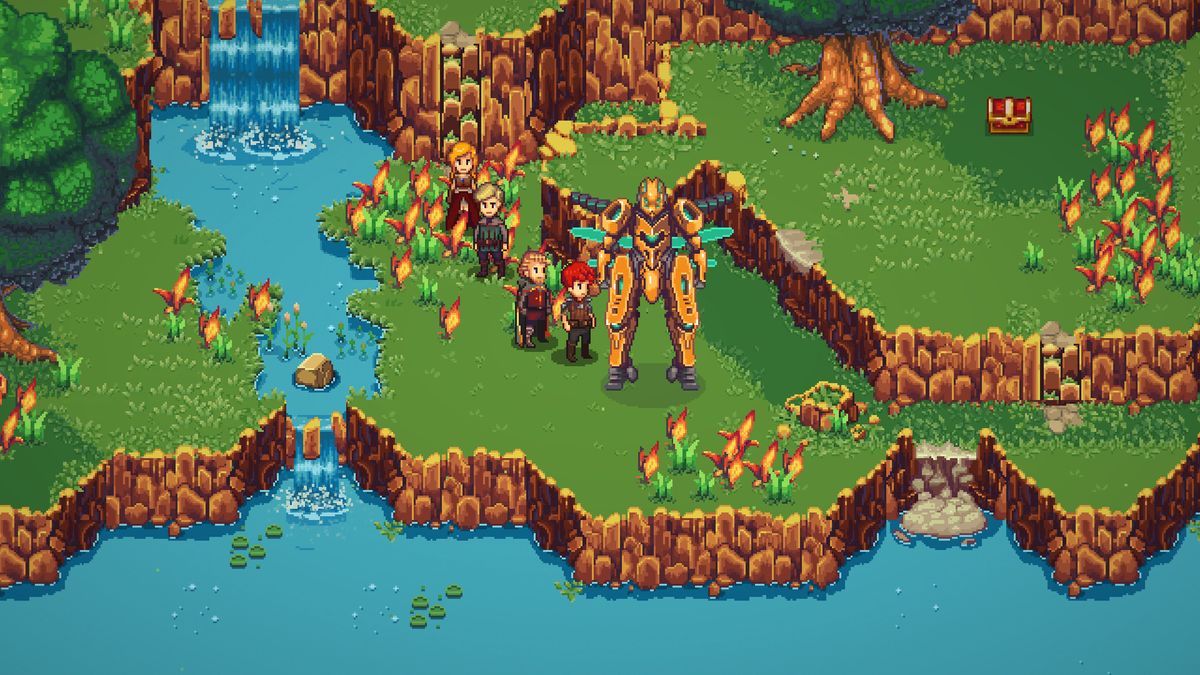

A spinoff of the Dragon Quest series starring Erik and Mia from its 11th entry, which as its name implies, is focused heavily around hunting treasures in a large open world. But does Treasures strike gold, or should it just be left buried?

Dragon Quest, as long running and successful a franchise as it is, is certainly no stranger to spinoff games, running the spectrum from Warriors style beat-em-ups to roguelikes to action platformers centered on the series' signature slimes to a monster collecting spinoff inspired by Pokemon; a bit ironic considering Dragon Quest had recruitable monsters as a mechanic several years before Pokemon was even a thing.
Treasures is another such entry, taking the familiar world of Dragon Quest XI (and starring two of its protagonists) but changing up the gameplay to be an open-world experience focused around completing objectives and hunting for hidden artifacts across a span of several floating islands. To this end, your two main characters acquire a pair of magic daggers that allow them to procure said treasures, enlist monsters to help them pinpoint exact locations and travel more efficiently, and gradually upgrade their home base by finding loot and recruiting new characters to staff it.
A key component of any open world game, at least in my view, is making it fun to get around; after all, if you're going to be spending a ton of time running around the map, the developers had better put some work into making that aspect enjoyable, otherwise it's just 20+ minutes of empty filler in between each mission. Treasures thankfully does just that - your characters will automatically hop over small obstacles like fences and rocks, and pretty much anything that looks scalable with platforming is. Recruited monsters aid greatly with this too, with some monsters being ridable to make running around faster (Knights), able to propel you into the air to scale cliffs (Slimes) or even go gliding over significant stretches a la Breath of the Wild (Drackys and other flying monsters). Others still allow you to simply submerge into the ground, becoming temporarily undetectable to slip past potential dangers or avoid combat.
Combat in the game is pretty simplistic overall - Erik and Mia use their daggers and a slingshot to attack, with the latter having a large variety of pellets to utilize various effects - doing physical and elemental damage, inflicting status effects, healing allies, or even making monsters you shoot with them more likely to be "scouted" after their defeat, and they can hold X to heal using their stock of MP or tap it while moving to dodge. Your monster allies largely move and act on their own in battles, though you can give general commands to go on an all-out offensive or battle more defensively. Serviceable, ultimately nothing spectacular; but in a game where the majority of the focus (and experience) is in finishing objectives and treasure hunting, it's excusable. In fact, the main reason you bother with combat is less for experience and more to gather dropped items or having a chance to "scout" them and make them into a recruitable team member back at your base for a fee (typically a handful of items and/or some gold). Monsters will also randomly drop Medals, which you can equip on your characters to boost their stats, earning more slots for them as your treasure rank increases.
Treasure hunting itself is pretty cleverly handled. Holding L and pressing B activates your character's treasure radar, which will point you in the direction of where its' buried. When you get in close proximity you can pinpoint its location using your monsters' vision, showing where it's at from different angles so you can identify it with landmarks (with cute touches like looking through the slats on the Knight monster's helmet, or having a Ham Shamwich's view blocked by their hat and their nose). From there, you dig it up and it gets added to your reserves, with one of your monsters carrying it until you're able to return to base and store it in the vault. Sometimes monsters will drop treasures after taking a heavy blow, and they'll vanish unless you collect them again before too long passes (several minutes, so it's a pretty generous countdown). You'll also (seemingly randomly) happen across already exposed dig spots with minor treasures called "Bric-a-Bracs" that reward less XP and gold for your vault, but finding enough of them does add up over time.
There's a bit more to it than that, though. Party composition, time of day and a few other factors determine each island's "golden ratio", the chance to find treasures there, so you can change up your party and try later if the prospects in an area are pretty bad. On the other hand, a ratio of 100% is pretty ridiculous - you can barely go 30 yards without finding another bric-a-brac. Which makes it kind of a shame that you can only carry 6-10 treasures at a time depending on your party composition.
As you complete missions and upgrade your base, you'll also add several new amenities. These include being able to cook meals that temporarily boost your allies' stats, craft any of the many pellet types available from collected items, or even send out teams of up to three monsters on expeditions - basically they go out and gather items for you on trips that last 30 minutes or more, and they may even bring back some treasures under the right conditions. Once a certain point in the story is reached, rival treasure hunters will become a more constant gameplay element, attempting to ambush you in the field and steal your treasures or raid your base - you can do the same back to them, however, so it's a fun dynamic.
Dragon Quest Treasures is a fun little romp - an open world lootfest adventure with some creative mechanics and the endless charm that the series has had as its trademark for three decades. You have to be a Dragon Quest fan to get the most out of it (and appreciate the enormous encyclopedia of references to be found in the goodies you uncover), but for series enthusiasts, it's a quite fun time. Oh, and mute the voices - I got so annoyed by my monsters constantly repeating the same three phrases over and over again every few seconds that I had little choice to continue playing.


Developer: TOSE
Publisher: Square Enix
Platform: Switch
Released: 2022
Recommended Version: N/A

Square's Front Mission has been a pretty popular franchise in Japan since the days of the Super Famicom, but never attained anywhere near the same level of success in North America; it got releases on PS1, PS2 and DS, though sales ranged from just passable to abysmal (with the DS remake of 1 only selling a reported 60,000 copies worldwide). I was surprised they'd make another attempt at localizing it after that, but Front Mission 1st Remake was released as a digital-only Switch exclusive. It's a remake of the PS1 version of the original game, which includes a bonus campaign viewed from the opposite side of the war. The core gameplay stays basically the same regardless of your story path, though - you command a squad of customizable mechs in turn-based tactical combat across various maps and terrain types. Your mech's limbs take damage individually from the body, though you're only rendered inoperable if the body is destroyed - losing arms disables weapons, while having your legs disabled will stop you from moving until they're repaired. There doesn't seem to be any way to target specific body parts though, so having limbs disabled or just straight crushing an opponent (or getitng crushed) comes down to luck of the roll. Mecha fans may also be disappointed by the fact that there's not a particularly realistic damage model - "the only hit point that matters is the last one" so to speak. It's got a pretty decent story and plenty of customization options for your mechs, but the overall gameplay is pretty ho-hum; nothing inherently wrong with it, but not much stands out either. A game worth a try for RPG historians, or just those who never got a chance to check out the series before, but it doesn't have too much to offer to serious mech combat fans other than a different hemisphere's perspective on the genre in the timeframe of the '90s (compare this to say, Mechwarrior 2, which came out the same year as the original version for MS-DOS).

Developer: G-Graft, Studio Clips, Tom Create, Square Enix, TOSE, Forever Entertainment
Publisher: Square Enix, Forever Entertainment
Platform: Super Famicom, Wonderswan Color, Playstation, Nintendo DS, Switch
Released: 1995, 2002, 2003, 2007, 2022
Based on the animated web series RWBY, Arrowfell looks pretty promising to any fan of the show, with some original music and animated scenes created just for the game, a story that's canonically part of the show's running plot, and a lot of characters both familiar and new to interact with. Fittingly, you control all four characters of the titular team and swap between them on the fly, use their special abilities from the show and travel around Atlas and complete missions in maps with a Metroidvania bent. As you finish missions you'll get skill points to unlock your base stats, and the odd upgrade to each character's Semblance, letting you reach areas you couldn't previously (for example, making Ruby's dash travel further). Health is handled strangely, with a generic Energy bar that serves both to fuel your ranged attacks and absorb damage, with a secondary health meter in the form of hearts (which are only depleted when your energy is low/empty). Each individual area you visit is very short, though the lack of a minimap throughout is a strange oversight, and combat is fairly one-note, with only the odd boss battle there to break up rooms of the same handful of enemies and tedious ambushes against more of the same - one would expect a bit more from a show known for its flashy action scenes, for sure. A polished and playable, but very short and average experience overall; only the most die-hard fans of RWBY and WayForward need apply.

Developer: WayForward/Arc System Works
Publisher: Rooster Teeth Games
Platform: Switch, Playstation 4, Playstation 5, XBox One, XBox Series, PC
Released: 2022
Metal Max is a franchise built around open-ended exploration and vehicles you can find and customize to aid you in battle, all set in a post-apocalyptic setting; sort of like Wasteland or Fallout but with JRPG-styled turn based combat. Metal Max Xeno is only the second game in this franchise to be localized, and it does its best to try and fit in with a more modern school of design. The minimal approach to story scenes and characterizations and the overall desolate world gives it a slight Fallout 3 vibe. Its gameplay takes a few cues from games like New Vegas as well, with a lot of side-quests to undertake and incidental objectives called "miniquests" that give you bonus experience for doing even mundane things - collecting a certain number of an item, customizing your tank for the first time, finding new records for the jukebox back at your base, and so forth. Switching between combat and exploration is pretty seamless - instead of having a separate combat screen, enemies draw a (literal) line of sight to you, and if you fail to move out of range before the gauge fills completely, you move a turn-based engagement; however, you can still move about freely in the time between your turns, allowing you to position yourself behind cover to avoid attacks or flee combat before you take too much damage, and once you defeat a foe, you move straight back into exploring. Weapons also have ranges now, covering a blast radii or cone-shaped areas of effect, allowing you to hit multiple enemies at at a time with well placed shots. Per previous games, there is a pretty heavy focus on collecting parts to build new weapons, engines and armor plating for your tank, and extras can be sold for a good bit of cash; far more than you get from battle. It still hits some common pratfalls for the series, though - as you travel about you'll frequently encounter boss-tier monsters whom you can defeat for large bounties, but they're often far, far beyond what you can handle at first, necessitating that you avoid them and come back later (with no indication of how much later - you don't ever get to see how much HP an enemy has). The overall bleak tone is also a detriment to a series which, up to this point, was known for its oddball humor; now the whole world is one big desert with almost nobody in it, making the whole thing feel pretty drab and lifeless, and you don't get oddball enemies like a giant subterranean VW beetle anymore - just a lot of repetitious tanks and mechs. Metal Max Xeno tries to be something more akin to the modern Fallouts, but in doing so loses much of its own identity. More damningly, it's missing that all-important satisfying gameplay flow, sense of freedom and subtle storytelling that make good open world RPGs so compelling.

Developer: Kadokawa Games, Cattle Call, 24Frame
Publisher: Kadokawa Games, NIS America
Platform: Playstation 4, Switch, PC
Released: 2022
Indie turn-based strategy RPGs that draws cues from other genre juggernauts are relatively common in the modern era of gaming, and Symphony of War is the genre debut of one Dancing Dragon Games. But does it deserve to hang with the games it's inspired by, or is this one Saga you can safely avoid?

Dancing Dragon Games was a studio I hadn't heard of before this game, but they've been around for a fair while, producing a fair number of RPG Maker content packs as well as several games made in the engine, most of which have gotten quite strong reviews on Steam. Symphony of War appears to use the same engine (or at the least, a very similar graphical style in its spritework and backgrounds), though its gameplay is drastically changed up, melding together elements of several established strategy RPGs together in surprisingly successful fashion.
Similar to games like Fire Emblem and Dark Wizard, you deploy and command units, slowly advancing across a map and engaging enemies in battle, capturing resources as you go (used to upgrade classes between battles) and attempting to win the battle by overtaking the enemy's fortress. Certain terrain types can grant advantages - archers that position themselves atop fortress walls or hills will get a bonus to range, while all will be harder to hit from afar when fighting in the woods or in a base. Roads grant a movement bonus, while rough terrain will be much slower to traverse for all but lightly-armored ones.
Unlike those games, however, you're not moving individual characters, but Squads consisting of up to nine units each. Similar to Ogre Battle, you position them on a 3x3 grid (or on lines between each grid space), with characters in front protecting units behind them during a clash, and each unit's actions during a clash changing depending on where they're positioned - melee fighters are only useful in the front row, obviously, while a mage class can hit all units for reduced damage from the middle column or full damage to an entire row from the back. You'll obviously also have to change up your tactics for some squads - Assassins and Rogues are relatively fragile, but can do Stealth attacks (hitting the back row instead of the front) if they attack on your turn, while Gunners do heavy, armor-piercing damage but cannot counterattack at all and die relatively quickly to melee attacks. The number of units you can have in a Squad at a time is determined by the leader's Leadership (LDR) stat, which goes up as you gain levels. Units typically cost 10 Capacity each, though some traits can increase or decrease capacity cost. A common one is "Mercenary", seen on most higher-end purchasable characters -- expensive, powerful, but they have a +2 to their Capacity cost if they're not a Squad leader. Equipping items grants bonuses to all characters in the Squad, but will also result in a penalty to Capacity that increases depending on their power.


An experimental Square Super Famicom RPG that was passed up for localization for nearly thirty years, but acquired a dedicated fanbase through the avenue of fan translations. It's also one that proved ahead of its time in several ways and is credited with laying the groundwork for later hit titles like Chrono Trigger. But is this odd outing one that's still worth trying out today, or was it left in Japan so long for good reason?


An open-ended RPG from a relatively unknown independent company, Wartales seemingly draws inspiration from games like Darklands, having no pre-scripted narrative and de-emphasizing individual characters to focus on group tactics and survival in a war-torn medieval world. But does it prove to be a worthy open ended role-playing experience, or is this one Wartale best not told?


Developer: Shiro Games
Publisher: Shiro Unlimited
Platform: PC
Released: 2021 (Early access)
Recommended Version: N/A
A medieval fantasy tactical RPG under the Square Enix banner, it certainly got people buzzing before launch, with many hoping it would be a return to the style of earlier Square hits like Final Fantasy Tactics. But does Triangle Strategy slake the long-standing thirst, or does heavy competition from other serious-minded tactical RPGs just render this one irrelevant?
Artdink is a company I haven't had much opportunity to talk about on either of my sites; they're not a particularly prominent name in the west, haven't made many high-profile games in the RPG genre, and in fact I mostly remember them for odd, erm, software titles that debatably don't even qualify as games. From the ocean-exploring experience Aquanaut's Holiday to the turn based robot-designer Carnage Heart (wherein you design and program a combat robot to overcome progressively tougher challenges, but never get to directly control it) to the railway building/logistics simulation series A-Train, they certainly live up to their name, having players approach their games more as complex projects or experiences rather than a source of visceral thrills. Netchubiyori is a similarly obscure name, mostly working on forgettable licensed titles and the odd, not-especially-well-received theme park RPG called "Heroland", with very few of their games ever leaving Japan.
My point in all this is that I certainly didn't see either of these companies, let alone both, collaborating with Square Enix to create a turn-based tactical RPG. However, the actual minds behind it were something of a secondary consideration - being associated with Square Enix, Triangle Strategy was also hyped up as the long-awaited proper followup to Final Fantasy Tactics, seeming to show a more serious-minded brand of storytelling and in-depth tactical combat and character management reminiscent of that game's in early trailers.
Well, if you go in expecting exactly that you're probably going to be disappointed, as Triangle Strategy's mechanics are not very similar to FFT's. In fact, its gameplay more closely resembles something like Shining Force, emphasizing individual, unique units and skillsets over a largely-homogenized class/skill system, with subsequent upgrades mostly being stronger versions of their base class. So if you want character building with a more mix-and-match flair, well, you're still probably better off with good ol' FFT, or modern games like Horizon's Gate or Divinity Original Sin II.
That said, the game does bring some new mechanics to the table to differentiate it from its closest cousins. Some that become evident right away are tied to even your normal attacks - hitting an enemy from above (whether with melee or ranged weapons) deals extra damage, while from behind will deal a critical hit; and yes, these two effects do stack. They can further stack with another mechanic - if you strike an enemy with an ally on the opposite side of them, that ally will automatically follow up with a second hit, doing a bit more damage and giving both of your characters experience points rather than just one. Taking careful measure of your movements, being careful not to get surrounded, and using the terrain to your advantage whenever possible can and will turn the tide of battle. In addition, these actions, as well as some others (like hitting 3 or more enemies with a single spell) will earn you "Kudos" - a special currency that can be spent at a shop to gain Quietuses (special buffs that can be used once per battle) or notes detailing other advanced strategies and plot threads. Definitely worth taking advantage of as much as possible to gain an edge in future battles, as well as the current one.
Spells and skills offer some relatively unique advantages too. There is no traditional "magic point" system in Triangle Strategy, but special skills are present and, as mentioned above, unique to each character. These come in the form of passive bonuses or actively-used spells/skills, with the latter being tied to TP; each character begins with three of these, gaining more to their maximum as they grow, and they regain 1 spent point each turn, so while they can use a 1-TP ability pretty much anytime, they can't spam more powerful abilities nearly as easily. Techniques are quite varied even early on, though - sword slashes that delay an enemy's turn, moving through and striking multiple enemies in a line, arrows that blind, buffs that raise stats, being able to build ladders to reach rooftops, setting traps, and so forth. Spells act as your area-of-effect abilities, able to strike multiple enemies at a time, as well as occasionally leaving lingering effects; for example, ice spells will leave behind frozen terrain that slows movement. In what's probably a nod to games like Divinity Original Sin II, these can also be further affected by later spells - ice can be melted into water by a fire spell, which can then conduct electricity cast from a lightning spell, potentially dealing greater damage to everyone standing in water at the time. While it's of course not as big a central focus to the game's strategy as it was in DOS, it is nice to see Japanese companies stepping up their game in response to western competition. Quietus is another thing that can bail you out of a jam; basically, you spend Quietus Points to do things like stop an enemy's turn once or move a unit up to 8 squares away; you only begin with one of these, and more are occasionally made available in the Sundry shop but are quite expensive to purchase. Still, they can help turn things around if you're in a bad spot.
During and after battle, one also lays claims to "spoils" in the form of money and consumable items, as well as basic resources like Iron, Stone, Timber and Fiber, which led me to believe the game was going to have an in-depth crafting system. That is somewhat true, but not to the degree I originally believed - instead, these are used as an avenue to upgrade your characters under the pretense of forging their weapons. Basically, each character's 'weapon' has three tiers of power, each with several associated upgrades, and you spend money and resources to unlock bonuses like extra attack power, HP, defense, et cetera, with later upgrades on that tier costing progressively more as you unlock more things. Fittingly, upgrading to a new tier of weapon usually requires some rare materials itself, and you cannot take some upgrades on later tiers without taking prerequisites (can't take the Level 2 attack upgrade without buying the Level 1 first, for example). Some upgrades are also exclusive choices - if you pick one, you can't get the other, so you do have at least some opportunity to tweak characters to your liking.
Between battles, there are occasional free roaming segments where you can venture around towns, buy equipment, search for secret items and interact with NPCs - some just give nice bits of lore or comments on story events, but others may give clues that can benefit you later, even unlocking dialog choices in future conversations that you wouldn't get otherwise. Some actions you take, as well as key choices in dialog scenes will also bolster one of your three "convictions" - Utility, Morality or Liberty - which will ultimately affect what characters you recruit or aren't able to as the story progresses. However, these are all hidden stats and it's not always clear which option will boost which conviction - something I actually like, as it effectively removes all the tension when games do that and feels much more organic when the consequences of your choices show themselves later on.
Another clever turn is that while Triangle Strategy features a branching storyline, the choice that will lead you down a given path is not a unilateral one - your currently-recruited allies will all take a vote on the situation, with whichever option receives the majority cementing the decision. However, you can attempt to influence characters during these segments through well-chosen dialog options; some can be swayed rather easily, others may require you to have seen a particular piece of dialog/plot thread beforehand, and still others you may not be able to change at all. Definitely a creative idea, and one way more interesting than the flaccid "A or B" dialog choices present in so many western RPGs. As ever, though, every road you take has consequences, causing you to miss out on opportunities the other path may have provided, so it's never an easy choice to make.
Triangle Strategy is the second game released to feature Square Enix's heavily-touted "HD-2D" graphics, and though it does look better than their first go-around with it (Octopath Traveler), I still can't say I'm a fan of the style. Basically, it's a very awkward mix of low-res 2D and high-res 3D graphic styles, utilizing a 3D engine with modern graphical effects like bloom, filtering, high-quality textures, distance blurring and anti-aliasing, and even surprisingly realistic water effects with light refraction; however, some elements - leaves, grass, roof tiles, nets, et cetera - are just masses of large squares and stick out like a sore thumb next to other modeled objects. Other elements are similarly inconsistent - some background elements are very clearly 3D models with crisp hi-res textures, others have textures consisting of large blocks made to simulate pixels (not even the same size as the blocky grass, leaves, etc), while others still are highly-detailed sprites with no visible seams at all. Characters are meant to simulate old blocky 16-bit sprites, showing nice animation and detail in that regard, but whereas the environments (and 2D world map) show much in the way of saturated color to make them pop, characters often appear too dark or overly bright and washed-out, making their details indistinct. It only gets more jarring in battle, where they're slinging around spell effects rendered in high-res CGI with particles, flame trails and smooth animation. Even the HUD falls prey to inconsistency, with crisp linework on windows and fonts and some wonderfully detailed pencil-drawn character portraits that wouldn't be possible in an old 2D game, but would fit in perfectly in an HD one. I get what they're going for - an attempt to fuse multiple different eras and types of graphics together - but rather than having any kind of cohesive stylized feel, all of its disparate elements clash together and it just ends up looking tacky and distracting. Games have successfully fused 2D sprites and 3D effects/environments before - witness Skullgirls, Indivisible, Dust: An Elysian Tail, Suikoden II, Xenogears, Grandia or even the upcoming Eiyuden Chronicle - but "HD-2D" just doesn't get the mix right. Maybe the style will be further refined by the time the Live-a-Live or Dragon Quest III remakes roll around, but for now I'm still not impressed by it. Do spirites atop 3D renders or even voxels if you want a blend of old and new, but don't do this weird halfassed mishmash of a half-dozen different resolutions and styles.
Other aspects of the presentation fare considerably better. Voiceover in the game is surprisingly good for the most part, and the dialog is consistently well written - both enormously better efforts than their counterparts in Octopath, and a good thing as the game loves to throw 20+ minute marathons of cutscenes at you. The soundtrack is quite pleasant, with some beautiful sounding orchestral tracks carrying the mood of any given situation, though I found it a touch loud on the default setting and it would occasionally drown out the dialog; turning it down to about 45% fixed that. One also cannot close tutorial messages without scrolling all the way through them nor skip mid-battle dialog scenes, though the latter can at least be fast-forwarded through with the R button.
All told, Triangle Strategy is a pleasant surprise, especially because I was none too fond of Square Enix's other "faux-retro" RPGs like Bravely Default and Octopath Traveler. This one succeeds where those failed, however, delivering a solid tactical RPG wirh a well-told branching storyline in a fleshed out fantasy world, strongly written dialog, good voiceover and gameplay which, in a lot of non-trivial ways, is more involved and entertaining than Fire Emblem. It's still not the Final Fantasy Tactics successor everyone's been screaming for since the nineties, and I don't much care for the dopey title or the "HD-2D" concept, but those are minor flaws I can easily overlook. If everything I've described about the game sounds good to you, pick it up. And if you're on the fence, try out the demo; you get the first three chapters of the game for free (roughly 4-5 hours long, a bit more if you decide to explore both branching paths), and it even carries over your save file to the retail version so you don't have to start from scratch.


The original Ogre Battle was a novel combination of real-time strategy and RPG elements with plenty of replay value owing to its random elements and multiple endings. Tactics Ogre, first released a few years after, continued that philosophy but changed the combat up into a turn-based tactical system. But does it prove to be a worthy sequel to a cult classic, or does it simply pale in comparison?


Tactics Ogre, like all of Matsuno's works, is one that shows a love for storytelling and the mechanical elements in every facet - the narrative is a dark and complex one, the gameplay pulls no punches with its difficulty, and it's a very deep, complex experience that will require a lot of experimentation and fine-tuning to find your niche in. Still, it's an ordeal you're glad to undertake because it's all so well-done; his passion shines through and gets you invested in the world he's weaved, ensuring that you want to puzzle out a road to success and see your way to all of the possible story paths and endings it has to offer. Definitely not an ideal choice for beginners to the genre, but those who want to see an intricate tactical experience and some finely-detailed lore and worldbuilding will find a lot to enjoy in Tactics Ogre.


Developer: Quest, Square Enix
Publisher: Quest, Riverhillsoft, Atlus, Square Enix
Platform: Super Famicom, Sega Saturn, Playstation 1, Playstation Portable, Switch, Playstation 4, Playstation 5, PC
Released: 1995, 1996, 1998, 2010, 2022
Recommended Version: The 2022 rerelease ("Reborn") is a marked improvement over the previous versions, adding in voiceover, revamping the UI and overhauling the leveling system so that individual characters - not classes - have levels, which greatly cuts down on grinding. Your party's maximum level is capped but will gradually increase as you complete story missions (plus you can still train up weapon/magic skills in training battles), and you also earn and equip skills more organically in this version, not having to grind a ton of TP to unlock everything. It still has some weird balance issues and slow pacing, though.