RPGreats now has a Discord! Come on in to talk about game music, games in general, submit reviews or just hang out!
Showing posts with label πŸ‘‘. Show all posts

Saturday, August 9, 2025

Deltarune (Chapters 3 and 4)

Four years later and we finally get more Deltarune.  Was the wait worth it?  I think so.  The passage of time (nearly seven years since the first chapter dropped) has done nothing to deter Deltarune's unique charm. Toby Fox's world and characters are as supremely creative and delightfully unhinged as ever, with one chapter taking part as a demented TV game show with a surprisingly tragic bent, and the second continuing to build up the unique world and characters present.  The character chemistry is brilliant, the dialog is consistently hilarious and the emotional beats all land; simply put, the writing is phenomenal on every front.  The games also contain some of the most beautiful spritework I've ever seen, with incredibly expressive characters, incredible use of lighting and shockingly fluid animation.  Combat retains the same gimmick but remains as fresh as ever, with every battle (even with mundane enemies) finding new ways to surprise me and implement new ideas, never becoming monotonous.  The fact that it does all this in chapters that only last about 4-5 hours apiece is commendable too; they pack more personality and charm into those few hours than every Ubisoft open world content-for-contents-sake turd combined.  Really, the only negative aspect is I know I'm going to have to wait many long months to see more, but the memories these chapters have made are more than enough to tide me over.


Developer: Toby Fox
Publisher: Toby Fox, 8-4
Released: 2025
Platform: PC, macOS Switch, Switch 2, PlayStation 5, PlayStation 4

Monday, March 4, 2024

Star Control II: the Ur-Quan Masters

A followup to the moderately successful 2D space strategy sim, Star Control 2 takes things in a much different direction.  Drawing heavy inspiration from Starflight, there is now a much greater focus on storytelling, resource gathering and following a trail of clues to defeat a powerful enemy.  But does this blend of simplistic, arcadey combat and complex storytelling work out for the best, or does it get lost among the other stars of early '90s gaming?

The original Star Control was a modestly successful game in its time; with gameplay encompassing a blend of strategic board control and arcade action, it worked both as a single player experience and as a two player head-to-head combat game, earning a following both on computers and from a Sega Genesis port produced by Ballistic.  There was an overarching story about a war between two factions - the Alliance of Free Stars and the oppressive Ur-Quan Empire - though it was mostly told in text blurbs at the start of each campaign and had little bearing on the gameplay save for determining what types of ships each side utilized.  Combat was inspired by one of the very first video games ever made - 1962's Spacewar! - and featured one-on-one top-down duels between two ships, with varying specs and weapons depending on the type of ship.

Star Control 2 retains the top-down combat in both single and multiplayer mode (called "Super Melee!"), but the rest of the game is completely reworked into a narrative experience.  After the Alliance canonically loses the war in the first game, the people of Earth are permanently imprisoned by a "Slave Shield" that encircles the entire planet.  The player, captain of a skeletal ship from a long-lost alien race called the Precursors, was stranded during the final leg of the war and thus was not imprisoned with the rest of humanity.  Aided by the crew of a space station orbiting Earth, they begin a journey to seek out other alien races, build a resistance force to the Ur-Quan and eventually reclaim their freedom.

Building on that, you start off with just your skeletal Precursor ship (and should it be destroyed at any time, it's an immediate Game Over) and a single Earthling Cruiser.  However, you have the option to build more Cruisers at the space station, and as you interact with and befriend other alien races, more options become available.  From the cowardly Spathi (whose Eluders are weak, but relatively durable and extremely fast) to the Pkunk Fury (with a short-ranged minigun and random ability to resurrect from death) to Arilou Skiffs (which can teleport and move independently of inertia), there are numerous options.  Enemy ships are equally varied, of course, and picking the correct ship type to counter their strengths is invariably a good idea.  Each ship has up to two weapons and runs off a slowly-recharging energy supply to ensure that you pick your shots carefully rather than just firing wildly.  If you're severely outmatched you can also press Escape to flee from battle, though you are left vulnerable for several seconds while the escape drive activates, so it's best saved as a last resort.

As in earlier games like Starflight and Elite, you won't get too far on a basic ship and little backup, so you'll need to purchase a boatload of upgrades to give yourself a fighting chance.  Crewmen also effectively serve as your ships' hit points and (of course) do not regenerate on their own, so you'll have to purchase quite a few replacements over the course of the game.  This is primarily accomplished through exploration - visiting other star systems and planets in search of raw materials you can trade in for Resource Units (abbreviated as RUs), which in turn can be spent to buy upgrade modules.  Resources are color-coded by value, ranging from common (cyan) materials worth only 1 RU apiece all the way up to radioactives (orange) being worth 8.  Scarcer still are "Exotics", colored purple, which are worth a whopping 25 apiece, but are very hard to come by outside of rare Ruby, Sapphire and Emerald planets.  Planetary surfaces come with their own array of hazards - violent storms, earthquakes and waves of fire on particularly hot planets, as well as wildlife that can damage you on contact and potentially destroy your landers.  Stunning wildlife with your landers' beams allows you to collect data icons, which indirectly serve as a secondary resource - by trading it to another race called the Melnorme, you earn Credits to purchase useful clues for your journey and an array of useful upgrade modules for your ship and your landers.  From making your landers more resistant to planetary hazards to more efficient fuel tanks to stronger weapons, they all prove quite useful, though the order you get them in is fixed and they cost quite a few Credits apiece.  The Melnorme also pay highly for the location of "Rainbow Worlds", of which there are only a scant few in the entire game, so those are well worth seeking out once you have the means.  Finally, they're a much cheaper source of fuel than your starbase (1 Credit per unit as opposed to 20 RUs), so they're invaluable for refueling your ship, especially when you're far from Sol.

Of course, the meat of the game is finding and interacting with other alien races; not just to add more combat ships to your repertoire, but they'll often give vital clues in the form of planets with valuable deposits or point you in the direction of other helpful races.  Of course, help rarely comes for free - you'll often have to complete some quest or another to convince other races to aid you in the fight, and at times you'll even have to get creative - coercion is a perfectly valid tactic.  The dialog throughout all of these encounters is incredibly inspired and often downright hilarious, succeeding in bringing the universe of Star Control to life and getting you raveled in its lore while rarely regressing into stretches of empty exposition.  Even without the 3DO version's voice acting, they still manage to add some personality to each individual race by having them all speak in different fonts.  Solid proof that a well-written narrative does leagues more to keep you enthralled in a game than any amount of empty filler missions could.

Despite being over thirty years old at this point, Star Control 2 remains a highly regarded game among fans of both science fiction and PC gaming.   There's little doubt to why after you play it for only a short while - with its relatively simple interface and combat but engrossing story, sharply written dialog, a massive universe to explore and countless secrets to uncover and mysteries to solve, a it's downright addictive experience.  It proved to be a big inspiration among industry names too, with developers on high profile titles like Fallout, Mass Effect and Stellaris citing it as a major influence.  Since it's also been made open-source and fan-ported to numerous platforms (with the title trimmed to just "The Ur-Quan Masters" owing to copyright concerns) and can be freely downloaded and played natively in Windows with the benefits of controller support and enhanced music from the 3DO port, there's little reason not to at least give it a chance.


Developer: Toys for Bob
Publisher: Accolade
Released: 1992
Platforms: MS-DOS, 3DO, PC
Recommended Version: As mentioned above the 3DO version of the game had its source code released in 2002, allowing for freely-available enhanced ports to numerous platforms under variants of the title "the Ur-Quan Masters".  These include HD graphics, native Xinput support and numerous gameplay extensions, as well as implementing the voice acting and enhanced music from the 3DO version.  Check out the vanilla version at this Sourceforge site, or the Ultronomicon Wiki for other versions of the Ur-Quan masters (including an HD remaster).

Sunday, September 3, 2023

Sea of Stars

A game which makes no secret of its inspirations by a company who already has one acclaimed retro-style game under their belt, Sea of Stars has been heavily compared to mid-90s RPGs like Chrono Trigger and Super Mario RPG.  But does it prove to be a legendary title like those games, or is this just another soon-to-be-forgotten game that mimics the visuals of the era and little else?


As tech in the world of games has gotten more and more focused on graphics and making huge, sprawling and beautiful but mostly empty worlds with only the barest basics of gameplay, there has been an increasing demand for games to go back to earlier times with "worse" graphics, shorter lengths, but retaining the polished design, quality writing and creative spark that made many older gamers fans of the medium in the first place.  

Naturally, many developers (mostly small indie studios) have answered the call, making their own "NES styled" or "SNES styled" or "classic styled" games to get a piece of that demand; sometimes quite successfully.  Personally I'm especially critical of games that mimic an 8 or 16 bit style of design, especially RPGs; the overwhelming majority of the time, studios just use that style as an easy in-road to peoples wallets while serving up an otherwise mediocre and uninteresting experience, their developers having no concern for the fact that retro games are almost universally remembered because they were cutting edge for their time, not because they looked and sounded a certain way but had no real substance beneath the hood.  Hell, when games from the '80s like Solomon's Key, Castlevania II, Montezuma's Revenge and Goonies II have leagues more depth than games of similar aesthetic made in the 2010's, there's some serious values disparity going on there.  But hey, if it looks the part and it sells enough copies to break even based just on that, who cares, right?

Obviously there are outliers to any rule, and I think Sea of Stars is an excellent example of one.  When Sabotage Studio makes a game patterned after classic titles, it's because they love them and want to share their magic with a younger generation.  Not just because they want a bigger install base, but because they want a new generation to share in the best of retro gaming's timeless charm, immaculate design and sense of fun. Case in point, while Sea of Stars has an overall similar aesthetic to Chrono Trigger and Secret of Mana, some earnest dialog and self-aware humor reminiscent of games like Earthbound, and turn-based minigame-driven combat not dissimilar to Mario RPG, it blends in enough of its own elements to not feel overly derivative of any of them.

The exploration element in the game is also distinctly fresh, putting heavy focus on traversing the environment via handholds, narrow ledges and hopping over gaps and up and down small ledges, so dungeons have quite a bit more going on than just being the typical RPG "empty corridor full of monsters".  They also have a heavy focus on Wild Arms-styled puzzles, as well as ones involving your protagonists' abilities to unlock hidden secrets by manipulating the time of day.  These can get a bit drawn-out at times, but I never became overly annoyed by them owing to the brisk pacing and lack of random encounters; enemies appear in pre-determined places on each map and they do not respawn unless you completely leave the area and return.

Combat similarly draws elements from its inspirations - Chrono Trigger's three-party system with enemy placement and special move effectiveness varying from battle to battle - but also works in timing minigames for attacks, blocks and special moves similar to Mario RPG.  It's definitely not a 1:1 copycat of either, though, mixing in several elements of its own.  For one, characters can act in any order on your turn, but only once per round, which becomes important when enemies start charging special moves.  While they do this, 2-4 icons (termed "locks") will be displayed over them, and hitting them with attack types depicted on those icons will break locks, weakening the incoming attack or, if all of them are broken before their turn occurs, will stop it completely.

The game also encourages you to use skills and special abilities liberally, rather than conserving them for larger battles.  Your characters have relatively small MP pools (and they only grow a small amount with each level), with your skills able to cost easily half or more of your reserves.  Your normal attacks restore MP when they land, though, so you can use them fairly often without having to rely too heavily on restorative items.  Landing hits and breaking locks also fills up your Combo meter, which fuels more powerful moves involving two or three characters - not unlike the combination techniques in Chrono Trigger.  Stored combo meter also does not carry over between battles, so it's worth using them whenever you get a chance to.  Finally, landing blows on enemies with normal attacks causes them to drop orbs; holding down Right Trigger will cause your currently controlled character to gather them up and unleash a stronger, elemental-charged attack; this can be done up to three times in a single turn for an especially powerful blow.  Having a character be KOed in battle also isn't as big a deal as in some games - they will recover 50% HP on their own after a set number of turns (starting at two and increasing each time they're downed), though if all three characters are down at once the game is over.  If nothing else, a nice alternative to many of the Final Fantasy games where reviving allies mid-battle is an annoying ordeal of using a Phoenix Down on them, then watching as they get hit and KOed again right away.

Sea of Stars puts much emphasis on its cooking system, which is your primary means of healing during battle.  You gather various ingredients throughout the dungeon areas, as well as from fishing holes on the map (complete with a Breath of Fire-esque minigame).  Whenever you reach a campfire you can cook up food items to restore HP, MP or both to one person or your whole team, and it's best to weigh your options carefully as you can only carry up to ten meals at a time.

On a writing front, Sea of Stars is refreshingly modest - a wonderful change of pace from countless other modern RPGs that want so badly to present their writers as highly-cultured visionaries with messages too important to ignore, but who are just too full of themselves to pull it off.  Its world and storytelling is pretty formulaic RPG fare, but it makes it work by giving every location a distinct feel and adding some new elements to the traversal mechanics, so even getting around them rarely feels monotonous.  The characters are genuinely human - relatable, fallible and with strong chemistry between them, so it feels all the more impactful when the twists come around and lives get shaken up.  The sense of humor is admittedly cheesy (particularly the pirates who constantly rag on clichΓ©d plot points from other games), but it never becomes overly irritating.  The world lore is conveyed in a clever way too - by finding various artifacts as you traverse the world, you can then have various legends read out during the game's campfire segments - several end up playing into story events later, with others just being there for fun.

In short, Sea of Stars is a game that, while clearly inspired by the classics, is anything but a cheap knockoff.  Its inspirations are apparent if you're familiar with that era of role playing games, but it brings plenty of its own twists to the overall design and gameplay and feels very fresh in its own right.  The charming characters, modest writing, brisk pacing, gorgeous 2D animation (with some modern touches like dynamic lighting) and wonderful music (with a few tracks contributed by the legendary Yasunori Mitsuda) make it not just a memorable tribute to 90s-style JRPGs, but a fine one in its own right.  It's a true rarity - a game made by people who invoke the classics because they genuinely love them and know what makes them work, not because they want to use that connection as an easy inroad to being put on a pedestal and worshipped.  It admittedly does have a few balance issues and it starts to run out of steam toward the end, with combat becoming overly easy and the best ending locked behind doing basically every little sidequest in the game (which involves tracking down numerous hidden items and completing basically every side-mission), but I nevertheless had a lot of fun with Sea of Stars.  I certainly hope it inspires other indie devs to bring a high degree of polish, innovate and set new standards in the way their old favorites did, too.


Developer: Sabotage Studio
Publisher: Sabotage Studio
Released: 2023
Platforms: PC, Playstation 4, Switch
Recommended Version: All versions seem to be identical as far as I can tell.

Friday, May 19, 2023

The Legend of Zelda: Tears of the Kingdom

The long-awaited followup to Breath of the Wild ultimately took six years to be released, blending in numerous new gameplay elements and vastly expanding the size of its world and the scale of its narrative over its already huge predecessor.  But was this heavily anticipated sequel worth the wait, or does it just bring a tear to the eyes of fans?

Despite being a cross-platform release, Breath of the Wild was the breakout title for the Switch, and really affirmed Nintendo's commitment to the platform after the very lackluster reception (and sales) of the Wii U.  The game ultimately sold over 25 million copies and was very strongly received by new fans, but had a more mixed reception among long-timers, who criticized its lack of traditional Zelda dungeons and boss battles, comparatively bland overworld and constantly-breaking weapons, among other things.  I had somewhat mixed feelings about it myself; while I commended Nintendo for a noble first attempt at something they'd never really attempted before - an open world RPG with a focus on slower-paced emergent gameplay - the lack of tangible reward for most quests (unlike a good Elder Scrolls or Fallout) and the overworld lacking a lot of the hidden side areas and secrets of earlier Zeldas ensured that while I enjoyed the experience overall, I didn't love it.  I've compared it unfavorably to Skyrim on several occasions - another game with some very prominent shortcomings and a lot of missing elements compared to its predecessors, but having a much more well-crafted world and rewarding gameplay loop than Breath of the Wild ensured it was a game I played a fair bit more.

Tears of the Kingdom was announced not long after the original game's release, and though they were tight-lipped about it for a long time, it still generated a considerable amount of fan interest.  They seemed to have taken fan criticisms into account in a big way - in addition to heavily retooling the original overworld from BotW (now with many more caves, wells and hidden areas to discover, major changes to existing locales, as well as a whole new set of temples to earn upgrades from), there's floating ruins in the sky and even a vast, dark underground world to explore that you gradually light up by activating giant roots.  Essentially, there are now three different worlds to explore, so the game is absolutely dense with content before you even get into the quests and storyline.

The core gameplay remains essentially unchanged - weapons still break after a few good whacks, and it's easy to stumble into powerful foes who can take you out in one or two hits - but the powers you're given to improvise solutions to these problems are much different (and far more versatile) than they were before.  Right away you're given the "Ultrahand", which can be used to pick up and manipulate heavy objects, and even attach them together with supernatural "glue" to create structures.  This lends itself to a heavy focus on building things; both from pre-fab parts like gliders, planks, wheels and even weapons like flamethrowers and beam cannons - but also plays heavily into problem solving, allowing you to improvise creative means of crossing over obstacles, reaching out-of-reach objects, and so forth.  Basically Zelda now has a touch of Garry's Mod to it, which as you can imagine has already led to all sorts of bizarre and amazing player creations to deal with enemies and solve puzzles (or just getting laughs on social media).  As the game progresses you'll also unlock more battery capacity, letting you power more complex creations for a longer period of time, and even unlock the ability to save your creations and recreate them instantly later (either from raw ore or available parts).

Other powers include being able to Rewind time for specific objects, leaping upwards through ceilings to reach new areas (so long as the ceiling is fairly close and the surface relatively flat), and Fusion - the ability to combine weapons, shields and objects together into new forms.  This lends an entirely new dynamic to your arsenal and the gameplay as a whole, as for story reasons most metallic weapons in the land have decayed and become near-useless in battle. But if you take, say, a rusted Claymore and fuse it with a heavy piece of wood, or a metal spiked ball, or a Lizalfo horn, or even another claymore, you not only combine their offensive properties to make a more powerful weapon, but you get something with greater reach to boot.  Shields can also be Fused in similar fashion, allowing you to weaponize them or bolster their defense, and you can plop nearly any object on the game onto the end of an arrow - from bombs that explode on impact to flame fruits that ignite things to mushrooms that bounce whatever they hit a fair distance backwards, or even Keese eyeballs to give arrows homing properties, the possibilities are vast and great fun to experiment with.  One can also freehand throw any object, so unless you're incredibly wasteful, you're never caught without at least something to defend yourself or create a means of escape with.  Weapons also have a considerably wider variety of bonus effects now too, such as more energy-efficient usage when fused with building components or added durability or elemental effects, so while there are still essentially only a small handful of weapon types (thrusting, slashing and two-handed blades), they manage to feel distinct nonetheless.

Tears of the Kingdom also addresses my major complaints with its predecessor, giving it that heavy focus on secrets that earlier Zeldas had and making the exploration element feel much more rewarding.  As mentioned, there are effectively three different maps to explore now, all of which are ridiculously dense; packed with hidden caves, alcoves, wells and miniature dungeons, and all have a surprisingly unique feel to them and give some useful rewards for your trouble.  Whether it's a new piece of armor, a few potions and food items, some leads on a new quest or just some rare crafting materials, they all do their best to make it worth your while to explore them.  Hunting down specific crafting components is made easier with the addition of a compendium for all of Hyrule's sights, which you add to by snapping photos, and can set your radar (which normally homes in on shrines) to detect anything else you fancy as long as it's in there.  Rain is much less of a momentum-killer than it was before, as you can create potions and equip armor that makes you slip less frequently on wet surfaces in addition to the vehicle-building element.  The worlds as a whole also feel much more dynamic and alive, with nice touches like NPCs traveling between towns and even fighting monsters on occasion, talking you up and giving hints on potential item locations, and even occasionally taking part in quests with you.  Dungeons are once again distinctly themed and feel more like proper Zelda, focusing on puzzle solving, battling monsters and having large-scale, amazing boss battles.  Even the story scenes are cinematic, wonderfully acted and amazingly staged, making it feel like your (and Zelda's) actions are having a tangible impact on wresting Hyrule from the grip of a looming evil.

While the game is a massive improvement in just about every respect - music, visuals, gameplay, physics and features - it's not without some minor technical issues.  The framerate does get a bit choppy at times, particularly in some of the busier locations (like towns) and during some of the more chaotic fights.  There is also a slight delay to the controls that takes a bit of getting used to, but the game in general moves at a fairly leisurely pace, so it's not as much of a problem as it would be in something based more around intense action like Ghost of Tsushima.  Still, the fact that it's such a massive, complex game with a very robust physics engine, keeps track of dynamic events going on for miles around, yet runs as smoothly as it does on a handheld system that's over six years old at this point, is nothing short of incredible.  It also manages to do all of this without making my Switch's fan run at full blast constantly, unlike some games (*COUGHShinMegamiTenseiV*).  It also doesn't have some QoL you'd hope it would (being able to favorite items or outfits for quick access), but that's a minor concern.

In closing, Nintendo's second attempt at an immersive sim style game (with their own brand of off-beat creativity blended in) hits all the notes its predecessor missed, taking the experimental elements the series has tinkered with going all the way back to Ocarina of Time and melding them together with what works into a brilliant and cohesive whole.  The fact that it has so much content, so many added features on top of highly polished core mechanics, and such amazing worldbuilding and storytelling, all polished to virtual perfection, is nothing short of breathtaking, and that it's all happening on a six-year-old handheld system and runs as well as it does stands as proof positive that the hardware it's on ultimately has little to no bearing on a game's quality.  Tears of the Kingdom is a massively deep new well for the genre, to the point where it makes Breath of the Wild look almost like an unfinished beta in comparison.  A wonderfully addictive, ingeniously executed and highly entertaining game that deserves every bit of praise it's gotten; Nintendo once again proves they're the true kings of gaming.  


Developer: Nintendo EPD, Monolith Soft
Publisher: Nintendo
Released: 2023
Platforms: Switch
Recommended Version: N/A

Saturday, April 15, 2023

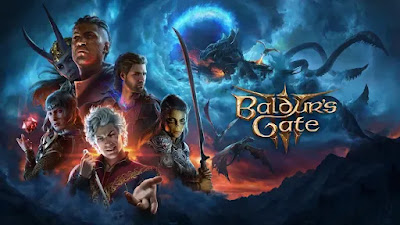
Baldur's Gate III (Review #300!)

Can you believe I've been doing this for six and a half years now?  Neither can I.  Ah well.  For my 300th Full Review it's time to look at a revival of a classic CRPG franchise.

A beloved PC RPG classic, Baldur's Gate fell off the map for a long time as Interplay went bust, only recently coming back to prominence with some Enhanced Editions and, later on, being revived under a different company's banner; not unlike the similarly-beloved Fallout series.  But does Baldur's Gate III prove to be a worthwhile return for the franchise despite the major change, or is this just one comeback that never should have happened?
The early 2000's was definitely a tumultuous time for western RPGs; Interplay's closure meant that Fallout - regarded as a savior for the genre by many - would go dormant for nearly a decade, controversially being revived by Bethesda in 2008.  Baldur's Gate, while developed by BioWare, ran on the Infinity Engine owned by Interplay, so it too fell victim to their financial troubles.  Bioware and the newly-formed Obsidian would continue to develop original games with new engines and publishers, and a decade later the offshoot studio Beamdog (and their division Overhaul Games) would develop Enhanced Editions of several of the Infinity Engine games, reviving interest in seeing the series return.  Despite Beamdog teasing a third entry for the series, though, it would eventually come to be developed by Larian Studios - a company hot off the success of their Divinity: Original Sin games and using the engine from them.  That meant the series' gameplay changed up, going from pausable real-time combat to a turn-based style, and like Fallout 3 before it, it would discard all the work done on a canceled early version of the game (Baldur's Gate III: The Black Hound) in favor of telling an original story.

Of course, Dungeons and Dragons itself has also undergone some heavy changes since the '90s, so the gameplay itself is also changed up a lot from the earlier Baldur's Gates, being based around Fifth Edition rules rather than Second Edition.  Later revisions of the ruleset are in numerous ways geared much more toward roleplaying and storytelling than simple monster smashing (and indeed, I've criticized other D&D games based on Third Edition and later rules for focusing so heavily on combat to the exclusion of everything else, since so many other mechanics go completely to waste).  Baldur's Gate III does it right, though - you're afforded a surprising number of options to deal with almost every situation, and while it of course makes sense to stay in line with your character's pre-built stats and skillsets, you're by no means bound to them.  You can bluff, intimidate, use stealth, arcane knowledge or just brute-force your way past almost any obstacle, favorable stats or otherwise.  Indeed, you can avoid nearly all combat with successful skill rolls, or at the very least find creative ways to turn things to your favor ahead of time.  Staying in line with a given character's principles as you complete puzzles also earns you "Inspiration Points", which allow you to redo failed rolls - always a nice thing to have when you get the notorious Natural 1 on what should be an easy roll (or just want another crack at a particularly challenging obstacle).

As mentioned, the game utilizes the same engine as the Divinity: Original Sin games, so combat here bears a strong resemblance to those - gridless turn-based action with a heavy focus on field control and elemental effects.  Spells can lay down effects like acid, poison or fire that will damage enemies passing through them, while ice or grease can make anyone who passes through them slip and fall and water can be used to conduct electricity, damaging all enemies inside it.  Grease and oil can likewise be lit on fire to damage all enemies standing in it (and ignite them for further damage in subsequent turns).  One also gets a height advantage shooting down at enemies from above and a penalty for attacking enemies above them, and oftentimes you can lure enemies into a narrow corridor or run around a corner to shield yourself from ranged attacks.  Barring that, you can also create clouds of steam or smoke to obscure their view, though this can also work against you as well.  At other times you can also weaponize the environment in creative ways, like knocking over braziers full of burning coals or even collapsing bridges to cause enemies to tumble to their doom, though you lose our on any treasure they may have been carrying.  In short, it's the first tabletop RPG inspired engine that actually lends itself well to that style of improvisation and creative thinking; indeed, it's very hard to survive without employing creative tactics whenever possible, as you're always at the whim of the dice to land hits with your weapons and most spells, so every advantage you can give yourself is a worth taking.

Character creation is something I always tend to dread in western RPGs, mostly because it's very easy to hose yourself unless you're intimately familiar with both the rules of the game itself and what the game is going to throw at you in advance, which results in a lot of tedious rerolling and frustrating game sessions where you're setting yourself up to fail and not even knowing it.  You may not think it given my choice of genre to review on this site, but I detest tedious overdone stat crunching and inane micromanagement in games.  It's certainly not necessary for a good RPG experience, especially since the genre (ostensibly) began as a means of storytelling rather than a dopey math lesson. Original Sin 2 largely averted inane stat-crunching by being a well-balanced game, but also by allowing you to respec your character at almost any time by finding the nearest magic mirror if your current build was just not working out.  Baldur's Gate III does a good job avoiding it as well, offering a solid explanation of all the skills and stats each race, background and character class provides, as well as giving you a pretty well optimized starting stat loadout by default (and when you level up); of course, you're also free to customize at your leisure if you're a die-hard min-maxer. Fifth Edition also largely does away with the issue of "Dump Stats" present in earlier D&D versions, mostly tying characters' abilities to stats and proficiencies they're expected to have.  So Bards, Paladins, Warlocks and Sorcerers cast from their Charisma rather than superfluously relying on Intelligence, for example, and having knowledge of a particular field gets bonuses based on a character's background and learned skills (and the subsequent roll bonuses they grant) rather than a bare stat roll.  All of this stuff contributes in various ways to letting you focus on enjoying the gameplay and the story rather than obsessing about the number crunching going on under the hood, which earns it a lot of points in my book.  Of course, even if you still dislike your current build, you can visit a character at your camp named Withers and pay him a small fee to respec any or all of your characters.

Something else the game gets down (after so, so many failed attempts in previous western RPGs) is that the roleplaying element actually feels natural and well-done.  Rather than having a predetermined chaotic/lawful/good/evil scale that you're rigidly glued to the entire game, your choices throughout all feel valid, all have palpable consequences, and any of them can make you new friends or enemies depending on how you handle them.  Your party members all have their own personalities, backstories and motivations as well and will react accordingly to your actions, and may become offended or even leave entirely if you do too many things they dislike; though you may be able to mitigate this to a degree with successful skill rolls, peoples' patience will inevitably run out, so every choice on your long journey feels weighty and requires careful consideration.  Getting them to change the ways they're rooted in is no easy task either; it requires a long and subtle commitment and not just one dice roll at a pivotal moment.  All good stuff, though as ever, the attempt to fit character romance into a largely open-ended RPG experience feels very shoehorned and cringey, with characters trying to get in your pants mere hours after you meet them.  Considering Fallout and Star Control were already actively mocking badly-written nymphomaniac characters in the '90s and yet devs like BioWare and CDPR roared ahead with it anyway with no trace of irony, I don't think it's a problem that will be resolved anytime soon either.  The final act of the game gets pretty messy too, with far too many extraneous subplots tangled together and even trying to tie it back to the first two games with nothing indicating the story would go in that direction before that point, so it becomes a bit of an overblown mess, and I definitely don't recommend trying to go for anything resembling full completion in it.

But even with a few minor missteps and the baked-in frustration factor of having everything being built on random all-or-nothing rolls, Baldur's Gate III is a stellar experience.  The engine lends itself well to not just intense and strategic combat with a lot of subtle nuance, but to actual role-playing - creating a character, thinking how they would think, forging alliances with other characters, bluffing your way out of trouble, and seeing the consequences of your actions unfold in a surprisingly organic way without making every action feel like a trite good-or-bad pull on some overarching moral compass that determines which boolean endings you'll get.  The strong narrative, surprisingly good voiceover and never once having to rely on a dopey plot codex to get you caught up on what's occurring also speak well to its quality.  It's a game about playing a role first and foremost, and for that reason it's one I'll eagerly be playing it for a good, long while.  Hell, it easily ranks among the finest western RPGs I've ever played.


Developer: Larian Studios
Publisher: Larian Studios
Released: 2020 (PC early access), 2023 (Full release)
Platforms: PC, macOS, Playstation 5, XBox Series
Recommended Version: Only available on Steam Early Access as of this writing.

Monday, December 19, 2022

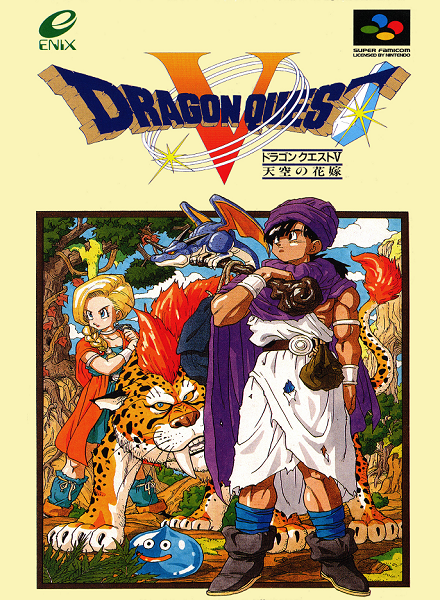
Dragon Quest V: Hand of the Heavenly Bride

The fifth game in the Dragon Quest series marked its first entry on a 16-bit platform, and fittingly, it attempted to change things up both narratively and in terms of design.  But does it prove to be another engrossing entry in a legendary franchise, or does this prove to be an unworthy Quest? 


Dragon Quest is of course an extremely popular series in Japan, but didn't fare nearly as well in North America.  Despite its relative unpopularity overseas, though, it still attained enough of a following for Enix to localize all four entries on the Famicom, with the last coming as late as September 1992 - just over a year into the Super Nintendo's lifespan.  Dragon Quest V was the first not to be localized, reportedly due to programming issues that couldn't be resolved, and wouldn't be until many years later on the Nintendo DS; in the meantime, Enix mostly became known as a publisher of other company's games (mostly RPGs) until the early 2000s, when they would merge with Square to become the single biggest name in Japanese RPGs, Square Enix.

Dragon Quest V was one that intrigued me for a while; series creator Yuji Horii cited it as his favorite on at least one occasion, and it was said to turn a lot of the series' tropes upside-down in its story.  This is certainly evident right away as the story starts off with your main character as a young child, following his father around the world on a search for the Legendary Hero who will save the world.  The story is considerably more grounded and personal this time, centering on a lifelong trial for the protagonist and everyone who comes into his life - friendships and alliances are forged, he marries and has a child, learns the secrets of his family's past, and undergoes very personal hardships and tragedy before the game ends.  While not the first JRPG to introduce such a personal element to its storytelling, it certainly set a trend, seemingly inspiring some story beats and character building in later games like Final Fantasy VI and VII.  Having a multi-generational dynamic as part of its storytelling would also become a somewhat common trope in Japanese RPGs after this one, seen in games like Lunar, Suikoden, Harvest Moon and Fire Emblem, so Dragon Quest V seems to have been a pretty influential title in more ways than one.

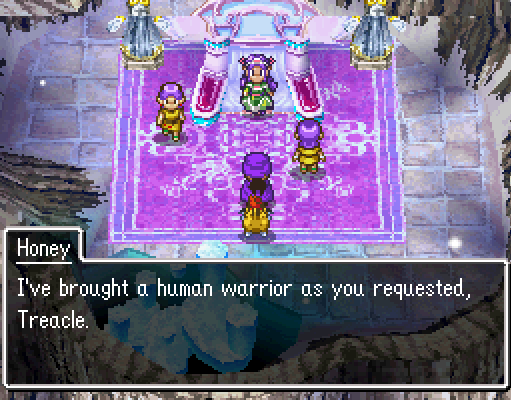
Fitting its more personal and turbulent nature, the game's playable cast is also much larger than any prior game in the series.  Many allies join throughout the journey, coming and going as the story dictates.  As mentioned, your main character also marries during the game, and his wife becomes a playable character - all three choices (two in the original SFC version) have slightly different playstyles and equipment choices too, and you're locked out from recruiting the other two on that playthrough once you've made your choice.  In a new twist for the series, you can also recruit monsters to your side - after defeating them in battle, they have a chance to ask to join your party, at which point you can then add them to your wagon or drop them off at a "Monster Den" for potential later use.  This is a surprisingly full-featured addition, too - each monster has unique equipment choices, stats, learns unique sets of spells and even have widely varying max levels, though they may ignore your commands if their Wisdom is a very low amount (below 20).  Some prove to be rather gimmicky - the Goodybag monster is resistant to many elements and status effects and has quite high stats, though a low level limit of 7 and a capped Wisdom of 5 limit its long-term usefulness.  Slimes are another example; being the archetypal low-level mook enemy of the series, they have unimpressive stats and low growth per level, but surprisingly can equip some of strongest gear and, should one raise a Slime to level 99, they will learn one of the most powerful attack spells in the game.  Metal Slimes and their variants also make very powerful allies, though the odds of recruiting one are extremely low (1/1024 according to most guides), so it's highly unlikely you'll get one without copious amounts of farming.  They do still retain all of their usual resistances and weaknesses, too, so that can give you an edge or become a liability in certain scenarios.

So, there's a lot there in terms of storytelling, emotional impact and nitty-gritty party customization for the powergamers in the audience, but of course Dragon Quest V doesn't skimp on the side-content either.  The series mainstay of collecting Mini-Medals to trade for rare prizes persists in all versions, as does the casino where one can win medals to trade in for powerful items.  From the PS2 remake on, several more get added - a game-spanning quest called "The Knick-Knackatory" where you basically inherit a museum and put various artifacts from your adventures on display is probably the centerpiece there.  The Pachisi board game returns from Dragon Quest III as well, though under the name "Treasures n' Trapdoors", serving as both a means to acquire rare items as well as tweak your characters' stats with a hefty luck element involved.  A small bonus dungeon is added too, which ties the story back to Dragon Quest IV a bit and adds some powerful recruitable monsters to play with in the post-game.

So, having now played it, I can see why Dragon Quest V is considered a high point for the series.  While the core gameplay remains essentially unchanged from the 8-bit entries, it definitely upped the stakes in terms of storytelling and forging an emotional connection therein, giving the player character a very personal stake in the adventure and making its twists and turns that much more gripping.  Monster recruiting added an interesting if slightly underdeveloped new element, though it was relatively novel in RPGs of the time; though predated by Shin Megami Tensei and later taken to runaway success with Pokemon, it did also lay some of the groundwork for Dragon Quest Monsters, a game focused entirely on recruiting and training DQ's iconic critters which has become a fan-favorite franchise in its own right.  But beneath it all, Dragon Quest's high degree of polish, refinement and developer passion makes it shine, taking the player on an engrossing adventure that ranks among the best of its time period and a high standard which many other Japanese RPGs aspire to equal.  It's been criminally overlooked in the west for ages, but any serious fan of the genre should strongly consider giving it a playthrough.


Developer: Chunsoft, ArtePiazza, Matrix Software
Publisher: Enix, Square Enix
Platform: Super Famicom, Playstation 2, Nintendo DS, Android, iOS
Released: 1992, 2004, 2009, 2015
Recommended Version: The later versions add a number of tweaks over the Super Famicom version, including some extra content (mentioned above), having a party size of four rather than three, and some extra items and weapons to utilize.  The only version to be released physically in the west was the Nintendo DS port, though the later Android and iOS ports are based on this version as well, which make it the most affordable way to play the game in English.

Wednesday, November 2, 2022

XCOM 2

After a very successful but somewhat divisive remake of the original X-COM, the stage was set for a sequel.  But does Firaxis's XCOM 2 help the franchise step out of the shadow of the original game's legacy, or does it simply provide a by-the-book entry for the franchise


X-COM: UFO Defense is a game that remains highly regarded among fans of classic PC games even today, and for good reason - it was a brilliant blend of tactical combat, business management and even had a touch of RPG style character building, requiring you to train up your army gradually and improve their skills through combat (and hope they didn't get taken out by a fatal reaction shot or an exploding gas station).  It had a number of sequels and spinoffs in the following years of varying quality, but none ever quite matched up to the first.  In the early 2010's, a reboot was announced; however, it quickly drew heavy criticism from fans, seemingly discarding the deep strategic element of the series in favor of a generic first person shooter experience.  The developers did take this criticism in stride, though, reworking the gameplay considerably to make it a squad-based tactical shooter (somewhat akin to Mass Effect in gameplay), and retitling it to "The Bureau: XCOM Declassified" to cement it as a spinoff rather than a proper entry, though it still only got middling reviews and sales were lackluster.  Alongside it came something more in line with fan expectations - a turn-based tactical combat experience that put focus on training your squad, managing their finances and developing new equipment to even up the odds in battle.  It was well-received and commercially successful, though it still felt a bit simplified and didn't break much new ground for the franchise in terms of storytelling or mechanics.

XCOM 2 was released four years later, serving as a direct sequel to the reboot.  Rather than attempting to copy Terror from the Deep or Apocalypse's scenario, though, it took a considerably darker turn.  The game is set on a future Earth where XCOM lost the war early on and the aliens (now under the collective name "ADVENT") have become a part of everyday life, using their technology and control of the media to keep the populace under control and blissfully unaware of their genocidal acts.  XCOM now exists as a rogue faction centered out of a single carrier ship called the "Avenger", waging a desperate guerilla war against the aliens and trying to prevent their mysterious "Avatar Project" from coming to fruition; this effectively serves as a time limit hanging over the game, as if the project does reach completion it's an immediate game over.  Taking some undercover actions and completing certain types of missions can set back the project's progress, but not stop it entirely, so that becomes another strategic element you must factor into your choices.

As in Enemy Unknown, your generic soldiers start off as a plain "Rookie" class, but after gaining experience will be randomly promoted to one of four prefab classes.  Grenadier is similar to the first game's Heavy class, able to equip heavy armor and carrying a minigun-style cannon (capable of shredding enemy armor) and a grenade launcher.  Rangers function similarly to the first game's Assault class, specializing in close-quarters combat with rifles, shotguns and even melee weapons.  Sharpshooters function similarly to the Sniper class, taking long-ranged shots that consume an entire turn or, in a pinch, relying on close-quarters combat with a pistol. Specialists serve as a support class, using a flying drone called a "Gremlin" to aid allies, hack enemy electronics and even stun enemies with electrical shocks.  A fifth option exists as well once a Psi Lab is built - the Psi Operative, who unlocks powerful skills that aid allies and hinder enemies, though they only improve by training in the Psi Lab, not through battle.  The expansions add a few more you can recruit through special missions - cybernetic soldiers called SPARKs, the stealth-utilizing Reapers, the psionic melee-fighting Templars, and Skirmishers - renegade ADVENT soldiers who ally with the resistance.  Naturally all of said classes have a variety of customization options - gear, abilities, skins and overall stats - so you still have plenty of leeway to customize your team as you see fit even if there's only a handful of overarching classes to choose from.  (And of course, those playing the PC version have plenty of mods to introduce more classes if they wish.)

Gameplay remains largely similar to the XCOM norm - battling enemies, researching their tech to enhance your own loadouts, scavenging for resources, and of course dealing with the odd special mission to either deal a heavy blow to ADVENT's schemes, gain new allies in the resistance, earn much-needed resources, or just fend off a direct attack on the Avenger.  Fitting for the dark setting, characters who suffer serious harm in battle can also gain debilitating "negative traits" - being fearful of a certain enemy type, compulsively reloading their gun if it's not at full, panicking when on fire, and so forth.  These can be cured in the infirmary, though it puts the soldier out of commission for several days to overcome their fear.  Another changeup comes with the War of the Chosen DLC which adds three powerful bosses called "the Chosen" who can randomly intrude on any mission you undertake.  They are persistent and very dangerous, but you will eventually be able to uncover a way to defeat them permanently through a special mission - this not only prevents them from bothering you in future missions, but will give you access to their (very powerful ) weapons for your own use.

The game does add a few new mechanics to the core combat experience as well.  One that comes in fairly quickly is Armor, which reduces all damage taken on both you and enemies; however, some weapons (gatling guns and explosives in particular) will damage it, lowering the threshold, and a handful of abilities can even bypass it entirely, so it's not something you can rely too heavily on.  Stealth is another prominent one - you begin most missions undercover and can move freely, though if you're seen by an enemy or launch an attack, the enemies will begin to come after you in earnest; this gives you an attack to secure advantageous position before going loud.  Reapers work slightly differently here, in that their attacks only have a chance to reveal their position - they can potentially stay hidden and pick off a few foes before the jig is up (though the chance of staying hidden gets substantially lower each time).  Thus, stealth is engineered to be a strategic element that will be quite useful, but it's not a total balance-killer as in some games.

In my view, XCOM 2 is a masterpiece.  Enemy Unknown was a worthy remake, but it felt a bit overshadowed by the 1994 classic in terms of overall depth, variety and scope.  XCOM 2, however, really allows  the reboot series to stand its own, paying homage to everything that made the series a hit while also feeling very fresh.  It plays well to the original's strengths while also working in Firaxis's talents for keeping you on your toes with a variety of randomized events, inventive mechanics and a constant air of uncertainty, ensuring that every decision you're presented with is one you have to weigh the risks of carefully.  A fantastic tactical experience that any fan of the genre should play.


Developer: Firaxis Games
Publisher: 2K Games
Platform: PC, OS X, Linux, Playstation 4, XBox One, Switch, iOS, Android
Released: 2016, 2020, 2021
Recommended Version: The PC version is a personal favorite, as it allows for modding that introduces anything you could want - more classes, more enemy types, more equipment, a much longer campaign if that's your thing, and all sorts of voice packs and even guest characters, both serious and silly.  A personal favorite being one that adds a mission to recruit none other than Duke Nukem - rather appropriate considering the theme of both his native game and this one.  (I've also added 2B from NieR, Max Payne and even Bob Ross to my squad with other available mods.)

Monday, February 28, 2022

Deltarune (Chapters 1 and 2)

The companion game to beloved indie darling Undertale, Deltarune actually began development several years before it, and appropriately for a game still yet unfinished, it goes for much greater scale in both its gameplay and narrative design.  But does Deltarune manage to capture the magic of its sister game even in its unfinished state, or does it simply get overshadowed by it?

2015's Undertale is a game that attracted an enormous following despite its humble origins, low budget and being built in Game Maker, even being nominated for numerous awards in shows usually almost exclusively reserved for big-studio productions, and even winning a few (with IGN awarding it their 2015 award for Best Story and even naming it the 20th best game of all time).  So, when a followup was finally publicly announced, it of course generated a lot of buzz and high expectations; moreso when it was revealed to have begun development well before Undertale and, as of early 2022, remains unfinished.  Toby Fox saw fit to release the first chapter of the game as a free demo and, during the ongoing COVID-19 pandemic, released the second one as well, giving people a chance to see just what it had to offer in comparison to Undertale.  

The answer, as it turned out, was quite a lot.  While its exact relationship to Undertale still isn't entirely clear (it retains numerous characters from it, though whether it's a sequel, prequel or alternate universe is left ambiguous, at least so far), it retains many elements from its sister game.  The warm characters, the simple-yet-stylish visuals, interesting gameplay and the sense of fun it carries all remain intact.  However, Deltarune also aims for much greater heights on every front - all characters show much more fluid and technically-proficient animation, with little to none of the "floating joints" style that was evident in the first game, and its use of lighting effects and shows are surprisingly effective even with the minimal color palette.  The combat screen is also given a Final Fantasy style side-view rather than a more basic Wizardry-styled UI, allowing the player character and his allies to show off their own animations.  The music, as ever, is phenomenal, perfectly highlighting the epic combat as well as any mood the story attempts to go for, and stands as proof that well-composed electronically-generated music is as timeless as any other.

Even in its unfinished state, Deltarune's gameplay also shows quite a bit of depth and polish.  Rather than simply controlling one character, you now control up to three as the story dictates, and they're given distinct abilities to match.  Kris serves as the protagonist and the one primarily responsible for non-violent interactions with enemies (though they can also order the other two characters to participate as well, using one/both their turns that round to move enemies closer to "Tamed" status).  Ralsei, as a compassionate and friendly character, serves as the party's healer and can knock enemies out harmlessly with Sleep spells, which also offers an alternate way to Tame them.  Susie, being a more hot-headed and violent character, uses primarily offensive moves and acts on her own for a good portion of the first chapter, with the other two having to warn enemies of her attacks in advance if you wish to remain on a pacifistic route (though she will eventually become more of a team player and start to take orders). And of course, your choices do actually make a difference; not so much the dialog choices (which seem to actively poke fun at the lazy flat good-or-bad-choice plot branching present in so many modern RPGs), but in pursuing a pacifistic or deadly route through the story, events and story outcomes for each chapter will change substantially.

Combat retains the minigame-based approach that Undertale implemented, with basic attacks and specials alike playing out as minigames based on timed button presses, and avoiding enemy attacks playing out by having the player move a small heart icon around within a box to avoid patterns of projectiles.  (This also comes into play outside of battle, where the player must avoid traps or hazards by keeping their player's heart icon outside of their hit zones).  Spells and special techniques now operate off a "TP" bar that is shared between the three characters, and which can be boosted by using the Defend command (effectively skipping a turn), or by narrowly avoiding projectiles during the dodge minigames - a second outline appears around your heart icon, and any projectile passing through that outline (while not hitting your heart) will boost the TP gauge slightly.  So, in effect, doing well requires not just avoiding attacks as they come, but having enough confidence to let the attacks narrowly miss you so you can build meter, similar to a mechanic in Radiant Silvergun where you'd gain points by narrowly avoiding a fatal shot.  Items can also be used in a pinch to recover HP or TP without requiring meter to be spent, though these are quite limited in how many you can carry at a time, they're best used as a last resort.

Of course, Deltarune wouldn't be nearly as memorable or captivating as Undertale if it didn't have a great cast of well-written characters.  It certainly does not disappoint there; yes, much of the cast from Undertale returns as the inhabitants of the player's hometown, but they mostly serve as ancillary characters, with care taken so that they don't upstage the main characters of this story.  Thankfully, the new cast is just as brilliantly realized as Undertale's - vivid, expressive, with some great well-written dialog and genuinely funny jokes, and never once falling into being lazy cardboard-cutouts.  Even the story's antagonists are very well-realized, three-dimensional characters with their own histories, motives and personalities, and show genuine emotions throughout, including that very human yearning for acceptance that all of us have.  Similarly, the story isn't afraid to show its emotional side, running the gamut from hilarious to disturbing to tender as events warrant while never once feeling forced or out-of-place.  Basically, Deltarune has a sense of energy, fun and warmth I've not had with a game since the likes of Chrono Trigger and Earthbound, and that's saying a lot considering the sheer number of RPGs I've played.

So, with only two chapters publicly released and five more to be released at some indefinite point down the road, is it safe to say that Deltarune lives up to the hype?  I certainly think so.  It's a game with a lot to offer on every front - its polished gameplay, heartfelt writing, stylish visuals, amazing music and sound design and a sense of fun and passion that few other games I've ever played have captured all make it an incredible experience that proves budget ultimately has very little to do with a game's quality.  AAA Games only seem to be concerned with getting larger and prettier, with gameplay and storytelling relegated to a shallow, heavily-compromised afterthought at best, and most just bore me to sleep within only a couple hours of starting them up, leaving me wonder why I even bother to keep up with current gaming tech.  Then comes a game like Deltarune to remind me of why I love video games and RPGs in particular.  Even with only two chapters done, it's a brilliant experience; hell, even if it never gets finished it'll still be one of the best games I've ever played.  In an era where 99% of all time and money in the medium of video gaming goes into pretty-yet-empty 3D backdrops, models and textures that'll age about as well as milk, and algorithmically-generated bland filler just to meet some arbitrary publisher-mandated length quota, with another 3 years of multi-gigabyte patches to follow just to make it slightly resemble an actual, finished product, it's nice to see developers who still remember what really makes gaming great.  And since the demo is currently free, there's little excuse to not at least give it a chance to win you over too.  Some games really are worth the wait.


Developer: Toby Fox
Publisher: Toby Fox, 8-4 Ltd.
Platform: PC, macOS, Switch, Playstation 4
Released: 2018, 2021
Recommended Version: I'd say play the PC version if you can; according to the developer the console versions have had some issues with updates breaking things, and patching for them may come slower than the PC version.

Tuesday, November 9, 2021

Dragon Quest VIII: Journey of the Cursed King

Dragon Quest's first non-remake Playstation 2 entry was a surprisingly big event, going on to become the series' best-selling title outside of Japan (until XI broke the record years later) and garnering quite a bit of acclaim even among those who barely paid attention to the franchise beforehand.  But was this just because people were hoping Square Enix would prove their worth in the RPG arena again after several baffling missteps, or was there a genuinely good game to be found here as well? 


Dragon Quest as a franchise of course needs no introduction, especially for Japanese gamers - it's pretty much their bread-and-butter over there, selling millions of copies with each entry and most stores famously refusing to sell it on weekdays so kids don't cut class to go buy it. It never had quite the same impact in the west, though. While the original game was notable for having some 400,000 copies given away as an incentive to subscribe to Nintendo Power magazine, the franchise was mostly relegated to niche status throughout the NES era and got no western releases at all during the period when JRPGs started to get big. Yep, while games Chrono Trigger, Final Fantasies 6 through 9 and Breath of Fire were making bank, Dragon Quest was relegated to a few low-key releases on the Game Boy Color and saw no representation on consoles. Well, aside from a late and little-promoted release of VII on the Playstation 1, which did moderately well (selling about 200,000 copies) but wasn't enough to prevent Enix's North American branch from closing.

However, after Enix merged with Square, they would make another attempt at turning Dragon Quest into a household name in the west.  They commissioned Level-5 - a newcomer hot off their success with Dark Cloud 1 and 2 - to develop it, and under them the series saw a significant upgrade.  Formerly noted for its relatively low production budget and minimal animation that stuck with it even up to the Playstation 1, Dragon Quest VIII moved the series into true 3D, with colorful and lushly-detailed environments, well-animated and expressive character models, and a cel-shaded visual style very similar to Dark Cloud 2's that gives the game the look and feel of a well-produced anime. For the western release they went even further, adding CD-quality orchestral music and full voice-over for plot scenes - a major leap over the Japanese version which had comparatively dull synth music and didn't feature any voice acting at all. Dragon Quest VIII also reaped the benefit of a heavy promotional campaign, being released alongside a limited edition controller shaped like the series' iconic Slime enemies and having commercials aired on channels like Cartoon Network and Spike TV.  As a result, the game ultimately sold around 430,000 copies in North America and another 470,000 in Europe - small potatoes compared Japan's 4 million, but certainly not bad for a series that had been so niche in the west beforehand.

Dragon Quest's fundamental design remains relatively unchanged - turn based, random battles (though thankfully, the rate at which they appear is relatively subdued compared to some earlier titles), and a group of prefab characters on a journey to - what else - save the world from evil.  It doesn't have the clever narrative gimmicks of some earlier titles, like 4's chapters that follow different characters or 5 following several generations of a bloodline, but what's there is well-told and memorable thanks to its strongly-written characters and a solid sense of humor.  It also has a relatively small cast of four playable characters (with two more added in the 3DS version), though each is quite distinct and can be customized over the course of the game - a welcome fat-trimming after the two previous games became somewhat notorious for their rather bloated design and extremely overwrought class systems.  Each character can put points into one of four weapon skills, which will give passive bonuses when wielding them and unlock new techniques (spells for staves), and each also has one unique skill category, which generally adds new special abilities and passive bonuses.  For example, the hero can use swords, spears, boomerangs or fisticuffs, and his unique Courage skill gives him useful utility spells that let him instantly return to visited locations, cure negative statuses or reduce MP cost of all of his spells.  Some of these are humorously overpowered, too - Jessica's Twin Dragon Lash (in the Whips category) is famously one of them, hitting twice for 1.5 times the damage of a normal attack and costing only 3 MP (nerfed in the 3DS version to 0.9 times).  Points also cannot be recovered once spent, so one should consider carefully before committing to a particular build for a character.
 
A new mechanic for this entry is "Tension", which basically lets you save up energy for a turn (or several) to give your attacks or spells significantly more punch - great for dealing with enemies that have very high defense and would just absorb normal-powered blows, or getting more mileage out of MP used for healing magic.  Saving up for one turn will give your next one a 1.7x multiplier, and up to four will give you a whopping 5x effect, letting you deal devastating damage or heal your party very efficiently. Later in the game one unlocks the ability to randomly enter Super High Tension, where a character basically buffs up Dragon Ball Z style and gets a whopping 7.5x multiplier instead.  However, most later bosses have a move called "Disruption Wave" that will instantly dispel any stored tension, so relying solely on Tension-buffed attacks is a very poor strategy.

Dragon Quest VIII also features a crafting element in the form of the Alchemy Pot.  By speaking to King Trode after a certain point in the story, you can combine two or three items together to create a new one; everything from stronger medicine to weapons and armor (in fact, some of the best pieces of equipment in the game can only be created this way).  Experimenting with various items can sometimes yield good results, but your best bet is generally to explore towns, checking bookshelves whenever you can to learn new recipes.

But of course, no PS2 RPG is complete without side content.  The series' trademark game-spanning search for mini-medals is back once again, ensuring that you'll be searching every corner of dungeons for treasure chests and smashing every piece of pottery you can for them, as they can be turned in to unlock all sorts of useful rewards.  There is once again a casino where you can gamble for coins to trade for rare and useful treasures, and even a side dungeon or two to explore.  Probably the most substantial one overall is the Monster Arena - after a certain point in the story, you gain the ability to track down and defeat "Infamous monsters", which can then be pitted against progressively tougher fights in the arena to win rare prizes.  While not as deep as something like PokΓ©mon (or even the spinoff series Dragon Quest Monsters), it's nonetheless a fun little diversion.

Dragon Quest VIII may not be the deepest RPG ever made, or even the deepest one within its own franchise.  However, what it lacks in originality it more than makes up for in presentation, taking the franchise into true 3D and utilizing a cartoony, fun visual style that makes its vast environments a joy to explore.  The characters themselves benefit from this as well, having very expressive animations and personalities that play off one another brilliantly throughout.  Dragon Quest's defining element - the impeccable level of polish in its mechanics - definitely does not suffer under Level-5's watch either, with a surprising amount of strategy and planning being required to overcome many of its challenges, and relatively few abilities that feel grotesquely overpowered or totally useless.  A charming, well-made adventure that easily ranks among the finest on both PS2 and 3DS, as well as one of Level-5's best games to date.


Developer: Level-5 (PS2), Square Enix (Mobile/3DS)
Publisher: Square Enix, Nintendo
Platform: Playstation 2, Android, iOS, Nintendo 3DS
Released: 2005, 2014, 2017
Recommended version: The 3DS port has some added content, including two new playable characters, and you can see dungeon maps at any time on the second screen, whereas you have to go to a separate screen for them on the PS2 version.  This version also features visible enemies instead of random encounters, and battles can be sped up to make mundane fights quicker.  It doesn't have quite as nice graphics (running at a lower resolution and missing some lighting effects) and it sadly loses the orchestral score of the US PS2 release, though it does at least feature a higher-quality synth soundtrack than the Japanese PS2 version.

Tuesday, August 24, 2021

Dragon Quest XI S: Echoes of an Elusive Age Definitive Edition

After more than thirty years of uneven success in the west but massive popularity in Japan, Dragon Quest's eleventh numbered entry was released to considerable worldwide acclaim.  But does the series' long-standing traditional design still pay off after three decades, or does it just begin to fall by the wayside after a slew of changes and innovations in its competition? 


It's been 35 years since the Dragon Quest franchise's debut, and surprisingly little has changed for its eleventh numbered entry. Even with a leap to gorgeous HD, some excellent orchestral music and high quality voiceover, it's instantly recognizable as Dragon Quest. Akira Toriyama's character designs, writing and design by Yuji Horii, the punny enemy and spell names, many of the music cues and sound effects, and the combat still being relatively simple turn-based fare with a party of up to four characters haven't changed a bit. Combat is visually three-dimensional and you and enemies move freely around the field, though this is purely a visual effect and has no bearing on the gameplay whatsoever. But if even the modern aesthetic is too much, you have the option to change the game to a 2D art style reminiscent of the Super Famicom Dragon Quests; even mid-run if you wish.

However, some nice quality of life changes are made for Dragon Quest XI S.  You can speed up battle animations and assign each character AI patterns to quickly deal with random encounters, then toggle them off at any time when you need to deal with tougher fights or bosses.  Healing after a fight is condensed into one simple menu command, which saves quite a bit of hassle, particularly later in the game.  Monsters are visible on the map, doing away with the irritation of frequent random fights and letting you engage on your terms.  You can give yourself a slight edge before a fight as well - if you approach an enemy in the field and then strike them with your weapon, you'll sneak in a free hit before the fight even properly begins.  Some added challenges are available right from the get-go too, labeled in the startup menu as "Draconian Quests"; things like making all the enemies stronger, causing an instant defeat if the main character is defeated, not being able to equip armor or use shops, or the rather annoying effect of "Shypox" which causes characters to randomly lose turns.  A nice way to give genre veterans more of a challenge, and the game even notes on the menu when you've completed a playthrough with one or more of these activated for the duration so you have the bragging rights.  (You can also deactivate them at any church if you find them to not be to your liking.)

It's not all standard '80s RPG fare, though.  After gaining levels you will earn Skill Points; these allow you to customize your party by unlocking bonuses, depicted in the form of grid with panels that flip over when you spend points (not dissimilar to Final Fantasy XII's License boards).  Generally speaking, these let you give your characters greater attributes, bonuses when using specific weapon types (extra damage, chance to parry or get criticals, et cetera) or learn new attack skills.  Some panels with particularly strong bonuses are also locked at first, and can only be opened (and points spent on them) when you unlock at least four panels surrounding them.  One can also freely respec their characters if a current build isn't working (or they just want to use a particular skill temporarily) by visiting any goddess statue or church, though this does carry a small fee.

Another prominent mechanic is "Pep".  During battle, and after taking several hits in a row, using a particular skill, or just randomly as a fight starts, your character may become Pepped Up, which gives them a boost to their stats for a few turns;  the exact stats boosted vary from character to character, but generally emphasize their abilities.  Pep wears off after a few turns, but it does carry over between battles as well, so any turns you have left on it after winning a fight don't go to waste.  Some particularly skills are also only available during Pep status, and generally (but not always) require two or more participants to be in Pep at the same time to use them.  Generally, these are quite powerful attacks that use every character's turn (somewhat similar to the Dual/Triple techs in Chrono Trigger), but the sheer power they offer makes them worth using when the opportunity arises.

Crafting returns again for this entry, this time in the form of the Fun-Size Forge, a minigame that allows you to turn various items into new weapons, armor and accessories. It's largely optional (unless you're playing with shops disabled), but generally worth doing, as items you can forge at a given stage will often be better than what you can buy at shops. If you do well at the forging minigame, they'll get some nice bonuses on top too, even boosting innate abilities like status resistances or stat bonuses.  It's worth it to explore around a bit whenever you reach a new area - gather up items you find in the field and scavenge for more jars/pots/chests whenever you hit a new town or dungeon.  Sidequests frequently award uncommon or rare crafting components too, so keep an eye out for those.

While the franchise is still quintessentially old-school in design even three-and-a-half decades out, Dragon Quest XI manages to stand out as distinct and memorable regardless.  Its traditional, yet highly polished gameplay remains its strongest asset, ensuring it's a game easy enough for newcomers to get into while long-time genre fans can tweak settings to give themselves more of a challenge or find obscure tricks to give themselves an edge.  The world of Erdea is brought to life in 3D in brilliant form, its environments managing to look like a gorgeous modern game, yet losing none of the colorful cartoon style and personality of Akira Toriyama's distinct art.  All the familiar sound effects and music cues that have been here since day one return, but the new stuff is great too - the voice acting is perfectly on-point, while the music is beautifully composed and adds tremendously to the atmosphere of any given area.  Dragon Quest takes relatively few risks with its fundamental gameplay, but when it takes care to hone the format it's followed for over thirty years to virtual perfection, it's hard to complain.  Whether you love DQ's adherence to tradition or hate it, it's one franchise that's here to stay.


Developer: Square Enix, Orca, Toylogic, Artepiazza
Publisher: Square Enix
Platform: Nintendo 3DS, Playstation 4, PC, Switch, Xbox One, Stadia
Released: 2017, 2019, 2020, 2021
Recommended version: Any of the later versions (released as "Definitive Edition") are the ones to go with, as they add new content and the redone orchestral soundtrack which sounds much better than the synthesized one.  The Playstation 4 version has this available as a downloadable upgrade to the original version (as well as a physical release), while the PC, Switch, Xbox One and Stadia versions all have it packaged in by default.