RPGreats now has a Discord! Come on in to talk about game music, games in general, submit reviews or just hang out!
Showing posts with label 2000. Show all posts

Thursday, November 3, 2022

The Misadventures of Tron Bonne

A prequel to Mega Man Legends starring the series' breakout character, Tron Bonne.  While it does still utilize the same engine as the other two games, weird control scheme, stiff physics and all, the gameplay here is changed up quite a bit, broken up into a mission structure (with each mission having three sub-levels) rather than being an open-world game.  You play as Tron, of course, piloting a mecha called the Gustaff and commanding a small squad of Servbots via "beacon bombs" to carry out various tasks - looting buildings, attacking enemies or disabling hazards temporarily, and whatever else needs doing.   Some missions are pretty straightforward action segments, while others change things up quite a bit.  The closest it comes to MML's overall gameplay is a search through a labyrinthine pyramid in search of a legendary treasure, but others include a battle through a city to rob a bank, stealing livestock and carting them off in a truck, a puzzle game of sorts where you load cargo containers onto a ship in a set number of moves, a first-person dungeon crawl, and even a casino where you can play Bingo and High-or-Low.  The strangest thing, though, is that Misadventures has a slight X-COM vibe to its design - your Servbots' stats can be improved by going on missions and playing minigames, which not only give them new combat capabilities, but can unlock hidden potentials in them that allow for customization options and can even unlock upgrades to the Gustaff.  If you don't take them on missions for a good while they'll also fill up their "Sloth" meter and refuse to work, which can only be lowered by sending them to the torture room and playing another minigame to sort them out.  While Misadventures ultimately isn't particularly deep and retains the series' usual weird quirks with hit detection, awkward controls and stiff movement, it once again gets by on the merits of its sense of humor and by having a lot of charm, and the general 'variety show' feel of its design ensures it doesn't wear out its welcome.  It's also a very expensive game these days, going for well over $500 online, but thankfully Capcom saw fit to release it on the Playstation Network, so you can still play it without breaking the bank; it takes a bit of doing these days, but for only $6 it's hard to argue against at least trying it.

Developer: Capcom Production Studio 2
Publisher: Capcom, Eidos Interactive
Platform: Playstation, Playstation Network (PS3/Vita)
Released: 2000

Monday, August 8, 2022

Nox

Westwood Studios was a pretty big name in the late '80s and most of the '90s with several well-received PC titles to their name - Eye of the Beholder, Command & Conquer, Toonstruck and Blade Runner probably being their best-known ones.  Nox was their attempt at an isometric action-RPG in the vein of Diablo, and a pretty inventive one for its time.  Gameplay is relatively fast-paced as movement isn't rigidly restricted to a grid, you can push around objects to safely trigger traps or find hidden passages, some walls can be broken down with your weapons to reveal secrets, and you can even jump to make a quick escape from groups of enemies or avoid ground-based hazards.  The game sports a relatively innovative "truesight" mechanic which dynamically blacks out portions of the map that are out of the character's line of sight, requiring you to approach dangerous angles with a bit more caution.  You get a quickbar that can store several pages of five spells or items each, cutting down on cumbersome inventory management and spell preparation during tense moments.  You also get a choice of three classes - Warriors can wield almost any weapon and heavy armor, but no magic or bows, Wizards have comparatively limited equipment choices and low health but can use any spells, and conjurers fall somewhere in the middle, mostly focusing on summoning or subjugating monsters to aid them in battle.  Multiplayer is also more varied than Diablo's, and in fact has game modes more reminiscent of a first person shooter - deathmatch, capture the flag, king of the hill, and so forth.  All good stuff; however, Nox was released only a few months before Diablo II, which eclipsed it in popularity almost immediately and continues to have a strong following even today.  Nox's fame was very short-lived in comparison, but it still enjoyed a fair bit of fame in its time thanks to a promotional tour by Westwood, which allowed visitors to play the game before it launched and provide feedback, as well as a company-sanctioned post-launch competitive tournament that allowed players to compete against one another, with top prize being a new gaming computer.  Sadly, not long after its multiplayer-centered 1.2 patch launched, rights for the game were lost to Electronic Arts, who officially ended its support cycle, canceled a planned sequel and closed down the official multiplayer servers, effectively capping off its legacy for good.  A mostly forgotten game these days outside of its small but dedicated community, but if you enjoy isometric action-RPGs of this type, it's one that's worth a go.


Developer: Westwood Pacific
Publisher: Electronic Arts
Platform: PC
Released: 2000

Sunday, August 7, 2022

Wizards & Warriors

Not to be confused with the similarly-named trilogy of NES action-platformer games, Wizards & Warriors on PC is a game by David W. Bradley, who made his name working on Wizardry 5, 6 and 7.  During 8's protracted development, however, he had a falling out with Sir-Tech and left the company, enjoying a brief stint with Origin Systems (and releasing Cybermage: Darklight Awakening) before founding his own company, Heuristic Park.  Wizards & Warriors is seemingly his attempt to carry on in the tradition of the Wizardry series - a traditional dungeon crawling experience with multiple races, the four basic RPG job classes (Cleric, Wizard, Thief and Fighter) that can eventually upgrade into powerful 'prestige classes', and plenty of randomized loot and respawning monsters to fight, but gameplay-wise it's changed up a fair bit from its inspiration.  In fact, it actually plays a bit closer to Might and Magic 6-8 than any of the classic Wizardries, operating in real-time and with a first-person, full-3D viewpoint, though everything you do is still governed by dice rolls.  It's a very awkwardly balanced experience, too - enemy spawns seem to be highly random, often appearing only one or two at a time or dropping huge groups on you with no forewarning whatsoever, there's huge and sudden leaps in difficulty even within a single dungeon, leveling takes ages as quests and monsters give a piddly amount of experience each, stat gains from levels are randomized (which can put you at a serious disadvantage later on), and ranged weapons and "diplomacy skills" have no practical use that I could find.  Seemingly taking some cues from Daggerfall, you can also undertake semi-randomized quests at pubs and guilds and purchase horses to ride for slightly more movement speed, though the latter is largely a waste of money - you don't go much faster than you do on foot, and you can easily outrun nearly every monster in the game without a horse anyway.  Basically, Wizards & Warriors is a game that might have garnered a bit of a following had it come out in the early '90s, but by the year 2000 its rigid design sensibilities and general lack of polish made it look seriously dated compared to the likes of competing franchises like Baldur's Gate, Might and Magic, Deus Ex and Diablo.  Wizardry 8's release, despite being over a year after W&W's, only further doomed it to obscurity, as it married classic dungeon crawling and new elements together in a well-crafted, fan pleasing conclusion to the series.  Heuristic Park would take one more crack at an old-style dungeon crawl with 2005's Dungeon Lords, but it being released in a very rough, unfinished state led to their downfall and the closure of David W. Bradley's career as a game developer.


Developer: Heuristic Park
Publisher: Activision
Platform: PC
Released: 2000

Wednesday, August 3, 2022

Mega Man Legends 2

The second entry in the Mega Man Legends series followed the series' usual trends, keeping the core gameplay relatively intact but adding some improvements and general polish to try and make a more balanced game overall.  But does Mega Man Legends 2 succeed in being a more satisfying game experience, or does it spoil the broth?

Mega Man Legends wasn't a success for Capcom, being met with relatively average reviews and mediocre sales, but it still found a following among enthusiasts of Zelda-likes as well as long-time Mega Man fans.  This prompted Capcom to try their luck at a spinoff game starring the series' breakout antihero, Tron Bonne, and later a followup to the first game.  While both games met with more positive reviews, they still didn't do particularly well in terms of sales, which ended up pushing the franchise into a long dormancy that continues today.

Something you'll notice right away is that Mega Man Legends 2 carries on the polished presentation of the original, with quite a lot of voice-acted cutscenes, expressive characters and an intriguing storyline building up to a large mystery.  The anime-like aesthetic returns, though now with more polished models and far less jagged edges and ugly, stretched textures.  Several music tracks return from the original game in addition to numerous new ones (replacing the conspicuous absent noise in most of the original game's dungeons), and all of them sound quite good; I especially like how each major area in the game has a leitmotif that carries between all the songs you'll hear there.  Even most of the same voice cast from the original game returns here, with the baffling exception of Mega Man having a new actor; he's not a bad actor or anything, but it's a bit jarring if you're coming straight in from the first game.  Load times have also been tightened up considerably, resulting in transitions between areas and save screens being much smoother than the original game. 

The gameplay remains mostly the same, retaining the same awkward "tank control" movement and rotation even if you use the analog stick, but some improvements are made nonetheless.  Mega Man's movement is a bit sharper now, with less noticeable delay between pressing a direction and moving, and you can actually move while locked on to enemies now, making combat more fluid (and your sub-weapons considerably more useful), though it does have two irritating bugs - one is that there's seemingly no rhyme or reason to what enemy it will lock on to any time you press the button, which can be particularly annoying during the more chaotic battles, and the second is that if you take even the slightest of hits, you'll lose your lock-on and it will probably snap onto another random enemy; this can get extremely frustrating at times.  On the upside, the lock-on does introduce a useful bug, too - if you lock on to an enemy, hold down the fire button and tap Up on the D-pad, you'll reset your gun's cooldown and fire again immediately as soon as your stepping animation stops, effectively letting you fire as quickly as you can tap the Up button and rendering the Rapid and Energy stats mostly irrelevant.  They've also done away with the redundant 'shield' system from the first game; you no longer have to worry about it breaking mid-fight and taking more damage from subsequent attacks until you get it repaired.

Special weapons have seen some significant overhaul too.  While you can still only equip one at a time, enemies will occasionally drop powerups that refill their energy, so you don't have to get through an entire dungeon on one bar.  Or rather, two bars, as the game implements a mechanic where you can only use a weapon so much at a time, draining the green bar on the left half of the gauge; once you stop firing, it will draw from the larger blue bar to refill it.  As mentioned above, most weapons now also work in tandem with the lock-on, making you less likely to waste shots, although many of the stronger ones still plant you in place when you fire them.  Fitting the larger scale of the game, weapons generally cost much more to upgrade now, with some reaching well into the millions.  On the other hand, you have the opportunity to take timed trials to upgrade your Digger License, which makes the enemies in the game tougher but also causes them to drop more Zenny, in effect letting you adjust the game's difficulty and risk/reward ratio to your liking.  

As mentioned above, Mega Man Legends is a considerably bigger game than its predecessor, having you explore numerous islands across the world, discover their secrets and undertake a number of optional side-quests throughout.  Dungeons are considerably more varied and hazardous too, with plenty of traps, more aggressive enemies and a couple of irritating 'status effects' you can be inflicted with; fire is a particularly bad one as it will continuously drain your health for upwards of thirty seconds, and there doesn't seem to be any way to put it out early (not even the otherwise-useless fire extinguisher weapon used to clear the intro mission, or taking a cue from Ocarina of Time and letting you roll to put the flames out).  You can also be 'paralyzed' by electrified floors, greatly slowing your movement speed and jump height and making it very difficult to avoid enemy attacks until it wears off (which also takes an irritatingly long time), or "decayed", which prevents you from firing your buster, also for an irritatingly long time.  On the other hand, you do get a greater variety of armor pieces this time; some of which help with avoiding status effects like these (though in the case of fire, not until after you've gone through the game's first major dungeon and probably been ignited several times throughout).  Seemingly taking a cue from Zelda, you can access consoles in major ruins to fully reveal the area map and point out the location of treasures within it, which definitely helps keep you caught up on potential equipment upgrades; a good thing, as some fights are very difficult without the right special weapon at your disposal.  Also like Zelda, there are underwater segments now, and one of the game's most irritating dungeons is one where you have to fill and drain the water to progress, with movement while submerged being very slow without the use of special boots.

Seemingly acknowledging the repetitive nature of the first game's boss battles, Mega Man Legends 2's boss fights are considerably more involved.  Circle-strafing still works on occasion, though many bosses are now fought in trap-laden rooms, cramped quarters or on small platforms that make it implausible.  The first boss fight in particular is a good example - a frog-bot that hops between several elevated platforms above a floor with constantly-respawning grub robots, and there are also robotic flies in the room that it can eat to regain health - destroying those, staying out of reach of the grubs and avoiding the frog's attacks all have to be juggled to win.  Other missions have a bit more strategy, like having to defend an air-dock from attacking robots, with your own shots able to damage or destroy barriers that prevent them from getting in.  One fight is even a direct reference to The Misadventures of Tron Bonne, with Tron utilizing similar tactics to the ones the player uses in that game.

So, while Mega Man Legends 2 does have some irritations with its long-lasting status effects, unpolished mechanics and being more grindy than the original in some ways, it is a substantial improvement in most others.  It's bigger, longer, has more boss battles, addresses several prominent shortcomings of the original game's design, and like the original, ends up being an enjoyable action-adventure-RPG experience despite its flaws.  It's a shame it never got much of a chance to shine, being released over a month after the debut of the Playstation 2 and the followup to an already relatively unpopular game, but it has quite a lot to offer any discerning fan of Zelda-likes.  It's gotten pretty scarce and expensive in recent years, but if you happen across a copy or are looking for some good PS1 classics to download to your Playstation 3, PSP or Vita, it's well worth picking up.

Developer: Capcom
Publisher: Capcom
Platform: Playstation 1, PC, PSP, PSN
Released: 2000, 2003, 2005, 2016
Recommended Version: I've only ever played the original PS1 version, both as a disc game and emulated on PSN, but from what I've read the PSP and PC ports are mostly identical (though the former was only released in Japan, and the latter only in Japan and Asia).

Monday, May 23, 2022

Grandia: Parallel Trippers

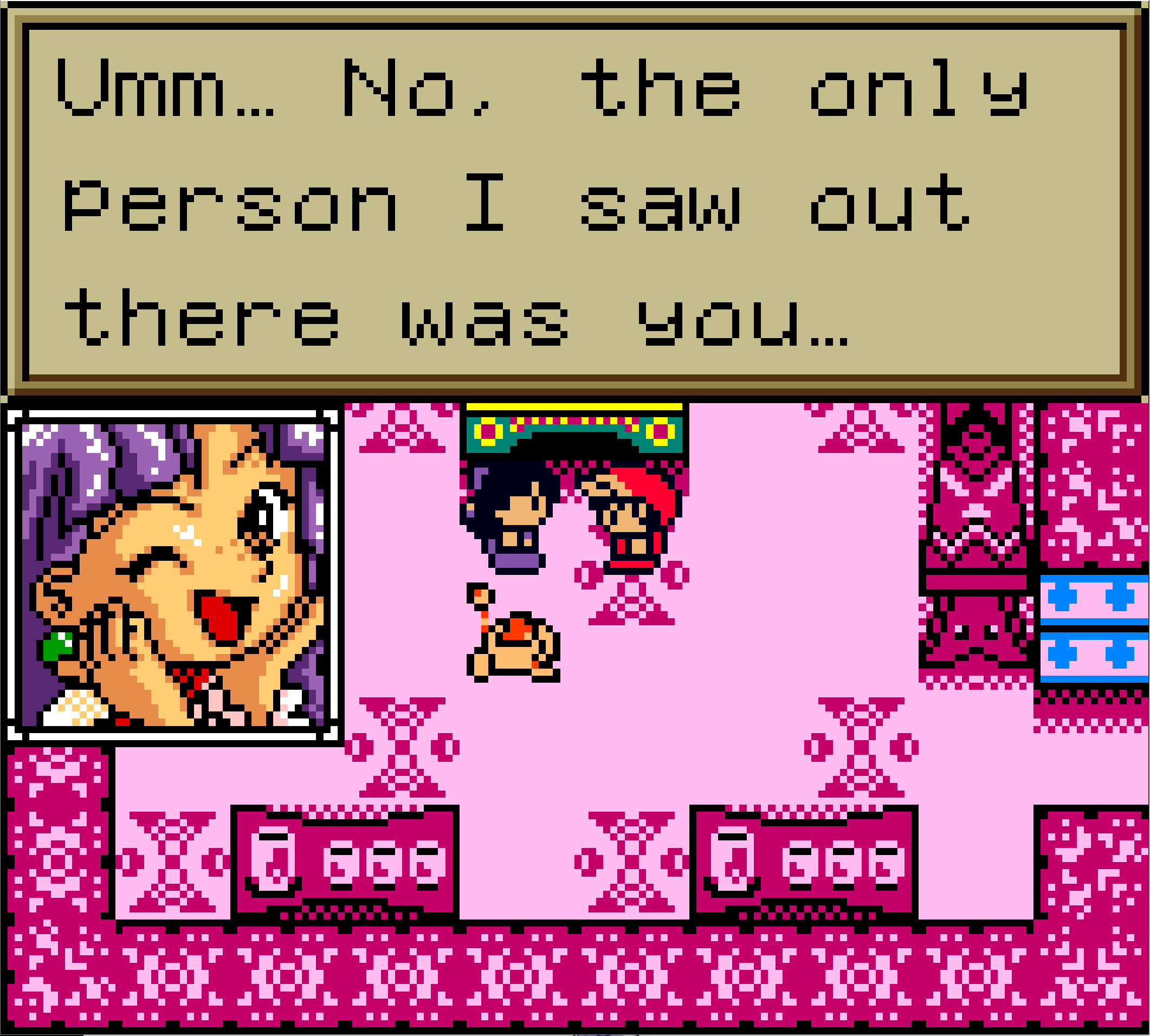
Game Arts' breakout game is doubtlessly Lunar, but not nearly as many people talk about Grandia.  And it's a shame, as I actually think it's a fantastic series, with the first game in particular even surpassing Lunar in its sense of adventure, wonderful characters and overall fun design, and I'm glad it's available on modern platforms alongside its sequel in the Grandia HD Collection.  As with many late '90s games, though, it had a spinoff on a portable platform; this time as a Japan-exclusive on the Game Boy Color.  The plot stars a character called Yuuhi who, along with his friend and rival, are pulled into the world of Grandia, and he must ally with the familiar protagonists of that game to reunite with his classmates and return home.  It incorporates some of the actiony elements of Grandia's dungeons, having you jump pits, avoid hazards and solve puzzles to progress, and even has quite a few familiar musical beats from the original game.  Combat is changed up to be  a turn-based experience, though still incorporating Grandia's Initiative-Point based combat to a degree - after selecting an action you can choose where to place a character on the timeline, and having several characters act in succession can combine their moves together into new, damaging combinations for extra damage and effects (like hitting all enemies on the field or inflicting a different type of elemental damage).  Actions themselves are tied to a collectible card element; you find new cards by winning battles or as treasures in the field, and you can then equip them on characters to use them in battle, or combine two cards together to potentially get a new type of card, or two similar cards to combine them into a more powerful version.  It all feels a bit like it's hopping on the bandwagon of Pokemon, Digimon and similar collect-em-all games of the time, but it's at least a well-executed and entertaining experience.  Grandia fans will definitely get the most out of it, though.


Developer: Game Arts
Publisher: Hudson Soft
Released: 2000
Platform: Game Boy Color

Friday, April 8, 2022

Daikatana

Daikatana on PC is a name which continues to live in infamy.  It was hyped up big-time before its release for being a pet project of the auspicious developer John Romero, who made his name working on Doom.  John Romero himself played no small part in this - he registered countless merchandising trademarks for the game years before it came out, and even ran a notorious magazine ad simply proclaiming "John Romero is about to make you his bitch" while saying nor showing nothing of the actual game.  But as Daikatana's development dragged on for over five years, it ultimately would require something on the order of 2.5 million copies sold to break even; however, news that it was still running on the now-outdated Quake II engine, as well as an atrocious multiplayer-only demo and rumors of behind-the-scenes drama at Ion Storm soured many fans well before it released.  It fared no better when it actually came out, getting pitiful reviews across the board and ultimately barely breaking 40,000 copies sold, becoming a tremendous commercial and critical failure which is still commonly pointed to today as a perfect example of developer hubris.

In between it all, though, a little studio simply called "Will" concurrently developed an adaptation for the hottest handheld at the time, the Game Boy Color.  While the plot is largely identical to its PC counterpart, the game itself very much is not; it's viewed from a top-down perspective with gameplay heavily modeled on the Zelda series, most especially Link's Awakening.  So, while you're still wielding a ton of different firearms and hopping through time in pursuit of a magical sword, it's done with monster-zapping, platforming, puzzle rooms and boss battles and even chibi-style spritework and animation that honestly looks pretty nice on the hardware.  It makes for a surprisingly decent game, and it still stands out today as being a "downport" of a high-profile game that's actually much better than its counterpart.   Physical copies are a bit tough to come by (owing to only being released in Europe), but John Romero also released the game for free on his website several years back, so it's definitely worth a try.


Developer: Will
Publisher: Kemco
Released: 2000
Platforms: Game Boy Color

Sunday, December 27, 2020

Pokemon Gen 2 (Gold/Silver)

The second set of many Pokemon games that would be released over the decades, Gold/Silver improved the balance in a number of ways and made an impressive amount of improvements and additions, creating what are arguably the most technically impressive Game Boy games of all time.  But are these Pokemon games still fun ones today, or are they just destined to be forgotten amongst a sea of followups, sequels, spinoffs and remakes?

Like most people who were around at the start of the Pokemon phenomenon, I got swept up in it for a good while.  I sunk nearly 100 hours into Red, trading with people, training up my team and trying to capture all 151 Pokemon; even if it was a frustrating and largely luck-based experience, I was hooked and wouldn't rest until I had, in fact, caught them all.  Of course, the game's addictive design and competitive element ensured that Nintendo wouldn't let it be a one-off thing, and so the first of many sequels was quickly announced in "Pokemon Gold and Silver".  Naturally, I went out and bought a copy of Gold as soon as I could, while my sister opted to get Silver instead.

What was in store was about what I'd expected, but it nonetheless managed to surprise me in quite a few ways as well.  Of course, there were more Pokemon this time, adding 101 new faces in addition to all the old faces (though, of course, you'd still have to do quite a bit of trading between games to add them all to your Pokedex).  A day/night cycle was added via an in-game clock, requiring you search both during daylight and nighttime hours to find new Pokemon, as well as adding other timed events to the game.

Game balance was also addressed in a pretty big way in the second wave of Pokemon games.  Anyone who played the original Red/Blue family of games can attest that they were pretty lacking there - Psychic and Ice types basically dominated everything while Poison, Bug, Grass, Ghost etc. were almost worthless in comparison (particularly owing to some poor planning and bugs that made Psychics completely immune to Ghost-type attacks, which they were supposed to be weak to).  That has very much changed this time around, with a number of new moves made to exploit those types' weaknesses, as well as two new types - Steel and Dark - that have new advantages and drawbacks of their own.  Steel types are naturally very durable and resistant to most types of damage, and deal double damage to Ice types, while Dark types are immune to Psychic attacks and deal extra damage to that type to boot, giving some much-needed kryptonite to formerly-unstoppable juggernauts like Mewtwo and Alakazam.  It wasn't a completely foolproof endeavor, though - in attempting to even out all the other types, the humble Normal type suddenly rose to the top of the pack owing to their lack of weaknesses, enormous move pools and having tons of options to stall - but even with that, the game feels much more well-balanced and satisfying to play than the originals.

Inventory management is significantly improved too, with different pages for different types of items the player acquires (key items, Pokeballs, healing items, et cetera), as well as the ability to assign a single item to a "Quick Key" via the Select button (handy for the bicycle in particular, as it makes getting around much more convenient).  Not only that, but Pokemon can use items themselves - each can use a "Hold Item", which can serve a number of purposes - various types of Berries can be used to heal status effects or some HP automatically mid-match, while others will boost the effectiveness of some of their moves, make them slightly more resistant to some types of attacks, or even let them slowly regenerate HP over time (Leftovers).  It adds a significant new layer of strategy to the game, as well as a convenient way to overcome otherwise debilitating status effects like Paralysis and Freeze.

Training and raising Pokemon is a considerably more complex endeavor from this point on as well.  Nearly all Pokemon now have genders and can breed with one another, passing on some stats and moves to their children, which also led to the infamous meme about Ditto (who can breed with virtually any Pokemon type).  On top of that, there are many more TM moves to learn, and it's possible to delete moves (including otherwise-unremovable HM abilities) at a particular shop, so you don't have to set aside Pokemon for that specific purpose.  In addition, each Pokemon now has a hidden "Friendship" stat, which can enable evolutions for some (like Pichu, Igglybuff and Cleffa) and affect the power of some moves.

Pokemon has never really been highly regarded for its storytelling, but Gold/Silver also made an attempt to provide a more immersive and running narrative.  The player gets access to a radio early on, which allows them to keep up on some running time-based events and can also allow them to win prizes on some occasions (a lottery based on their trainer ID).  One also gets access to a phone, which can be used to keep in contact with some characters and, also on a timed basis, allow them to undertake some story events and rematches to earn extra experience and cash (ending the "finite money" issue of the original games).

Perhaps the most impressive element of Pokemon Gold/Silver, though, is the fact that one can revisit the entirety of Red/Blue's Kanto region as a bonus after completing the main story.  Yes, the game's programmers (headed by the late Satoru Iwata) managed to compress the data for basically the entire original game and included it in the sequel as a bonus - you get to explore, collect all eight badges again, and see a pretty clever twist after completing a new final challenge at the end of it all.  That alone makes it one of the most impressive Game Boy games in my book - technically it was built for the Game Boy Color, but it was backward-compatible with the original system (which was not the case for the third iteration of this generation, Crystal, which added a significant number of changes and visual effects).

I never became a huge Pokemon fan (and largely lost interest in it once the Game Boy Advance rolled around), but Gold/Silver continues to stand out in my mind as my favorite game in the series as well as one of the best Game Boy games of all time.  It addresses many of the shortcomings of the original games while adding many of its own new mechanics, and the sheer amount of content it contains was nothing short of staggering for the time, rivaling that of RPGs on far more powerful platforms like the Playstation 1 and even some PC games.  Like the original games, it's since gotten a number of sequels and a remake that updates it to more powerful hardware (the Nintendo DS), but I think even fans of the series should check out the originals at least once, if only to see a true technical marvel for the time.

Developer: Game Freak
Publisher: Nintendo
Platform: Game Boy Color (backward-compatible with Game Boy)
Released: 2000
Recommended Version: N/A

Monday, August 31, 2020

SaGa Frontier 2

SaGa Frontier 2 is noted for being a vastly different game from its predecessor in almost every way, changing up its aesthetic, its gameplay and even many of the fundamental elements of its design.  But does it prove to be a worthwhile adventure regardless, or is it just too much of a changeup for even fans of the highly experimental SaGa franchise?


The SaGa series has never been a hugely popular one outside of Japan, but it has nevertheless found a niche fanbase, with its fans praising its experimental nature and open-ended design that draws influence from western RPGs.  Indeed, most games released under the name were almost entirely open-ended, having the player build a party, train them up and explore the world and all it has to offer at their leisure, only stumbling upon the main plotline after much wandering.

2000's SaGa Frontier II, on the other hand, was almost a complete 180 from that school of design.  Instead of being allowed to freely explore the world, its gameplay was almost entirely linear, having the player pick scenarios from a simple map menu that highlight points along a linear timeline, spanning its protagonists' entire lives.  Some are simple, non-interactive story segments, while the rest would stick the player in a small geographic area and having them advance through it, only being allowed to save their progress after completing it (though they can create a temporary "quicksave" in the interim).  The overarching plot follows two distinct storylines; the tale of Gustave XIII, a prince exiled from his country for lacking Anima (magic, essentially), and the other Wil Knights, a "Digger" (treasure hunter) in search of a legendary artifact. These two plots take place in the same world, with events in one story affecting the other, though the two characters never directly interact until close to the end of the game.

On the other hand, this does afford the game a degree of character depth that few other titles in the series offer.  Gustave is easily one of the most complex protagonists in the series, having low self esteem as a result of his upbringing and generally being manipulated by those around him as a result, even being dragged into a war with the country of his birth that he's reluctant to fight himself.  Wil, on the other hand, comes from a long line of treasure hunters and deals with rivalries and family drama throughout his story.

SaGa Frontier 2 is also a stark contrast from its predecessor in presentation.  Whereas that game was set in a bizarre world of fantasy creatures and science fiction elements, with CGI graphics and quite a lot of synthy electronic tunes, 2 opts for a strictly medieval setting and a "hand-crafted" style.  Sprites are hand-drawn and cartoonishly exaggerated, backdrops are finely-detailed watercolor paintings and the music is much more mellow and instrumental in sound, with a lot of piano tracks throughout.  It's easy to mistake it for an entirely different franchise at a glance, and it easily could have been if not for the handful of game mechanics tying it to the SaGa brand.

Case in point, combat in SaGa Frontier 2 remains perhaps its only largely consistent element.  You get a party of up to four characters and battle enemies when you make contact with them on the map, taking them on in a turn-based system.  The controversial weapon durability system returns from the earliest game in the series (though steel weapons have unlimited durability), and attacks are powered by either SP (for magical attacks) or WP (for special moves performed with weapons).  Skills are still randomly learned through battle, with odds for gaining them becoming better as you battle stronger enemies than yourself, and stat gains are also randomly awarded after battle.

A few change-ups are introduced, however.  One prominent one is that winning a battle doesn't restore all of your HP; just a portion of it.  Perhaps as a result of this, any character can now restore HP even if they don't have access to skills or items for that - they can instead spend one of their LP at the top of a turn to fully recharge their HP.  You also don't necessarily have to defeat every enemy to win.   Sometimes defeating enough will end the fight in a surrender, or you can attempt to negotiate a truce, chasing enemies from the field or, if you're outmatched, pleading for mercy can sometimes cause them to spare you.  Certain skills can increase the odds of such negotiations being successful, though I didn't end up using this feature a whole lot during the time I played.

As the game centers on a battle for the right of succession, I suspected that the game would incorporate some Suikoden-like elements, and I was actually correct in that regard.  Somewhat similar to Suikoden, there are three types of combat - the aforementioned SaGa style battles, one-on-one duels, and large-scale war battles, though they don't bear too much resemblance to that game's counterparts.  Duels are a somewhat strange beast, operating largely similar to the standard combat system save that you pick 3-4 moves per turn and watch them play out before choosing again.  Some attack moves can be chained together for extra damage, while other commands exclusive to this mode can do things like enhance the power of your next attack, give you a greater chance to block an enemy's attack, or increase the chance of hitting with your next move.  Its design is a bit overcomplicated, though - I won almost every one of these by simply choosing to Charge, then picking my strongest attack to deal extra damage with it.  Do that for two or three turns, maybe throw in a Parry or two, and most enemies will have their HP depleted long before you ever do.

Larger-scale war battles are also here, and they play out a bit similarly to the war battles from Suikoden III.  Each side gets a number of units that move across a grid, and when one side's moves into the same space as the other's, a clash occurs, playing out like a single round of the standard combat system.  The side that sustains more damage during this is declared the loser and driven back to the place they last moved from.  Interestingly, though each unit can only have four active characters at a time, fallen ones will be replenished from a supply of reinforcements at the top of each turn, one at a time.  Therefore, if a unit loses a character or two during a clash, it's often a good idea to have them retreat for a turn or two so they can regroup and join the fray again later.

SaGa Frontier 2 is arguably the oddest game in the series, doing away with almost everything that drew people to the franchise (and particularly its predecessor) in the first place.  The series trademarks of open-ended design, a surreal science-fantasy setting and even open-ended character customization are largely discarded in favor of a linear fantasy tale that puts heavy focus on interpersonal drama.  In fact, if it weren't confirmably written and directed by series mastermind Akitoshi Kawazu, I'd swear the franchise had been co-opted by an entirely different team of developers for this entry.  But in a way, it also encompasses what SaGa has always been about - an experimental series that takes unconventional ideas and inspiration from western RPGs and tries to make an interesting experience out of it.  The game certainly succeeds on that front, telling a complex and personal tale of two very different protagonists embarking on their own journeys, then coming together at the end to save the world.  But in a time period when RPGs were beginning to become more open and strive for a realistic sense of scale, making you feel that you were exploring and interacting with a huge living world, SaGa Frontier 2 certainly stood out like a sore thumb for its restricted design.


Developer: Square Product Development Division 2
Publisher: Square, Square Electronic Arts
Platform: Playstation 1
Released: 2000
Recommended Version: N/A

Tuesday, August 11, 2020

Koudelka

A late-generation release by Sacnoth, a company headed by Hiroki Kikuta (who made his name at Square composing for the Mana series), Koudelka was an experimental blend of RPG and survival horror elements.  But did it prove to be a worthwhile combination for those few who played it, or was it simply eclipsed by the Shadow Hearts franchise that followed it?

 A fair number of people enjoyed the Shadow Hearts series on the Playstation 2 - indeed, its second entry was regarded by many as one of the best RPGs on the system - but its origins were not quite as auspicious.  The first Shadow Hearts did relatively well in reviews, but sales were hamstringed by an M rating because of its heavy horror elements.  Even before that, though, there was one other game built on its model. That game was Koudelka, released for the PS1 in 2000 only a few months before the Playstation 2 made its debut.  That unfortunately timed release, plus mediocre reviews overall, led to it being overlooked by almost everyone; indeed, even as a big fan of Shadow Hearts, I didn't know this game existed until several years after the fact.

When I eventually played it, though, what I found was a game that was very well-made on quite a few levels.  Right from the beginning, Koudelka shows off high-quality FMVs easily on par with those in Square games, and even some surprisingly well-done in-engine cutscenes that utilized motion capture and professional actors for voiced dialog (with very little conveyed through simple text).  They definitely show that off in every way they can, too - despite it being a relatively short game (about 10-12 hours for a first playthrough), the cutscenes and voicework ensure that it takes up four CDs.

The gameplay didn't prove to be nearly on the same level, though.  Essentially, this is a slow-paced, puzzle-driven survival horror title, made even slower to experience by a tactical turn-driven combat system.  When you encounter an enemy the screen fades to a 7x7 grid that players can move freely around (though they cannot be on the same line as the enemy, nor even cross through it).  Each turn characters can move, attack adjacent tiles with a melee weapon or cast spells at range, all of which have fairly lengthy animations to endure.  Weapons have a significant chance of breaking each time you use them, and most also have elemental properties, none of which made much sense to me (a hammer that deals Holy damage, yet heals even headless corpse enemies on a hit?).  Strangely, there also isn't any real difference between the three playable characters - all have the exact same pool of equipment to use and spells to cast, and the player is even given full control over what stats they want to increase each time someone gains a level, which is more than a touch broken.  Indeed, once I figured all that out, I just ended up pumping everyone's Intelligence, Vitality and Piety up with every level; Intelligence boosts spell power, while Vitality and Piety boost maximum HP and maximum MP/Magic defense respectively.  Furthermore, putting one point into the latter two on a level will fully restore your current total and both grow exponentially after a certain point, so it became viable to simply rely on spells throughout the whole game.  Not to say that the game is easy; far from it in fact.  Enemies seem to deal out completely sporadic damage - one turn they'll hit everyone in your party for single digits, the very next they'll target a single person and hit four times for more than double their maximum HP.  Almost all of them inflict some manner of status effect too, and heaven help you if your entire party is Silenced or Paralyzed and you don't have enough items to quickly cure them (and hope they don't just reapply them the next turn), because they'll probably wipe out your whole party and force you to redo an hour of work.

Despite all that, though, Koudelka still managed to hold my attention to the end, in no small part for its impressive production values and story.  The setting - a creepy, dilapidated castle -effectively dark,  moody, and well detailed, with very few drab rooms to explore.  There are a fair number of interesting (and at times, downright twisted) characters throughout the adventure, and as mentioned, the character animation and voiceover is surprisingly enthralling, giving it the feel of a well-produced horror film.  I was pretty well engrossed in it throughout, and despite my gripes with the gameplay,  I'd honestly say it's one of the most impressive horror tales on the original Playstation.  No small feat given the sheer amount of competition it had from franchises like Resident Evil, Clock Tower, Dino Crisis and the first Silent Hill.

One significant omission compared to those games, though, was its replay value.  As mentioned, the game is relatively short for an RPG, and once you've completed it, there's not really much reason to come back - you don't unlock any new bonus items or hidden things for completing it faster, and while there are two different endings, the only factor determining which you see is whether you win or lose against the final boss.  Strangely, though, you get what I consider the more satisfying of the two endings by losing, so if you hit a brick wall against the final boss, well, it's not really worth grinding out levels to see the other one.

For fans of the the Shadow Hearts series, it's interesting to see where the franchise got it's start, and even non-fans can easily easy to be wowed by how much effort was put into telling its story.  However, because of internal strife during the design process, the gameplay ended up being very mediocre and dragged the whole experience down.  This in turn led to poor critical reviews, lackluster sales and the rest of a planned franchise (following other members of Koudelka's family throughout Europe) being cancelled as Kikuta left the company he founded and the remaining staff took things in a new direction.  As such, Koudelka now commands asking prices of over $200 online, ensuring that this one is for only the most die-hard of Shadow Hearts fans and collectors of rare RPGs.


Developer: Sacnoth
Publisher: SNK, Infogrames
Platform: Playstation 1
Released: 2000
Recommended Version: N/A

Tuesday, March 24, 2020

Lunar 2: Eternal Blue Complete

Lunar's first remake for the fifth generation of consoles was a hit with fans of classic 2D RPGs, so it was inevitable that its highly-acclaimed sequel would soon get a remake of its own.  But does this remake do justice to the Sega CD cult classic, or is it simply a flawed counterpart?


Despite being released late in the system's life and garnering overall low sales as a result, Lunar 2 on the Sega CD quickly became a cult classic for the platform and is still widely hailed as one of its best games.  Its gripping story and high quality animated cutscenes were a sight to behold, as was a great CD soundtrack and even surprisingly competent voice-over for the era.  But it was marred with criticism as well, mostly for its publishers (the ever-controversial Working Designs) making bizarre and unnecessary alterations to both the gameplay and the script.  Like most of their games, it's translation was far from faithful to the original Japanese script, changing many plot points and adding in numerous juvenile jokes.  There are also an abundance of references to the movie "This is Spinal Tap" - even the company's motto at the time was "our games go to 11".  Many gameplay changes were implemented as well, ostensibly to add challenge but in practice making the game considerably more grindy and less fun.  The difficulty has been dramatically ramped up through higher MP costs for many spells, buying items and healing at shrines cost much more money, enemy stats were all cranked up, and most infamously of all, it forces the player to pay large sums of valuable Magic Experience (dependent on Hiro's current level) just to save the game - something that didn't exist at all in the original Japanese version. 

Thankfully, they seem to have finally taken that criticism to heart by the time Lunar 2's remake was announced.  Eternal Blue Complete was left largely untouched gameplay-wise, only making some minor tweaks to address bugs and other inconveniences (like disallowing items in fights the player is scripted to lose so that they don't go to waste). The translation is also a bit more subdued than their earlier efforts, though still laden with jokes, silly accents and pop culture gags (one that particularly stands out to me is a Who Wants to be a Millionaire reference, which dates the game quite a bit).  As usual, they also went all-in with the packaging, shipping the game in a foil-stamped box and including extras like a map, a bonus CD with a "Making of" commentary, a hard-cover manual and a set of miniature standees depicting all of the main cast.  They were very obviously passionate about their works and tried to invoke the mood you'd get buying an old big-box PC game with all the extras - you weren't just playing a game, you were adventuring into another world.  The downside, of course, is that complete copies of the game are now somewhat sparse and can go for over $100 online.

Eternal Blue Complete's gameplay is largely modeled on its predecessor's, retaining many of the improvements it brought. Random encounters are still a thing of the past, now allowing the player to see them on the dungeon map and evade them with the ability to dash. Combat retains a slight tactical bent, with each character having a finite movement range per turn and some attacks having areas of effect, giving the ability to hit large groups of enemies at once and lessen the damage from some moves by spreading out the party. The Magic Experience system from the original is done away with completely in favor of earning spells through levels, with some attaining more powerful upgraded versions after the player's level reaches a certain threshold.  Ruby (Hiro's dragon companion) also aids in battle, though in a slightly different manner than Nall from the previous game - if an enemy is reduced to very low HP but not quite dead, she will often fly down and deal a finishing blow at the end of the round.

A new addition to the game is the Crest system.  Crests are items that grant small stat bonuses/penalties and occasionally spells when equipped.  This allows for a degree of character customization, and some even allow any character to cast elemental attacks, letting you exploit weaknesses more easily than in 1.  Seemingly taking a cue from the Final Fantasy series, many items also have extra effects when used in battle; particularly staves, which often cast mid-ranged elemental spells for no MP cost.  One of the more interesting ones is the Thieves' Staff, which grants a chance to steal items from enemies; you won't get anything too rare from most enemies, but having a few extra Angel Tears or Star Lights around is never a bad thing, particularly late in the game.

Lunar 2: Eternal Blue Complete, simply put, is a great update to a classic, taking the same great story as the first and updating it to a new generation in style.  Higher-quality cutscenes with top-notch animation, remastered music that sounds fantastic, the same great reworked engine and design philosophy as the first Lunar remake, and a number of gameplay improvements over the first.  Working Designs resisting the urge to make the game more difficult certainly helps it too; the game is polished to near-perfection as is, providing just the right amount of challenge without ever feeling overbearing and rarely requiring the player to stop and grind for experience and resources.  It may not be the most visually impressive PS1 RPG or quite as memorable as the remake of 1, but it's an elegant, enjoyable and charming update of a Sega CD cult classic.


Developer: Game Arts, Studio Alex, Japan Art Media
Publisher: Kadokawa Shoten, Working Designs
Platform: Sega Saturn, Playstation 1, Playstation Network
Released: 1998, 2000, 2015
Recommended version: Thus far, the only version of the game in English is the Working Designs release on the Playstation.  The Japan-only Sega Saturn version is the "non-complete" release and lacks some extra content that was added to the Playstation versions.  The Playstation Network release is an emulation of the Japanese version and is currently only available in that region.

The original Sega CD release is a cult classic in its own right, although Working Designs did include a few of their questionable changes, including having to pay Magic Experience to save your game and making the battles considerably more difficult.  I would recommend finding the fan patch that "unworks" that version.

Tuesday, February 25, 2020

Wild Arms 2

Wild Arms 2 came out three years after the first, expanding on the elements it established in just about every way it could.  But does it prove to be a worthwhile sequel, or just a disappointing followup to a cult classic?


Wild Arms was a well-regarded early RPG for the Playstation, though it quickly faded from the limelight once Final Fantasy VII arrived and took the world by storm.  Wild Arms 2 was released at the height of Square and the Playstation 1's popularity and found itself struggling for attention among a sea of other high-profile RPG releases, which probably didn't do it any favors when it had a more traditional, 16-bit feel to its design.  Fans of the original were also quick to deride it for its perceived faults, most notably a poor-quality translation that resulted in a lot of meme-worthy dialog and muddied story points (famously, one element that got a lot of praise - depicting two characters in a positive gay relationship - was simply the result of poor wording and not actually intended by the game's writers).  Over time, however, people warmed up to the game, regarding it as a solid, if not outstanding, sequel to the first and a logical step forward for the series.

I'm actually in a bit of an odd middle ground there; while I didn't play Wild Arms 1 until many years after the fact, I did play through and enjoy Wild Arms 2 when it was relatively new (particularly as I was in the mood for an RPG modeled on the 16-bit style).  While it obviously took more inspiration from games like the SNES Final Fantasies and Zelda than it did from more modern, "Movie-like" RPGs, it nevertheless captivated me with its strong presentation, well-paced gameplay and smooth design.  Wild Arms 2 again melds 2D and 3D graphics in a creative way, with 3D environments throughout the game but 2D character sprites for smoother animations outside of battle.  The three-year technological leap is very evident too, with almost no grainy textures, a much smoother framerate overall.and some surprisingly good visual effects (like certain attacks being portrayed from multiple camera angles in split-screen).  Audio design is similarly updated, retaining the same high-quality music as the original but much fewer distracting stock sound effects in battles.

Wild Arms' gameplay is largely retained, though with a few twists made to prevent it from becoming too monotonous. A notable difference is that the combat system does away with MP for special attacks. Instead, these are now governed by the Force gauge - once it rises above the required amount, you can cast that spell as many times as you wish until it falls back below the threshold.  The spell-learning system also has some new quirks, with more powerful Crests available that can multiply a spell's power by 1.5 or halve their FP cost, and even some entirely new types of magic for two of the new characters.  Tim learns spells by equipping a medium and killing a certain number of enemies, for example, while Marivel works somewhat like the Blue Mage class from Final Fantasy, learning certain spells from enemies with her Skill Drain ability.  Gaining levels also proves more impactful now - one's Force bar at a total equal to their current level, and they now gain "Personal Points" that can be spent to gain permanent bonuses like resistance to status effects, more HP gain per level or having a higher chance to counter-attack.  Spending these wisely is another very important part of the game's strategy, as it can make a drastic difference in the game's overall difficulty.  Dungeons are also considerably more convoluted now owing to the 3D layout, but efforts are made to help prevent you getting lost - the game provides a compass to follow, and each dungeon is also littered with HP-restoring "gems" that help you to keep track of paths you've already taken.  The world map has some twists of its own - towns and secret items are not readily visible until you "scan" for them to reveal their whereabouts.  Some can be determined by deciphering clues given to you from story context and NPCs in towns, but others are simply a bonus for exploring around as much as possible.

As one would expect from a sequel, there are also many more playable characters this time - a total of six, in fact.  Ashley is a relatively balanced character who utilizes Arms, Brad also uses Arms and is a slower, but heavier-hitting powerhouse, while Lilka is a Crest magic caster who operates very similarly to Cecelia from the first game.  Tim is another caster, though with a heavier emphasis on summon magic (learning mundane spells from having them equipped and having the ability to get more mileage out of summons than most characters).  Kanon is a weaker but speedier fighter who utilizes cybernetics and learns new special moves based on random chance influenced by her current Luck, while Marivel learns spells from enemies and summons various robots to attack her foes.

As in the last game, each character also has their own set of Tools, which play a significant part in solving puzzles or just providing conveniences for the player (like finding treasures that aren't readily visible).  The puzzles are quite a bit more varied and involved than the first game's too, often requiring some creative thinking - for instance, Ashley's throwing knives will actually fall when they hit a wall or other solid object, which can be used to hit a switch beneath him that he couldn't otherwise get to.  One will also frequently have to revisit dungeons later on when they have a tool to clear a particular obstacle they couldn't before if they want to experience everything in the game.

Wild Arms 2 certainly didn't skimp on the extra features, either.  As in the first game, you can redesign the UI's windows and icons to your heart's content, and even enable a screensaver for when the game is left idle for more than a few minutes at a time.  One has the option to name almost every major character in the story, playable or not, which is a bit unusual for games of this type.  More usefully, one has the ability to cancel random encounters - if a weaker enemy is about to attack, the player will see an exclamation point appear about their character's head.  Pressing the cancel button during this moment (default Circle) will cause the fight to be skipped completely.  However, one will still have to fight a fair bit to get above the enemy's level to enable this option, and "surprise attacks" can still occur, forcing the player into a fight with no opportunity to cancel it.

So, despite a spotty translation, I think that Wild Arms 2 is a significant improvement over the first game.  It has a fun storyline with some interesting twists, an impressive presentation despite its simpler and cartoonier aesthetic than the norms of the time, and plenty of gameplay expansions from the first that help it come into its own unique niche.  Combat mechanics are given much more variety, and while still rather monotonous (nearly all normal enemies die in one hit while bosses rarely involve more strategy than "spam your most powerful attacks at them"), the fact that most mundane battles can now be skipped significantly improves the pacing.  I enjoyed playing through it at the time, and while it is a more fun experience than the original, it's still not one that's held up particularly well over time. 


Developer: Media.Vision, Contrail
Publisher: Sony Computer Entertainment
Platform: Playstation 1, Playstation Network
Released: 2000, 2009
Recommended Version: The PSN version is a direct emulation of the original game.

Sunday, January 26, 2020

Vagrant Story

Vagrant Story was Yasumi Matsuno's second outing under the Square label and part of what would later be known as the Ivalice Alliance, though telling a story largely unconnected to the one in Final Fantasy Tactics.  Per Matsuno's standards, it is also a very unconventional game in many regards, feeling like a combination of a dungeon crawler and an action-platformer.  But does it prove to be a worthwhile experience, or is Vagrant Story a game with too many ideas for its own good?


Vagrant Story was definitely a divisive title among Square's PS1 entries, proving to be much different from their usual fare.  While touted as another entry in their acclaimed line of "movie-like" JRPGs (and having the aesthetics and some gameplay elements to match), it was really more of an action-oriented dungeon crawler; there were no shops, a limited supply of items, HP and MP would slowly recharge over time instead of doing so at inns or save points, and it had an emphasis on platforming and puzzles in between story beats and battles.  The game was even broken up into "stages" - generally each time you defeat a boss, you'll get a ranking, some items and a semi-random bonus to your stats (governed by a rolling slot machine).  Limited inventory space was also a turn-off to some, though the game did at least provide linked chests you can put items into and retrieve from any other like chest, similar to the safe rooms in the Resident Evil games.

Vagrant Story also featured a combat system somewhat similar to Parasite Eve, albeit not tied to a turn gauge - pressing the circle button at any time pauses the action, bringing up a 3D globe that you can target enemies within with your weapon.  Unlike Parasite Eve, however, Vagrant story features intra-model targeting - the ability to hit an enemy in their torso, a limb or the head.   Enemies are often vulnerable in only a specific point or two (for example, an early boss is an animated set of armor with a very thin connection between its torso and abdomen - hitting anywhere else will do much less damage).  Similarly, hitting the same spot repeatedly can cause a critical injury, inflicting negative effects like weakened attacks or parrying, silence or reduced movement speed.  Enemies can do the same to you, however, so keeping yourself healed during battle (and out of reach of your foes whenever possible) is a key part of the overall strategy.

Adding to this are battle abilities, which come in both offensive and defensive forms.  Offensive ones allow the player to time button presses during attacks to perform followup attacks, often with added properties - Draining some health from the enemy, restoring a small amount of weapon durability, inflicting status effects, or just doing extra damage.  Several can be chained in a row as long as you continually time button presses to a hit, racking up damage very quickly.  Timing hits is quite precise, though, and will require some practice on the player's part.  Defensive abilities work on a similar principle to the above - time a button press to an enemy's attack hitting you, and you'll get a bonus effect in return.  Countering their attack for partial damage, blocking about half the damage you take from a particular type of attack, or preventing status effects from being inflicted,  to name a few.

Mastering timed button presses and blocks is not as easy a road to victory as you may think, though, as there is a significant Risk VS reward element to the game - literally.  There is a mechanic in the game called Risk; as you attack (and chain attacks), your Risk counter will rise, and as it grows higher, you'll have less chance to land hits and will take more damage from enemies, but also a higher chance of scoring critical hits.  Risk will decay over time until it's finally back down to 0, doing so much faster out of combat, or you can spend items to lower it in a pinch.  However, it does build surprisingly fast, particularly when you chain battle abilities (which add several points per hit or counter move), so weighing it effectively also becomes essential to victory.

Special moves come in other forms, too.  Using a particular weapon type long enough will cause you to learn a Break Art for it - these are often powerful and useful attacks, but drain some of your HP when you use them, so they come at a cost.  Magic naturally plays into the game too; you have an MP bar that slowly refills over time, and will find Grimoires throughout the adventure that cast spells.  Using one causes you to learn that spell, and from that point on it will be cast from your MP reserves instead.  Neither of these abilities can be chained, but neither build or factor in Risk either, so they're another option to factor into your strategies.

I think the major element that drove most people away, though, was Vagrant Story's crafting system.  This too quickly becomes vital to success, requiring the player to tune their weapons and equipment to maximum effect against enemies, and further, to pair them with the proper grips and gems.  Weapons have interchangeable grips that are more or less effective with certain types of weapons, while shields can equip gems that change their affinities toward certain attacks.  Weapon types can also be combined to create new ones, with the product of that union having a combination of the affinities of both (though not necessarily an average).  There is a large random element to this too, so while you can occasionally get something amazing like a Damascus weapon, you might also get something less effective for the situation than you'd necessarily like.  Generally, you'll just have to hope for the best, and be prepared to make do with what you get if you don't luck out and get optimal results (or just be prepared to do a fair bit of save-scumming until you do).

Vagrant Story is definitely an odd beast, particularly for the era in which it came out.  While it retains some similar design elements to earlier PS1 entries on the system and its movie-like presentation definitely lives up to Square's high standards, its gameplay is considerably more akin to older titles from the early CRPG era.  With an emphasis on puzzles, random dice rolls, very tough battles, scoring points and a very in-depth crafting system that could fill a book in itself, it's a game with a steep learning curve and a heavy luck element rarely seen in JRPGs.  It does its best to be accessible and intuitive (even providing an online manual to explain many of its finer points), but even with that, it's something that will require a lot of patience and practice to adapt to.  However, those who enjoy this style of gameplay will quickly find it rewarding once they've attuned to its mechanics, and seeing how high you can raise your rank by completing stages and earning titles as quickly as possible will certainly spur them to master the game even further.  Those seeking a real challenge can also try again on New Game Plus mode, which allows you to carry over your gear but unlocks a new area with much tougher enemies that truly put your skills and luck to the test.


Developer: Square Product Development Division 4
Publisher: Square
Platform: Playstation 1, Playstation 3, PSVita
Released: 2000, 2011
Recommended Version: The PSN re-release is a direct emulation of the original PS1 game.

Monday, December 2, 2019

Baldur's Gate II: Shadows of Amn

The second game in BioWare's Baldur's Gate series, which made several tweaks to the original's design and, after an expansion was released, concluded its running story. But does Baldur's Gate prove to be a worthwhile adventure for D&D fans, or is this simply a lackluster sequel to a game that hasn't aged particularly well?


The original Baldur's Gate was a game renowned among PC gamers and D&D fans in general for its interesting storyline and strict adhesion to second edition rules, making it a classic to both camps.  It was not without its faults, however - the overall slow progression and some downright cheap encounters with enemies that could spam various debilitating effects (charm, stone, web, etc), paired with an extremely long duration for all of them, made combat downright frustrating at times and frequently all but forced the player to cheat in order to get by.

Baldur's Gate 2 continues this trend, adding some new effects to the mix like confusion and level drain (and my personal least favorite, psionic attacks from mind flayers that leave the player stunned for an extremely long time and vulnerable to their instant-death brain eating attack).  However, the game does show some improvement in this regard too, shortening the duration of many of the nastier statuses and taking care to give the player tools to counter most of them (like a Level 4 Lesser Restoration spell to counter level drain which did not exist in the tabletop game).  Many pieces of equipment also grant resistance or immunity to particular effects, and several class kits do as well, so there are tools to counter a lot of the nastiness one encounters.  Still, some fights are extremely cheap and all but require the player to use some underhanded tactics to succeed, so the big overarching issue from the first game is mitigated to a degree, but by no means eliminated.

Class kits are a new addition to Baldur's Gate II, adding much to the game's flavor and replayability.  Essentially, each of the generic D&D classes now has one of several variants the player can choose from, granting them some new abilities in exchange for others. For example, the Cavalier kit for the Paladin is completely immune to fear, charm and poison, gets innate fire and acid resistance and can cast Remove Fear once a day to aid the party, but cannot use any missile weapons.  Some offer a relatively reasonable balance of advantages and drawbacks (like the Kensai kit for the Fighter, which can deal out massive damage but cannot use any armor or ranged weapons) while others are virtually straight upgrades (nearly all of the Thief, Cleric and Bard kits).  One even has the option to retroactively apply them to characters imported from the previous game, which is a nice touch (though it comes with the drawback of averaging out their HP if the player employed savescumming to maximize their HP gains).  It can also allow for some amazingly powerful Dual Class combinations, like the Kensai dialing to a Mage and getting several spells to offset his weak defense, or a Cleric that gets the high weapon proficiencies and special abilities of a Berserker.

Some other significant improvements quickly show themselves too.  There is a much greater focus on party member interaction now, with each character one encounters being tied to their own questline and having several unique dialogs with the player and one another.  This can be interesting at times (like Viconia's character arc which, played properly, can convince her to change her alignment), and at other times it can be deterimental; some characters outright hate one another and will fight to the death if kept in the same party for too long.  One even has romance options with many of the female characters (though only one male character if playing as a female character yourself, disappointingly).  It ultimately doesn't have a huge effect on the overall gameplay most of the time, but it is nice to have the option and for characters to have alternate endings depending on the player's choices.  The antagonists in BG2 are significantly more nuanced too, proving to be effectively well-written and with a legitimate strong element of tragedy to them instead of the rather cartoonish ones of the first game.

The gameplay is much more focused as well. The world map is no longer nearly as expansive, with more interesting areas than just "woods with slightly different enemy sets" and fewer random encounters with generic goons on the way to a destination.  Sorely lacking from the original game, the player is now properly rewarded for completing quests with a large sum of experience for each character, not just a lump sum spread across the entire party.  Another nice bonus is that the player is afforded a unique questline depending upon their chosen class - thieves get to run a thieves guild, bards can run a playhouse, fighters get a castle (and must keep their peasants safe and taxes reasonable, lest they revolt), to name a few.  The rewards for these tend to be pretty useful and worth undertaking, as well as satisfying from a storytelling perspective, and it's another nice element of depth and replay value for the game.

Like many D&D games, Baldur's Gate doesn't offer a lot in terms of player alignment roleplaying choices.  There are only a small handful of times when being "evil" causes a storyline to change significantly (mostly in the form of your allies leaving the party), and there is very little benefit to choosing an evil character.  A few quests may yield useful alternate rewards, but for the most part, you're just doing more harm than good to your own experience by playing an "evil" character, as letting your reputation drop too low will cause you to constantly be attacked by bounty hunters and result in much higher prices in shops.

Baldur's Gate II is a logical extension of the first in every way, proving to be a much better experience on a storytelling and design front but every bit as frustrating as its predecessor managed to be in a lot of ways.  Combat still requires you to exploit loopholes to win at times, the roleplaying element of the game is stronger but still not amazing, and a general lack of balance and polish leads to a game with some very uneven difficulty and a lot of save-scumming being required to succeed, as well as some pretty game-breaking exploits for the player to abuse once they're aware of them.  Still, the game's stronger elements shine through to make it an entertaining experience, and in my book, still the finest game Bioware has ever created.


Developer: BioWare, Black Isle Studios, BeamDog
Publisher: Interplay, Atari
Platform: PC, iOS, OSX, Android, Linux, Switch
Released: 2000, 2012, 2013, 2014, 2019
Recommended version: The 2013+ update (dubbed "Enhanced Edition") makes some quality of life improvements like widescreen resolution support and a much-improved AI, as well as programmable party AI and some enhancements like new characters (most of whom can be romanced), quests and kits to play as, which only adds more depth and replayability to a game already swimming in it.  It also includes an alternate story mode (The Black Pits II), the original expansion and bonus disc content packed in, making it a definitive release.

Tuesday, July 2, 2019

Deus Ex

An ambitious action-RPG by Warren Spector and arguably the only game from the short-lived studio Ion Storm with any real longevity, Deus Ex is held in high regard among PC gamers as one of the greats.  But is this glimpse into a dark future still worth seeing today, or is Deus Ex another science fiction work that doesn't hold up to scrutiny?


Warren Spector is a name well-known to long time gamers, with nearly everything he's worked on pushing genre boundaries and attempting to create an experience never before seen in the world of gaming.  From Ultima to Wing Commander to Thief to System Shock, all of his games succeed in that to various degress, creating an immersive experience with staggering depth and immersion that even relatively few games today can match.

But even by that already high standard, it takes a lot to get named one of the best games of all time.  Deus Ex certainly made the effort, though.  Built on the groundbreaking Unreal Engine to allow for some truly enormous and realistic environments, Deus Ex also works in numerous RPG elements and multiple ways to complete each objective to create a truly free-form roleplaying experience.  This is evident even in the game's first mission - retaking the Statue of Liberty from a terrorist group that has occupied it.  One can take a stealthy approach to eliminating enemies with silenced weapons, simply march in the front door guns blazing, or traverse almost all combat by finding a hidden back entrance.  Each choice is equally valid, and more surprisingly, one's choices in previous encounters are often referenced in later dialog, letting the player feel like their choices actually have some bearing on events unfolding.

Befitting this, one also has a large variety of skills to interact with the game world.  Boosting weapon proficiency is fairly obvious - giving better accuracy and damage bonuses the more they are raised - but others are a bit more involved.  Hacking skill allows one to bypass password requirements on many consoles and ATMS, giving one extra money and saving some password-hunting.  While one can lockpick/multitool their way through locks and keypads without the skill involved, having levels put into the skill will make doing so much more efficient.  Even the Swimming skill, while very situational, can prove handy at times, letting one take alternate routes into some areas or simply reach secrets hidden deep under the water.  These, plus the fact that one gets bonuses for exploring areas or solving puzzles in unconventional ways, all encourage the player to play Deus Ex as anything but a traditional shooter.

Of course, there are times one will have to fight enemies, even if playing a more peaceable character, and ot that end the game does offer some other options.  One can KO enemies non-lethally (or at least stun them) with things like pepper spray (both canisters and mines), tasers and non-lethal "tranquilizer" crossbow darts, or simply take them out from afar with a sniper rifle.  Robotic enemies are a bit tougher to crack, being all but immune to traditional weaponry, but one also collects weapons like single-use LAW launchers, LAM mines and a GEP gun that fires small explosions, which can also be handy for dealing with stubborn doors.  Almost every weapon one finds can also be upgraded by finding or buying alternate ammo types or "weapon mods" that grant bonuses like added accuracy, bonus damage or a laser sight/scope for more precise aim, which can offset some of the penalties for having a lower skill rating or just let you carry a specific weapon of your choice throughout the whole game.

Adding further to this, one has a wide variety of Augmentations ("Augs") to use to further power up their character and adapt them to whatever playstyle they choose.  Each canister one finds can be applied to a specific part of the body (head, arms, legs, eyes, et cetera) but only one of two choices can be installed on any given location, so the player will often have to make a difficult choice.  The Head upgrade, for instance, can grant "Aggressive Defense" that causes enemy rockets to detonate in mid-air, making encounters with explosive-touting enemies rather hilariously one-sided, or a Spy Drone, which can allow the player to peer around corners and disable electronic devices without exposing themself to harm.  A stealth-oriented player will obviously want to go for the latter, but one versed in combat may wish to go for Aggressive Defense instead.  But regardless of your choices, these prove to be a lot of fun, making you from a relatively average joe at the start into a nearly unstoppable badass cyborg by the end, and are a large factor in the game's overall enjoyment (particularly the Leg upgrades, which let you run at incredible speed and leap over almost any obstacle you may encounter in the game).

Deus Ex's storyline is clearly its greatest respect, though, fully immersing the player in a dystopian future where grand, global conspiracies are very real.  Characters, plot points and scenarios one encounters are surprisingly plausible, and have only grown more relevant and striking as time has gone on.  Even the voice acting in the game is surprisingly good for the time; though there are not a lot of big-name actors in the game, the ones that are there, for the most part, do a surprisingly good job, taking their parts seriously and rarely coming across as hammy.  It also captures something few RPGs even today rarely do well; namely, giving you choices you actually need to put thought into for future events, without any clear-cut answer for which is 'right' or 'wrong.' For example, do you ask someone to act as a spy for you, putting himself at risk but potentially giving you an advantage in future scenarios, or do you have him flee with you, which arguably gives you less personal benefit but assures his safety?  Granted, I wished several of these choices had a bit more consequence, whether good or bad, but it doesn't change the fact that it was pretty awesome to see at the time. I'd also hoped future games would make choices like this feel more substantial rather than less; maybe even lead to totally new story branches or close off future opportunities in a big way.  But alas, very few have.

Being a fan favorite PC game, it is also little surprise that numerous fan patches, updates and conversions have been released over the years; some of which have even surfaced on digital storefronts like Steam.  From mods that allow third-party multiplayer servers to be used to ones that overhaul and rebalance some aspects of the default game (like underpowered weapons and underused skills) to graphical reskins to a bizarre total modification called "The Nameless Mod" that presents two entirely original stories using the engine, Deus Ex, like many well-regarded PC games, is as well known for its fan-generated content as for the core experience.

In short, it's not difficult to see why Deus Ex is so well-regarded among PC gamers and RPG players alike.  It was among the earliest games where one's choices actually had a tangible outcome on the narrative, with character reactions and dialog changing accordingly, and though there is ultimately really one story path to follow, the fact that one's choices are a constant factor in how events unfold never makes it feel like they're being railroaded.  The story is surprisingly credible at its core, with its religious parallels and conspiracy theories expertly woven together to create a vision of a grim but plausible dystopia, and even the protagonists have their morally ambiguous elements about them.  Pair that with a choice of three endings and a significant amount of replayability thanks to mods and multiple-choice design, and you have a defining classic.  There is a good reason that the game is still the focus of a well-known gamer meme: "Every time someone mentions Deus Ex, someone installs Deus Ex."  I know I will be again after penning this review.


Developer: Ion Storm
Publisher: Eidos Interactive
Platform: Windows, Mac OS, Playstation 2
Released: 2000, 2002
Recommended Version: The computer ports are easily the ones to pick for their moddability (Deus Ex: Revision in particular is fantastic) and a much-improved interface over the PS2 version.  However, the PS2 version is worth look for a few interesting exclusive elements - the characters are much more smoothly animated (utilizing motion capture to provide more expressiveness) and it contains exclusive FMVs for the intro and ending scenes.