RPGreats now has a Discord! Come on in to talk about game music, games in general, submit reviews or just hang out!
Showing posts with label Series: Dragon Quest. Show all posts

Saturday, February 7, 2026

Dragon Quest VII: Reimagined

The fourth iteration of Dragon Quest VII to get a release is also the first to make the leap to HD, with a charming art style based on digitized models and many quality-of-life improvements over previous editions.  But does this notoriously slow-paced game benefit from yet another upgrade, or does it fail once more to invite new fans to the franchise?

Dragon Quest VII is arguably the series' most divisive entry, earning both praise and criticism for the slow pace of its story and its copious amount of backtracking.  It was also the last to retain the series' noted low production values, still using simple text-based menus and minimally-animated sprites right up to the end of the PS1 era; definitely a stark contrast to more visually impressive CGI works of the era like the Final Fantasy series.  The later rereleases on the 3DS and mobile platforms tightened it up and gave it an updated look, though it did little to improve its perception in the west.  In 2026 Square Enix commissioned Hexadrive to try again with another updated version, hoping to ride the wave of success they had with their remakes of 1, 2 and 3 in recent years.

The most notable element right away is the visual upgrade.  While the original was very bare-bones 3D environments and spritework with minimal animation (aside from a few scattered FMV cutscenes) and the 3DS version was essentially the same idea with 3D models, Reimagined... well, reimagines things.  The character models are based on dolls that were actually made and digitally scanned, and are surprisingly well-animated and expressive. Environments adopt a more photorealistic, diorama-like look to match the models, giving it a style that's a comfortable blend of realism and cartoon.  Voiceover was added too, bringing it in line with the recent remakes of 1-3.

Some other improvements from later Dragon Quest games were added to this one too.  Enemies are now visible on the map, giving you a chance to evade or battle them at your convenience.  You can also land a preemptive attack on them to get some easy damage before a fight starts, or if an enemy is significantly weaker than your party, instantly defeat them.  The UI is substantially improved over the usual text-based Dragon Quest menus, sorted into tabs for inventory, equipment, options and so forth, all visually represented.  Rather than having individual character inventories it's now unified, so you don't have to distribute items to each character ahead of time.

Another added mechanic is the ability to get "Worked up" and "Let Loose" - a bit like Pep from Dragon Quest XI, getting Worked Up gives a temporary (and semi-random) boost to your character's core stats, while "Letting Loose" allows them to unleash a powerful ability.  Unlike XI, however, these are tied to your character's current Vocation; each character gets a unique default class (and ability to go with it), while the more generic Vocations get abilities of their own.  These range from boosting a chance to land a critical hit with spells to negating the next attack taken to allowing you to cast spells at no cost for a turn or two.

The vocation system has been reworked once again too.  As mentioned, each character now has a unique default Vocation exclusive to them.  In addition to that, one can now only use skills from Vocations they currently have equipped; they can now also equip two at once with the new Moonlighting system, allowing them to create powerful hybrid Vocations and level up two at once to cut down on the grind.  This version adds an item that allows class changes at any time, cutting down on trips back to Alltrades Abbey.  Being able to train two classes at once helps with a major shortcoming of the older versions too, namely that two of your party members come late in the game and far behind on vocation levels; that's still the case here, but being able to train up two at a time cuts down on the grind considerably.  Monster Hearts are also reworked; rather than being used to unlock more Vocations they now serve as accessories, granting small bonuses like a higher chance to land critical hits or survive a fatal blow with 1 HP.  They also are no longer dropped in random battles, instead being found in chests or earned by defeating souped-up monsters that appear in specific spots on the map.

Other quality of life improvements are introduced too.  In addition to tightening up the pacing (again), the player now has the option to make granular adjustment for difficulty, damage taken and even the amount of XP, gold and vocation points you earn to speed up the gameplay (or slow it down, if you prefer).  So the game can appeal to newer and less patient RPG players as well as those more suited to the old-school challenge and grind.  Many portals back to the main island exist too, allowing for substantially less travel time as you progress through the story and main goals within.  On the other hand, there is a substantial amount of cut content compared to previous versions; there are significantly fewer islands to explore and the monster sanctuary/Traveler's Tablets mechanic from the 3DS is entirely removed in favor of generic postgame boss challenges and timed arena fights, both of which require substantial seed farming and level grinding to overcome.  Luck too, since said arena challenges are on a turn counter and enemies within them can heal you back to full and disable your party for long periods with debilitating status spam.  Not exactly my idea of fun.

Dragon Quest VII is still unapologetically long, generally slow paced and old-school in its core design, and while I can't say any of them are flawless, Reimagined is definitely its most accessible iteration to date.  It does still require quite a bit of revisiting areas to progress and it's still tens of hours of gameplay before you get a full party and access to the Vocation system, but the pacing is considerably quicker now and there's substantially less backtracking to max out classes and get through the story. All this, plus the charming visual style, captivating story it tells and the many new tweaks and additions, may finally make this the game that puts Dragon Quest VII on the map in the west.  I certainly hope it does; it's a great, epic RPG that deserves more recognition. Even better, maybe it will inspire people to go back and check out the earlier versions that have more to offer in the way of significant content.


Developer: Hexadrive
Publisher: Square Enix
Released: 2026
Platform: Switch, Switch 2, PlayStation 5, XBox Series, PC
Recommended Version: All of them seem to be on level with one another; although the Switch 2 version does come on a Game Key Card (full download with the cart simply serving as glorified DRM), so if you're opposed to that you may want to spring for another one.

Saturday, November 8, 2025

Dragon Quest I/II: HD-2D Remake

The logical followup to the 2023 remake of Dragon Quest III, Dragon Quest I and II: HD-2D Remake revives the two earliest Dragon Quest games, adding a substantial amount of new content and of course updating their graphical styles and quality of life features to modern standards.  But does this revisit of two genre staples prove worthy of the name, or does this quest just get dragoned down?


Dragon Quest III was a definite game-changer in its time, bringing the JRPG genre to a new standard of quality, and it remains a beloved classic even today.  The first two Dragon Quests are not quite as well-beloved; while they did of course introduce the series to the world and sell like gangbusters in Japan, the first is a very short, fairly primitive game mostly occupied by farming experience and gold to progress and only a single party member, limiting your strategies overall.  The sequel is regarded as overly difficult, with three extremely specialized party members, some punishingly hard dungeons and an infamous dead stop at the end where you end up having to grind well over ten levels to have any chance at all of completing the final dungeon.  Even the developers admit they weren't fully satisfied with the game, reportedly having to cut a lot to fit it into the ROM space (with less than ten bytes of free space remaining) and not playtesting the latter half of the game enough, making it an overly difficult and very frustrating experience. 

Artdink's remakes do attempt to address these shortcomings while at the same time adding a lot more in the way of story and design. The first game now has a considerably more involved narrative, with a lot of in-engine cutscenes, character interactions and a more standard progression - while you're still largely free to roam, you are gently steered in the right direction so as to not get wiped by enemies well above your current level, with many high levels areas also now being locked off until you find a particular key.  It also carries over many of the spells and abilities from the 3 remake, giving you a much wider repertoire of moves to utilize in combat; and you will need them, as there's more boss fights added and they are substantially harder than anything in the original.  Other things get carried over from their remake too, like the little hidden glades and random items on the world map, three difficulty settings and of course the series staple of Mini-Medals that can be traded for prizes.  Some skills are learned by finding scrolls hidden throughout various towns and dungeons, and reading them permanently adds them to your repertoire.  Overworld spells and skills can also be assigned to shortcuts accessed by holding R1 and pressing a directional key, which is a quick and handy way to access commonly-used utility spells.

The core plot of Dragon Quest I remains largely unchanged and fairly simplistic, though many more subplots, cutscenes and characters are added.  Some add more to the lore like a subplot about Zalen, the descendant of the legendary bard Galen, and some are just for levity, like the subpar adventurers trying to save the land independent of the protagonist and constantly falling prey to their own incompetence.  Some other objectives are added in too, with the most prominent being the Sigils.  There are five magical items of power strewn throughout the game, and turning them over to the fairies to craft into sigils will as adding benefits like regenerating some MP while defending.  Some will allow you to access "Souped up Skills" - more powerful variants of abilities only accessible under certain conditions, such as being at low HP or having a particular buff active.  These are incredibly useful in some fights (in fact the later boss battles are nearly impossible without them), so learning how to activate and use them is key.  Playing smartly is also required; you'll have to use defensive moves at the right moment to counter the enemy's biggest attacks, be diligent with healing early and exploit weaknesses liberally or you'll get crushed.

So, in contrast to the original game which is a very short experience once you strip out all the grinding (I once finished the Game Boy Color version in about 4 hours), Dragon Quest I's HD-2D remake is now a pretty substantial RPG.  There's more towns, there's sidequests, there's an ongoing narrative throughout with voiceover and even a couple of clever twists, and in general it's considerably more strategic and challenging.  It's still recognizably the same game beneath the new stuff, but it's enough of a new spin to feel fresh even to fans who played the original decades ago on the NES.  And at about 15-20 hours from start to finish, it gives you plenty of bang for your buck as half of this package.

As for Dragon Quest II, the main protagonist (the Prince of Midenhall) still doesn't utilize any spells (a unique trait for the series), but does get MP and can use physical attack techniques; generally the ones geared toward dealing extra damage to specific enemy types.  The Prince of Cannock gets a combination of mostly-defensive spells and martial arts moves, while the Princess remains a fairly squishy caster, albeit with a more rounded skillset containing utility spells and some healing.

In addition, there's now a fourth party member to recruit; the Princess of Cannock joins, and has a handful of offensive and utility spells and random "Goof Off" actions like Torneko that can be surprisingly powerful.  There's a fair bit of new story and side content (with some notably taking place under the ocean), effectively filling in the dead stop in the final stretch from all the prior iterations.  There are some more story threads added and the protagonists have more personality, which gives more of an ongoing narrative than the original version; one notable one being that the Dragonlord's castle is now a story-relevant area and not just an optional location to visit (and the Dragonlord's descendant is a tough optional boss fight later).  The five sigils are a plot point again in this game too, conferring Souped-up Skills and other bonuses as they do in the first HD-2D remake.  There's also no shortage of postgame content to complete for those in search of a true challenge, including a much more difficult version of the final boss to face.
 
These HD-2D Remakes are definitely a different experience from the first one.  III's remake felt like they kept largely faithful to the original design and concept while adding more content.  For I and II, it feels more like they used the original games as a basis while largely doing their own thing; not dissimilar to Trials of Mana or the numerous versions of Ys IV, which were all very different interpretations of the same core concept.  The battles are definitely more of a challenge, and the abundance of extra content and cutscenes, as well as some welcome balance tweaks, definitely help with the slow pacing and rigid, overly difficult design the originals had.  If you want a different take on the first two Dragon Quests with some clever new twists, this is one HD-2D remake worth considering.  If you want a more authentic '80s RPG experience with all the awkward balance and primitive quirks, though, check out one of the earlier ports instead.


Developer: Artdink
Publisher: Square Enix
Released: 2025
Platform: PlayStation 5, PC, XBox Series, Switch, Switch 2
Recommended Version: All versions seem to be more or less on level with one another as far as I can tell, though the Switch 1 version obviously runs at a lower resolution and framerate.  Curiously the PS5 version (at least) has a toggle between Performance and Graphics modes, though it made no visible difference as far as I could tell.

Sunday, November 17, 2024

Dragon Quest III: HD-2D Remake

Dragon Quest III is easily one of the most beloved Japanese RPGs of all time, and has accordingly gotten numerous updates, ports and remakes over the years.  HD-2D Remake is the latest iteration of the legendary title, giving it not just a visual upgrade, but adding in plenty of new content so that long-time players will have new sights to see.  But is this yet another worthy iteration of a legendary title, or is this remake more of an unmaking?

Dragon Quest III, even among western gamers, is regarded as one of the best 8-bit RPGs ever crafted.  With a captivating story, an enormous world to explore and working in a bit of Final Fantasy style custom party building, it has a lot to offer for any genre fan.  It's also one of the most rereleased games in the series, seeing iterations on Super Famicom, Game Boy Color, Wii, 3DS, numerous mobile ports, and even a prior release on the Wii (based on one of said mobile ports), and it's continued to sell well across all of them.

HD-2D Remake is of course yet another iteration, codeveloped by Artdink (who also worked on Triangle Strategy) and updated to use Square Enix's trademark "HD-2D" style - 2D sprites on 3D-rendered backdrops.  I've been pretty critical of it in the past as being overdesigned and honestly pretty ugly (though they did manage to make it look mostly decent in Live a Live's remake).  For my money, though, Dragon Quest III is the best looking game to use the style so far; there's no too-close blurring filters or harsh lighting covering up the beautiful spritework, and the 3D backdrops don't have massive pixels the size of dinner plates that just end up being enormously distracting.  Even the little details like birds flying off as you approach, each character visibly wielding whatever weapon they have equipped on the battle screen and the hero's shadow being off to one side in dungeons (as they carry the lantern in their right hand) are immaculate.  The music (composed by the late Koichi Sugiyama) is now given an orchestral remix and continues to sound fantastic, lending an epic feel to the whole journey.

The game works in many elements of later Dragon Quest games, as well as most of the later iterations of Dragon Quest III itself.  One such addition is the Personality system; as the game opens, you're asked a series of questions that determine your character's Personality, which gives bonuses and penalties to their stats (a bit reminiscent of the Virtue quiz from the Ultima franchise).  Recruited characters likewise have randomized personalities when created.  One can find books along the way to permanently change a character's Personality to another, or temporarily change it by equipping them with certain accessories.  A new element to this version is the fact that you have two accessory slots, and only items equipped to the Primary slot will affect a Personality change; equipping it to the secondary slot just gives any stat bonuses and ignores the Personality swap (unless it's a cursed item, which will always cause the change until the item is removed).  Stats are also reworked and rebalanced now, with Wisdom actively increasing the power of your spells and Luck now factoring into critical hit and random drop chances rather than just granting a miniscule chance to avoid status effects, so finding a particular Personality to match your character's abilities is now a more careful balancing act.

Another addition are two new classes. Thieves were seen in most of the prior remakes and mostly serve as speedy party members who inflict statuses and cause more frequent random drops from foes.  New to HD-2D (but not the series as a whole) is the Monster Wrangler - a class that learns new skills as you find friendly monsters, and indeed has a skill to tell you if such monsters can be found in (or near) the current area.  They have average-to-mediocre stats across the board, but also gain an early party-heal skill and can equip whips and boomerangs, making them a relatively versatile class. Some of their later skills are very powerful, like Boulder Toss (hits all enemies for physical damage) and Wild Side, which effectively gives them two attacks per turn.  Other classes like the Fighter  and Martial Artist likewise have MP and Skills added from later entries in the franchise, letting them use signature moves like Flying Knee or Leg Sweep to give them more combat options.

Friendly monsters lend themselves to another new element to this game (though again, not the series as a whole), the Monster Arena.  In the original game it was largely just a game of chance that one could earn money from; that's still true to a degree here, but it's been significantly expanded and now resembles the one from Dragon Quest VIII, letting the player choose a team of three monsters to fight for them and awarding prize bundles should they manage to win a series of matches.  The player can give them vague commands, but not take direct control of them, so while there is an element of strategy to it, there's also still a large component of luck.  Still, the prize packages are quite nice and can give you a pretty big advantage if you win them as they come, so it's a worthwhile endeavor.  As mentioned, the Monster Wrangler's unique skill can help you to locate recruitable monsters, but talking to NPCs will often give useful hints as well.

Exploration has been made a larger component of the game in general, too.  The map is now much larger to traverse and it's now dotted with plenty of small hidden areas to explore, often containing treasures, recruitable monsters and NPCs that give various clues (as well as the occasional important item like a Mini-Medal).  Numerous "sparkly spots" (as the game's achievement tracker calls them) appear too, giving you a small cache of items and equipment each time you find one, and a trophy for finding at least 100 of them.  There are several instances where one is visible but not reachable until much later in the game, though, so you'll have to do a fair amount of exploring and backtracking if you want to collect them all.

Many newer RPG features are added.  One is that you can transfer characters between saves, which works as a somewhat limited New Game Plus as you can only transfer one character per file; however, they will retain all of their experience, stats and any equipment you give them, though they cannot gain more experience or transfer their equipment to other characters.  Another addition is the Memory system, which lets you 'record' up to 30 NPC lines for later reference so you can keep track of important clues you want to investigate, and an optional map pointer leading you to your next objective.  There are also three difficulty settings now; "Dracky Quest" is effectively a story mode; your party cannot die and you deal more damage. "Dragon Quest" (normal difficulty) is the standard setting for DQ3 - fairly leisurely to start, but it ramps up quite a bit in difficulty as the game progresses.  Draconian Quest is a much tougher challenge, with tougher enemies that give much less experience and gold, your party inflicting less damage per hit and bosses regenerating health every turn, making it much more difficult than even the original NES release.  There is of course also a preorder bonus, giving you a few in-game items available from the start in the form of a few stat-boosting Seeds and some Elevating Shoes.  The latter are a mostly-useless endgame accessory that give 1 XP per step taken in hostile areas, but getting them at the start of the game does allow you to gain a few of your starting levels much more quickly, finally giving them some merit.

HD-2D remake may be yet another iteration of a game that's approaching four decades old, but I dare say it's easily its best one yet, keeping everything that made the original great while adding plenty of new content, tweaking some of its annoying quirks and of course giving it a gorgeous presentation, finally proving that HD-2D style to be a worthy one.  There's enough here to satisfy modern RPG die-hards as well as long-time franchise fans who have already played through the game multiple times, and of course Dragon Quest itself's immaculate level of polish and simple, yet captivating design returns in full force here.  A classic that only got better.


Developer: Square Enix, ArtDink
Publisher: Square Enix
Released: 2024
Platforms: PS5, XBox Series, PC, Switch
Recommended Version:  I have only personally played the PS5 version but they all seem to be more or less identical.

Monday, April 3, 2023

Dragon Quest VII: Fragments of the Forgotten Past

The seventh mainline Dragon Quest game and the first to be released in the US in nearly a decade when it launched in 2001 is one of the less-talked-about games in the franchise.  But does it have enough to offer for genre enthusiasts, or does a barrage of high-profile releases from then-rival Square on the platform just push this one into irrelevance?

Enix was never an enormously popular name in the west, but they gained a substantial following in the 90s for publishing Japanese RPGs - still a relatively niche genre at the time, but it began to grow in popularity after games like Final Fantasy and Phantasy Star rose to prominence.  After finding some success there, they got talked into funding a western-developed game - a tie-in to the short lived animated show "King Arthur and the Knights of Justice" - which underperformed both commercially and critically (being released the same month as Chrono Trigger likely not doing it any favors either).  This, plus low sales of their products overall, caused Enix's North American branch to close down in 1995.  They would open another localization subsidiary in 1999 through a joint venture with Eidos, though it was also short-lived, closing down in 2003 after Enix merged with Square and both companies' IPs starting to be published worldwide under the new Square Enix banner.

Dragon Warrior VII was the last Dragon Quest game to be published under the Enix banner in North America, and it was a bit of an odd man out on the Playstation. Dragon Quest had gone dormant in North America for almost a decade by that point, and it came back in 2001 - well after the launch of the Playstation 2 and at a time when Square was the undisputed biggest name in the JRPG genre.  So not too many people outside of Japan took notice of it, and among those who did it saw a fair bit of criticism for its slow pacing and very dated design sensibilities - no surprise as it still looked and played very much like a menu-heavy 8-bit game at a time when Square (and others) were pushing the boundaries of cinematic flair and more dynamic gameplay styles in their RPGs.  Nevertheless, the game did very well in Japan, becoming the single best-selling game on the platform there.

The game's development was a very protracted one - it began development on the Nintendo 64 shortly after Dragon Quest 6's release before abruptly shifting to the PlayStation in 1997, citing the higher storage capacity of the Playstation's CD format as a major motivator.  That, plus numerous delays owing to having a relatively small development team and wanting to give fans their money's worth after such a long wait, meant it spent five years in development - quite a lot for the time period.

You can tell right out of the gate that they strove to fit in as much content into Dragon Quest VII as they could; though they may have overdone it just a little.  In the original PS1 release it's a good two hours before you even fight a single monster; you spend quite a lot of time setting up the main characters and venturing through a long puzzle dungeon before you solve your first stone tablet puzzle and get sent into the past, where the majority of the game's action takes place.  While there, you generally complete a quest, gather some stone fragments, return to the present, go back to that same (newly-restored) area in the present and venture through it again to gather new treasures and stone fragments, and then it's back through the entire shrine dungeon before you're off to a new area to do it all again. Basically, you're going through every area in the game at least twice to collect key items, and since there's a total of eighteen areas in the game... yeah, it adds up.  The 3DS version does alleviate this slightly by making the initial shrine dungeon much shorter to get through, but you're still retreading quite a bit of familiar ground.

Something I do quite like is that they carried on 6's distinct characters well here - all of the are quite talkative, have distinct personalities and they interact with one another quite a bit in plot scenes (and there's quite a lot of funny party banter activated by the Talk command).  Each location you go to is quite distinct as well, with their own unique culture and quite a lot of colorful accents and lingo, which really makes the whole world feel more like a real place you're venturing through.

Also returning from Dragon Quest VI is the Vocation system.  Once you get about a quarter of the way through the game you get the ability to take on Vocations, which are essentially a secondary job class for your character, giving them percentage based stat bonuses and penalties while equipped and allowing them to learn new skills by completing battles.  Naturally it is a good idea to have a character's vocation choices compliment their innate abilities - making Maribel a Fighter isn't the best choice, for example, as she has stats geared more toward spellcasting and limited equipment choices.  There are still three "tiers" of Vocations, with Intermediate and Advanced tiers requiring you to master several prerequisites from lower tiers, as well as a whole new set of Monster vocations (which I will detail further in a bit).  Like 6, any skills and stat bonuses you learn from mastering a Vocation are permanently added to that character, so you end up with quite a large variety of abilities among your team by the end.  In the original PlayStation version, you could also unlock hidden skills by mastering certain Vocations back-to-back with one another, which could potentially unlock some very game-breaking abilities (like Sword Dance) relatively early on.  The 3DS version does away with this, though, making it so that Intermediate and Advanced vocation skills (and stat bonuses) are only available while your character is actively in that vocation, and shuffling the formerly-hidden skills into the normal sets for Intermediate and Advanced Vocations, which makes them considerably less abusable.  Also like 6, each location in the game has a level cap that, once exceeded, will no longer allow you to power up your Vocations there, so staying in one spot and making your entire party into gods isn't really an option. (However, the 3DS version adds a new mechanic in Traveler's Tablets, which unlock mini-dungeons that generally have significantly higher level caps than the areas you locate them in).

The monster recruitment from 5 and 6 is gone in 7, as it was criticized by many fans as being superfluous; not to mention that by 2000 there was an entire spinoff series (Dragon Quest Monsters) based around recruiting monsters and forming teams with them.  Instead, monsters have a small chance of handing over "Monster Hearts" after you defeat them in battle, which can be used at Alltrades Abbey to change a character to a Vocation class based on that monster, gaining their appearance in the process.  Some hearts can also be found as items in certain dungeons or as prizes from minigames, or by completing Traveler's Tablets.  Monster vocations also have three tiers of power (though they aren't labeled as such in game) and once again, you only get to use the skills, elemental/status resistance properties and stat bonuses of more powerful ones while you're actually in that vocation.  Using a Monster heart to change vocations or create a custom Traveler's Tablet also consumes it, so one should consider carefully before doing so. 

Dragon Quest VII, like the rest of the series, sticks to what made it a hit in the first place - turn based gameplay, an impeccable level of polish, open-ended exploration and a captivating storyline.  It refines a few ideas introduced in VI, but tells an entirely new story with plenty of creative twists and some excellent worldbuilding of its own.  It also largely exhumes the movie-like presentation most other RPGs on the platform went for in favor of having an enormous volume of gameplay content, though even fans of the franchise will likely admit that by the turn of the millennium its minimally-animated presentation was starting to look a bit dated.  This, paired with Heartbeat's closure not long after the game's release, is probably why Square Enix commissioned Level-5 to develop the next game, which resulted in a significant visual and audio upgrade going forward.  VII is thus regarded by many fans as another "middle child" for the series, but even a relatively overlooked Dragon Quest is still a good time for fans of classic style RPGs.


Developer: Heartbeat, ArtePiazza (3DS)
Publisher: Enix, Square Enix, Nintendo
Released: 2001, 2016, 2017
Platforms: Playstation, 3DS, iOS/Android
Recommended Version: The 3DS version is a substantial improvement over the original release, with a much more refined presentation on level with Dragon Quest VIII, doing away with random encounters in favor of visible enemies on maps, tighter pacing in general, new content, rebalanced gameplay and several convenience features including a stone tablet "radar" and reminders of the storyline and your next objective - a very welcome thing and something I wish more RPGs in this format would do.  

Friday, January 27, 2023

Dragon Quest Treasures

A spinoff of the Dragon Quest series starring Erik and Mia from its 11th entry, which as its name implies, is focused heavily around hunting treasures in a large open world.  But does Treasures strike gold, or should it just be left buried?

Dragon Quest, as long running and successful a franchise as it is, is certainly no stranger to spinoff games, running the spectrum from Warriors style beat-em-ups to roguelikes to action platformers centered on the series' signature slimes to a monster collecting spinoff inspired by Pokemon; a bit ironic considering Dragon Quest had recruitable monsters as a mechanic several years before Pokemon was even a thing.

Treasures is another such entry, taking the familiar world of Dragon Quest XI (and starring two of its protagonists) but changing up the gameplay to be an open-world experience focused around completing objectives and hunting for hidden artifacts across a span of several floating islands.  To this end, your two main characters acquire a pair of magic daggers that allow them to procure said treasures, enlist monsters to help them pinpoint exact locations and travel more efficiently, and gradually upgrade their home base by finding loot and recruiting new characters to staff it.

A key component of any open world game, at least in my view, is making it fun to get around; after all, if you're going to be spending a ton of time running around the map, the developers had better put some work into making that aspect enjoyable, otherwise it's just 20+ minutes of empty filler in between each mission. Treasures thankfully does just that - your characters will automatically hop over small obstacles like fences and rocks, and pretty much anything that looks scalable with platforming is.  Recruited monsters aid greatly with this too, with some monsters being ridable to make running around faster (Knights), able to propel you into the air to scale cliffs (Slimes) or even go gliding over significant stretches a la Breath of the Wild (Drackys and other flying monsters).  Others still allow you to simply submerge into the ground, becoming temporarily undetectable to slip past potential dangers or avoid combat.

Combat in the game is pretty simplistic overall - Erik and Mia use their daggers and a slingshot to attack, with the latter having a large variety of pellets to utilize various effects - doing physical and elemental damage, inflicting status effects, healing allies, or even making monsters you shoot with them more likely to be "scouted" after their defeat, and they can hold X to heal using their stock of MP or tap it while moving to dodge.  Your monster allies largely move and act on their own in battles, though you can give general commands to go on an all-out offensive or battle more defensively.  Serviceable, ultimately nothing spectacular; but in a game where the majority of the focus (and experience) is in finishing objectives and treasure hunting, it's excusable.  In fact, the main reason you bother with combat is less for experience and more to gather dropped items or having a chance to "scout" them and make them into a recruitable team member back at your base for a fee (typically a handful of items and/or some gold).  Monsters will also randomly drop Medals, which you can equip on your characters to boost their stats, earning more slots for them as your treasure rank increases.

Treasure hunting itself is pretty cleverly handled.  Holding L and pressing B activates your character's treasure radar, which will point you in the direction of where its' buried.  When you get in close proximity you can pinpoint its location using your monsters' vision, showing where it's at from different angles so you can identify it with landmarks (with cute touches like looking through the slats on the Knight monster's helmet, or having a Ham Shamwich's view blocked by their hat and their nose).  From there, you dig it up and it gets added to your reserves, with one of your monsters carrying it until you're able to return to base and store it in the vault.  Sometimes monsters will drop treasures after taking a heavy blow, and they'll vanish unless you collect them again before too long passes (several minutes, so it's a pretty generous countdown).  You'll also (seemingly randomly) happen across already exposed dig spots with minor treasures called "Bric-a-Bracs" that reward less XP and gold for your vault, but finding enough of them does add up over time.  

There's a bit more to it than that, though.  Party composition, time of day and a few other factors determine each island's "golden ratio", the chance to find treasures there, so you can change up your party and try later if the prospects in an area are pretty bad.  On the other hand, a ratio of 100% is pretty ridiculous - you can barely go 30 yards without finding another bric-a-brac.  Which makes it kind of a shame that you can only carry 6-10 treasures at a time depending on your party composition.

As you complete missions and upgrade your base, you'll also add several new amenities.  These include being able to cook meals that temporarily boost your allies' stats, craft any of the many pellet types available from collected items, or even send out teams of up to three monsters on expeditions - basically they go out and gather items for you on trips that last 30 minutes or more, and they may even bring back some treasures under the right conditions.  Once a certain point in the story is reached, rival treasure hunters will become a more constant gameplay element, attempting to ambush you in the field and steal your treasures or raid your base - you can do the same back to them, however, so it's a fun dynamic.

Dragon Quest Treasures is a fun little romp - an open world lootfest adventure with some creative mechanics and the endless charm that the series has had as its trademark for three decades.  You have to be a Dragon Quest fan to get the most out of it (and appreciate the enormous encyclopedia of references to be found in the goodies you uncover), but for series enthusiasts, it's a quite fun time.  Oh, and mute the voices - I got so annoyed by my monsters constantly repeating the same three phrases over and over again every few seconds that I had little choice to continue playing.

Developer: TOSE
Publisher: Square Enix
Platform: Switch
Released: 2022
Recommended Version: N/A

Thursday, January 19, 2023

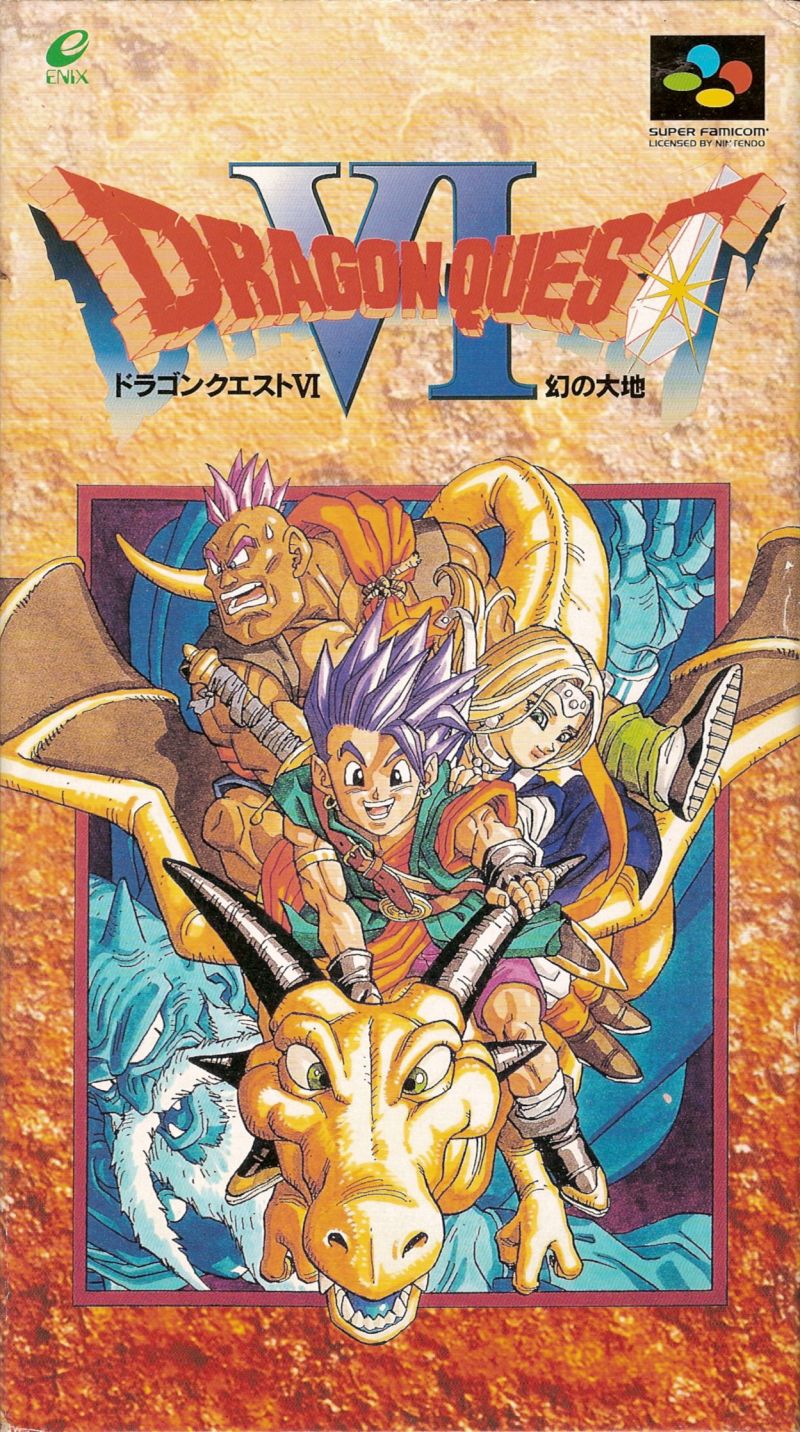
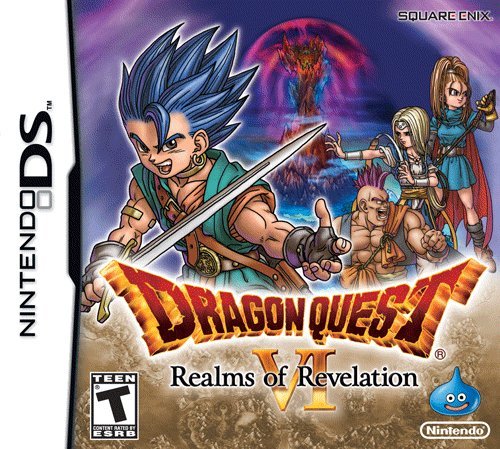
Dragon Quest VI: Realms of Revelation

Dragon Quest's sixth entry had a tough act to follow after the strong reception of V, but tries its best to put a new spin on the format with a new take on the class system and some seemingly Zelda-inspired world exploration.  But does it prove to be another worthy Quest, or is this one dream that should be forgotten?


Dragon Quest V brought the series to a new console generation in style, with a layer of emotional and very personal storytelling not yet seen in the franchise to that point; to this day it remains a fan favorite, and series creator Yuji Horii has even cited it as his favorite story in the entirety of the franchise.  But of course, setting a high bar comes with an equally hefty price - trying to top or even equal it in later entries without feeling too derivative of that previous high point is a tricky endeavor, and of course you'll never be able to satisfy all of a particular game's fans no matter how hard you try; ask any Final Fantasy fan where the series' highest point was and you'll get answers going all the way back to the 8-bit days.

Dragon Quest VI follows in its predecessors footsteps by setting up a mystery right off the bat, then having the player slowly uncover what it all means over the course of the adventure.  It plays out quite differently here, though, seemingly beginning in medias res with the hero and two companions facing the main villain and being soundly defeated, then trying to play it off as simply a dream.  As the story unfolds you begin to encounter the characters from said dream (though they have no recollection of this event at first), and find yourself traveling between two parallel worlds - a more idyllic and happy one where you preside, and a more dystopian and ruined world where you at first appear intangible and are unable to interact with people on any meaningful level until certain events pass.  Throughout the game you frequently travel between both worlds, making progress in one to reach new areas in the other - not unlike A Link to the Past, released a couple years prior.

Dragon Quest VI marks a return to the party customization of 3, though in a slightly different form.  Each character you recruit fits a particular archetype similar to previous DQ games - The hero is a good all-around fighter and caster, Carver is a tough but slow fighter, Ashlynn is a powerful but physically unimpressive mage-type, et cetera - but after a point in the story you gain access to Alltrades Abbey and can take on Vocations - essentially a second job class to accompany your primary one.  Your character keeps their innate abilities, but as they level up their vocation by fighting battles they will gain new abilities.  While equipped, their vocation will also grant percentage bonuses and penalties to stats as well as an innate trait- for example, the Marital Artist class will give a boost to Agility and a hefty MP penalty, but while equipped that character will also have a greater chance to land a critical hit based on the vocation's level (maxing out at a 1/8 chance at rank 8).  Merchants are a relatively weak vocation with substantial penalties to all stats (except Wisdom), but grant a bonus to earned money from battles, and the infamous Gadabout class returns as well, with enormous penalties to stats, a tendency to goof off during battle and several skills of dubious quality, but the are a prerequisite to a powerful intermediate vocation called the Luminary.

Intermediate and Advanced vocations are another new twist on this system.  After mastering two (or three) specific basic Vocations, that character will have the chance to take on an Intermediate vocation, which is typically a hybrd of the prerequisite classes; not unlike the prestige classes in games like Wizardry.  Dragon Quest III's Sage class is one of them, combining the Mage and Priest together into a powerful and versatile caster class.  Others include the Armamentalist (Warrior + Mage), Gladiator (Warrior + Martial Artist with a bonus chance to dodge attacks), Paladin (Martial Artist + Priest, with a chance to instantly kill on a melee hit), and the aforementioned Luminary (Dancer + Gadabout).  Each advanced vocation also gets its own skill sets, and maxing out its level will grant a bonus to that character - for example, maxing out Sage grants that character a permanent 20-point increase to their maximum MP.  Going even further beyond that, there is a special advanced class called the Hero which is quite powerful, but requires mastery of four Intermediate vocations to equip and use, as well as two hidden ones that are more gimmicky by design, but grant hefty bonuses when mastered.

In the original Super Famicom version of the game, the monster recruiting mechanic returns, though with the prerequisite of having a Monster Master in your party; something a lot of players dismissed as superfluous in light of the vocation system making characters much more powerful and versatile than any monster in the game.  As a result of this, the DS (and mobile) ports did away with that aspect, instead relegating the Monster Master to more of a status/elemental attack themed support class and having a small number of optional recruitable allies in the form of "Slime Buddies" - all are variants of the series' iconic Slime monsters, and while some can become surprisingly strong, I mostly just stuck to keeping Healie the Healslime in my party as a between-battle healer and ignoring the rest.  Moreso because you only have space for one monster in your party by the end if you keep all the human characters in your active team.

Perhaps as a means to try and further distinguish Dragon Quest VI from its predecessors, a new level of polish was added to the game's interaction element.  Characters in towns almost always have new dialog after major story events, which does have the nice effect of making your actions feel like you're having a tangible effect on the world.  The infamous "but thou must" choices of earlier games are also done away with - you actually get different bits of dialog depending on your choices, and at times they even may make events play out slightly differently - for example, if you agree to help Madame Luca early on, she'll give you ten free herbs and Milly will join you as a temporary ally, whereas if you refuse you'll get no reward and have to brave the next dungeon with just the hero and Carver.  You end up following the same overall plotline regardless of your choices, but it is a nice touch at least; not to mention a bit self-aware given how much of a mocked trope inconsequential choices in JRPGs have become.

So, while Dragon Quest VI is something of a forgotten middle child for the series, that doesn't mean it's a bad game; not at all.  It's got no shortage of content, more character customization than any prior game in the series and they went all-in with the polish, adding a sense of immersion and palpable consequence that even most modern games lack.  It just doesn't quite have the strong emotional hook that 5's story had, and the later games on optical disc based platforms would of course offer far greater length and depth than could be provided on a 4 MB cartridge.  Still, DQ6 is another solid, entertaining Dragon Quest game that's worth playing if you have the means.

Developer: Heartbeat, Square Enix
Publisher: Enix, Square Enix
Platform: Super Famicom, Nintendo DS, iOS, Android
Released: 1995, 2011, 2015
Recommended Version: The DS version is a substantially upgraded improvement over the original Super Famicom version, though it is a bit hard to come by these days (and usually goes for hefty prices when you do).  The mobile versions are based on the DS port, though, so that may be the best way to buy it until it gets another rerelease.

Monday, December 19, 2022

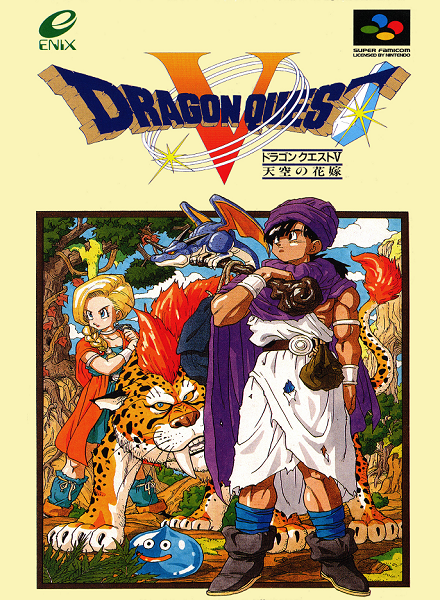
Dragon Quest V: Hand of the Heavenly Bride

The fifth game in the Dragon Quest series marked its first entry on a 16-bit platform, and fittingly, it attempted to change things up both narratively and in terms of design.  But does it prove to be another engrossing entry in a legendary franchise, or does this prove to be an unworthy Quest? 


Dragon Quest is of course an extremely popular series in Japan, but didn't fare nearly as well in North America.  Despite its relative unpopularity overseas, though, it still attained enough of a following for Enix to localize all four entries on the Famicom, with the last coming as late as September 1992 - just over a year into the Super Nintendo's lifespan.  Dragon Quest V was the first not to be localized, reportedly due to programming issues that couldn't be resolved, and wouldn't be until many years later on the Nintendo DS; in the meantime, Enix mostly became known as a publisher of other company's games (mostly RPGs) until the early 2000s, when they would merge with Square to become the single biggest name in Japanese RPGs, Square Enix.

Dragon Quest V was one that intrigued me for a while; series creator Yuji Horii cited it as his favorite on at least one occasion, and it was said to turn a lot of the series' tropes upside-down in its story.  This is certainly evident right away as the story starts off with your main character as a young child, following his father around the world on a search for the Legendary Hero who will save the world.  The story is considerably more grounded and personal this time, centering on a lifelong trial for the protagonist and everyone who comes into his life - friendships and alliances are forged, he marries and has a child, learns the secrets of his family's past, and undergoes very personal hardships and tragedy before the game ends.  While not the first JRPG to introduce such a personal element to its storytelling, it certainly set a trend, seemingly inspiring some story beats and character building in later games like Final Fantasy VI and VII.  Having a multi-generational dynamic as part of its storytelling would also become a somewhat common trope in Japanese RPGs after this one, seen in games like Lunar, Suikoden, Harvest Moon and Fire Emblem, so Dragon Quest V seems to have been a pretty influential title in more ways than one.

Fitting its more personal and turbulent nature, the game's playable cast is also much larger than any prior game in the series.  Many allies join throughout the journey, coming and going as the story dictates.  As mentioned, your main character also marries during the game, and his wife becomes a playable character - all three choices (two in the original SFC version) have slightly different playstyles and equipment choices too, and you're locked out from recruiting the other two on that playthrough once you've made your choice.  In a new twist for the series, you can also recruit monsters to your side - after defeating them in battle, they have a chance to ask to join your party, at which point you can then add them to your wagon or drop them off at a "Monster Den" for potential later use.  This is a surprisingly full-featured addition, too - each monster has unique equipment choices, stats, learns unique sets of spells and even have widely varying max levels, though they may ignore your commands if their Wisdom is a very low amount (below 20).  Some prove to be rather gimmicky - the Goodybag monster is resistant to many elements and status effects and has quite high stats, though a low level limit of 7 and a capped Wisdom of 5 limit its long-term usefulness.  Slimes are another example; being the archetypal low-level mook enemy of the series, they have unimpressive stats and low growth per level, but surprisingly can equip some of strongest gear and, should one raise a Slime to level 99, they will learn one of the most powerful attack spells in the game.  Metal Slimes and their variants also make very powerful allies, though the odds of recruiting one are extremely low (1/1024 according to most guides), so it's highly unlikely you'll get one without copious amounts of farming.  They do still retain all of their usual resistances and weaknesses, too, so that can give you an edge or become a liability in certain scenarios.

So, there's a lot there in terms of storytelling, emotional impact and nitty-gritty party customization for the powergamers in the audience, but of course Dragon Quest V doesn't skimp on the side-content either.  The series mainstay of collecting Mini-Medals to trade for rare prizes persists in all versions, as does the casino where one can win medals to trade in for powerful items.  From the PS2 remake on, several more get added - a game-spanning quest called "The Knick-Knackatory" where you basically inherit a museum and put various artifacts from your adventures on display is probably the centerpiece there.  The Pachisi board game returns from Dragon Quest III as well, though under the name "Treasures n' Trapdoors", serving as both a means to acquire rare items as well as tweak your characters' stats with a hefty luck element involved.  A small bonus dungeon is added too, which ties the story back to Dragon Quest IV a bit and adds some powerful recruitable monsters to play with in the post-game.

So, having now played it, I can see why Dragon Quest V is considered a high point for the series.  While the core gameplay remains essentially unchanged from the 8-bit entries, it definitely upped the stakes in terms of storytelling and forging an emotional connection therein, giving the player character a very personal stake in the adventure and making its twists and turns that much more gripping.  Monster recruiting added an interesting if slightly underdeveloped new element, though it was relatively novel in RPGs of the time; though predated by Shin Megami Tensei and later taken to runaway success with Pokemon, it did also lay some of the groundwork for Dragon Quest Monsters, a game focused entirely on recruiting and training DQ's iconic critters which has become a fan-favorite franchise in its own right.  But beneath it all, Dragon Quest's high degree of polish, refinement and developer passion makes it shine, taking the player on an engrossing adventure that ranks among the best of its time period and a high standard which many other Japanese RPGs aspire to equal.  It's been criminally overlooked in the west for ages, but any serious fan of the genre should strongly consider giving it a playthrough.


Developer: Chunsoft, ArtePiazza, Matrix Software
Publisher: Enix, Square Enix
Platform: Super Famicom, Playstation 2, Nintendo DS, Android, iOS
Released: 1992, 2004, 2009, 2015
Recommended Version: The later versions add a number of tweaks over the Super Famicom version, including some extra content (mentioned above), having a party size of four rather than three, and some extra items and weapons to utilize.  The only version to be released physically in the west was the Nintendo DS port, though the later Android and iOS ports are based on this version as well, which make it the most affordable way to play the game in English.

Monday, July 11, 2022

Dragon Quest Builders 2

Dragon Quest Builders proved to be quite popular with fans, but it felt a bit underfeatured, especially to those who had played Minecraft (and believe me, by this point basically everyone alive has).  So, in collaboration with Omega Force (yes, they do make other things besides Warriors games), a sequel was made, adding in features like flowing water, being able to build at greater heights, and even online co-op for up to four players, as well as slightly more sophisticated monster combat to add some spice.  It also comes with some slightly less savory design elements, though - namely, paid DLC.  Rather overpriced at that, as it just adds more things to build and the ability to fish (and build aquariums) at a pretty hefty price tag.  In fact, the PS4 version has even more as a "free" download, but only if you're subscribed to Playstation Plus.  There's still enough game and lore nods here to satisfy Dragon Quest fans, but if you're looking for a more complete sandbox building experience, just stick to Minecraft, which has plenty of amazing (and free) mods to change the game to whatever preferences you have.


Developer: Square Enix, Omega Force
Publisher: Square Enix, Nintendo
Released: 2019, 2021
Platform: Playstation 4, Switch, PC, XBox One

I've been informed that the PC and XBox One versions include all of the DLC content at  no extra cost, so you may want to grab one of those if the extras appeal to you.

Tuesday, November 9, 2021

Dragon Quest VIII: Journey of the Cursed King

Dragon Quest's first non-remake Playstation 2 entry was a surprisingly big event, going on to become the series' best-selling title outside of Japan (until XI broke the record years later) and garnering quite a bit of acclaim even among those who barely paid attention to the franchise beforehand.  But was this just because people were hoping Square Enix would prove their worth in the RPG arena again after several baffling missteps, or was there a genuinely good game to be found here as well? 


Dragon Quest as a franchise of course needs no introduction, especially for Japanese gamers - it's pretty much their bread-and-butter over there, selling millions of copies with each entry and most stores famously refusing to sell it on weekdays so kids don't cut class to go buy it. It never had quite the same impact in the west, though. While the original game was notable for having some 400,000 copies given away as an incentive to subscribe to Nintendo Power magazine, the franchise was mostly relegated to niche status throughout the NES era and got no western releases at all during the period when JRPGs started to get big. Yep, while games Chrono Trigger, Final Fantasies 6 through 9 and Breath of Fire were making bank, Dragon Quest was relegated to a few low-key releases on the Game Boy Color and saw no representation on consoles. Well, aside from a late and little-promoted release of VII on the Playstation 1, which did moderately well (selling about 200,000 copies) but wasn't enough to prevent Enix's North American branch from closing.

However, after Enix merged with Square, they would make another attempt at turning Dragon Quest into a household name in the west.  They commissioned Level-5 - a newcomer hot off their success with Dark Cloud 1 and 2 - to develop it, and under them the series saw a significant upgrade.  Formerly noted for its relatively low production budget and minimal animation that stuck with it even up to the Playstation 1, Dragon Quest VIII moved the series into true 3D, with colorful and lushly-detailed environments, well-animated and expressive character models, and a cel-shaded visual style very similar to Dark Cloud 2's that gives the game the look and feel of a well-produced anime. For the western release they went even further, adding CD-quality orchestral music and full voice-over for plot scenes - a major leap over the Japanese version which had comparatively dull synth music and didn't feature any voice acting at all. Dragon Quest VIII also reaped the benefit of a heavy promotional campaign, being released alongside a limited edition controller shaped like the series' iconic Slime enemies and having commercials aired on channels like Cartoon Network and Spike TV.  As a result, the game ultimately sold around 430,000 copies in North America and another 470,000 in Europe - small potatoes compared Japan's 4 million, but certainly not bad for a series that had been so niche in the west beforehand.

Dragon Quest's fundamental design remains relatively unchanged - turn based, random battles (though thankfully, the rate at which they appear is relatively subdued compared to some earlier titles), and a group of prefab characters on a journey to - what else - save the world from evil.  It doesn't have the clever narrative gimmicks of some earlier titles, like 4's chapters that follow different characters or 5 following several generations of a bloodline, but what's there is well-told and memorable thanks to its strongly-written characters and a solid sense of humor.  It also has a relatively small cast of four playable characters (with two more added in the 3DS version), though each is quite distinct and can be customized over the course of the game - a welcome fat-trimming after the two previous games became somewhat notorious for their rather bloated design and extremely overwrought class systems.  Each character can put points into one of four weapon skills, which will give passive bonuses when wielding them and unlock new techniques (spells for staves), and each also has one unique skill category, which generally adds new special abilities and passive bonuses.  For example, the hero can use swords, spears, boomerangs or fisticuffs, and his unique Courage skill gives him useful utility spells that let him instantly return to visited locations, cure negative statuses or reduce MP cost of all of his spells.  Some of these are humorously overpowered, too - Jessica's Twin Dragon Lash (in the Whips category) is famously one of them, hitting twice for 1.5 times the damage of a normal attack and costing only 3 MP (nerfed in the 3DS version to 0.9 times).  Points also cannot be recovered once spent, so one should consider carefully before committing to a particular build for a character.
 
A new mechanic for this entry is "Tension", which basically lets you save up energy for a turn (or several) to give your attacks or spells significantly more punch - great for dealing with enemies that have very high defense and would just absorb normal-powered blows, or getting more mileage out of MP used for healing magic.  Saving up for one turn will give your next one a 1.7x multiplier, and up to four will give you a whopping 5x effect, letting you deal devastating damage or heal your party very efficiently. Later in the game one unlocks the ability to randomly enter Super High Tension, where a character basically buffs up Dragon Ball Z style and gets a whopping 7.5x multiplier instead.  However, most later bosses have a move called "Disruption Wave" that will instantly dispel any stored tension, so relying solely on Tension-buffed attacks is a very poor strategy.

Dragon Quest VIII also features a crafting element in the form of the Alchemy Pot.  By speaking to King Trode after a certain point in the story, you can combine two or three items together to create a new one; everything from stronger medicine to weapons and armor (in fact, some of the best pieces of equipment in the game can only be created this way).  Experimenting with various items can sometimes yield good results, but your best bet is generally to explore towns, checking bookshelves whenever you can to learn new recipes.

But of course, no PS2 RPG is complete without side content.  The series' trademark game-spanning search for mini-medals is back once again, ensuring that you'll be searching every corner of dungeons for treasure chests and smashing every piece of pottery you can for them, as they can be turned in to unlock all sorts of useful rewards.  There is once again a casino where you can gamble for coins to trade for rare and useful treasures, and even a side dungeon or two to explore.  Probably the most substantial one overall is the Monster Arena - after a certain point in the story, you gain the ability to track down and defeat "Infamous monsters", which can then be pitted against progressively tougher fights in the arena to win rare prizes.  While not as deep as something like PokΓ©mon (or even the spinoff series Dragon Quest Monsters), it's nonetheless a fun little diversion.

Dragon Quest VIII may not be the deepest RPG ever made, or even the deepest one within its own franchise.  However, what it lacks in originality it more than makes up for in presentation, taking the franchise into true 3D and utilizing a cartoony, fun visual style that makes its vast environments a joy to explore.  The characters themselves benefit from this as well, having very expressive animations and personalities that play off one another brilliantly throughout.  Dragon Quest's defining element - the impeccable level of polish in its mechanics - definitely does not suffer under Level-5's watch either, with a surprising amount of strategy and planning being required to overcome many of its challenges, and relatively few abilities that feel grotesquely overpowered or totally useless.  A charming, well-made adventure that easily ranks among the finest on both PS2 and 3DS, as well as one of Level-5's best games to date.


Developer: Level-5 (PS2), Square Enix (Mobile/3DS)
Publisher: Square Enix, Nintendo
Platform: Playstation 2, Android, iOS, Nintendo 3DS
Released: 2005, 2014, 2017
Recommended version: The 3DS port has some added content, including two new playable characters, and you can see dungeon maps at any time on the second screen, whereas you have to go to a separate screen for them on the PS2 version.  This version also features visible enemies instead of random encounters, and battles can be sped up to make mundane fights quicker.  It doesn't have quite as nice graphics (running at a lower resolution and missing some lighting effects) and it sadly loses the orchestral score of the US PS2 release, though it does at least feature a higher-quality synth soundtrack than the Japanese PS2 version.

Tuesday, August 24, 2021

Dragon Quest XI S: Echoes of an Elusive Age Definitive Edition

After more than thirty years of uneven success in the west but massive popularity in Japan, Dragon Quest's eleventh numbered entry was released to considerable worldwide acclaim.  But does the series' long-standing traditional design still pay off after three decades, or does it just begin to fall by the wayside after a slew of changes and innovations in its competition? 


It's been 35 years since the Dragon Quest franchise's debut, and surprisingly little has changed for its eleventh numbered entry. Even with a leap to gorgeous HD, some excellent orchestral music and high quality voiceover, it's instantly recognizable as Dragon Quest. Akira Toriyama's character designs, writing and design by Yuji Horii, the punny enemy and spell names, many of the music cues and sound effects, and the combat still being relatively simple turn-based fare with a party of up to four characters haven't changed a bit. Combat is visually three-dimensional and you and enemies move freely around the field, though this is purely a visual effect and has no bearing on the gameplay whatsoever. But if even the modern aesthetic is too much, you have the option to change the game to a 2D art style reminiscent of the Super Famicom Dragon Quests; even mid-run if you wish.

However, some nice quality of life changes are made for Dragon Quest XI S.  You can speed up battle animations and assign each character AI patterns to quickly deal with random encounters, then toggle them off at any time when you need to deal with tougher fights or bosses.  Healing after a fight is condensed into one simple menu command, which saves quite a bit of hassle, particularly later in the game.  Monsters are visible on the map, doing away with the irritation of frequent random fights and letting you engage on your terms.  You can give yourself a slight edge before a fight as well - if you approach an enemy in the field and then strike them with your weapon, you'll sneak in a free hit before the fight even properly begins.  Some added challenges are available right from the get-go too, labeled in the startup menu as "Draconian Quests"; things like making all the enemies stronger, causing an instant defeat if the main character is defeated, not being able to equip armor or use shops, or the rather annoying effect of "Shypox" which causes characters to randomly lose turns.  A nice way to give genre veterans more of a challenge, and the game even notes on the menu when you've completed a playthrough with one or more of these activated for the duration so you have the bragging rights.  (You can also deactivate them at any church if you find them to not be to your liking.)

It's not all standard '80s RPG fare, though.  After gaining levels you will earn Skill Points; these allow you to customize your party by unlocking bonuses, depicted in the form of grid with panels that flip over when you spend points (not dissimilar to Final Fantasy XII's License boards).  Generally speaking, these let you give your characters greater attributes, bonuses when using specific weapon types (extra damage, chance to parry or get criticals, et cetera) or learn new attack skills.  Some panels with particularly strong bonuses are also locked at first, and can only be opened (and points spent on them) when you unlock at least four panels surrounding them.  One can also freely respec their characters if a current build isn't working (or they just want to use a particular skill temporarily) by visiting any goddess statue or church, though this does carry a small fee.

Another prominent mechanic is "Pep".  During battle, and after taking several hits in a row, using a particular skill, or just randomly as a fight starts, your character may become Pepped Up, which gives them a boost to their stats for a few turns;  the exact stats boosted vary from character to character, but generally emphasize their abilities.  Pep wears off after a few turns, but it does carry over between battles as well, so any turns you have left on it after winning a fight don't go to waste.  Some particularly skills are also only available during Pep status, and generally (but not always) require two or more participants to be in Pep at the same time to use them.  Generally, these are quite powerful attacks that use every character's turn (somewhat similar to the Dual/Triple techs in Chrono Trigger), but the sheer power they offer makes them worth using when the opportunity arises.

Crafting returns again for this entry, this time in the form of the Fun-Size Forge, a minigame that allows you to turn various items into new weapons, armor and accessories. It's largely optional (unless you're playing with shops disabled), but generally worth doing, as items you can forge at a given stage will often be better than what you can buy at shops. If you do well at the forging minigame, they'll get some nice bonuses on top too, even boosting innate abilities like status resistances or stat bonuses.  It's worth it to explore around a bit whenever you reach a new area - gather up items you find in the field and scavenge for more jars/pots/chests whenever you hit a new town or dungeon.  Sidequests frequently award uncommon or rare crafting components too, so keep an eye out for those.

While the franchise is still quintessentially old-school in design even three-and-a-half decades out, Dragon Quest XI manages to stand out as distinct and memorable regardless.  Its traditional, yet highly polished gameplay remains its strongest asset, ensuring it's a game easy enough for newcomers to get into while long-time genre fans can tweak settings to give themselves more of a challenge or find obscure tricks to give themselves an edge.  The world of Erdea is brought to life in 3D in brilliant form, its environments managing to look like a gorgeous modern game, yet losing none of the colorful cartoon style and personality of Akira Toriyama's distinct art.  All the familiar sound effects and music cues that have been here since day one return, but the new stuff is great too - the voice acting is perfectly on-point, while the music is beautifully composed and adds tremendously to the atmosphere of any given area.  Dragon Quest takes relatively few risks with its fundamental gameplay, but when it takes care to hone the format it's followed for over thirty years to virtual perfection, it's hard to complain.  Whether you love DQ's adherence to tradition or hate it, it's one franchise that's here to stay.


Developer: Square Enix, Orca, Toylogic, Artepiazza
Publisher: Square Enix
Platform: Nintendo 3DS, Playstation 4, PC, Switch, Xbox One, Stadia
Released: 2017, 2019, 2020, 2021
Recommended version: Any of the later versions (released as "Definitive Edition") are the ones to go with, as they add new content and the redone orchestral soundtrack which sounds much better than the synthesized one.  The Playstation 4 version has this available as a downloadable upgrade to the original version (as well as a physical release), while the PC, Switch, Xbox One and Stadia versions all have it packaged in by default.

Tuesday, July 21, 2020

Dragon Quest IV: Chapters of the Chosen

The fourth game in the Dragon Quest franchise and the last to be released on the NES/Famicom changed up the format once again, going for a chpater-based approach that would later be copied in games like Wild Arms.  But does Dragon Quest IV prove to be another worthwhile entry to the classic franchise, or does it just fizzle out compared to other games from the era?


Dragon Quest continued on with no sign of stopping throughout the 80s and 90s, getting four entries in as many years on the Famicom and NES alike.  This would be the last one localized for a good while, though, as Enix passed on bringing over 5 and 6 from the Famicom and 7 would see release on the Playstation, while an advertised remake of 4 for the platform would go unreleased due to the company set to localize it going out of business.

The fourth game is also one of the rarer games on the NES platform; little surprise as it saw release in 1992, when the Super Nintendo and Sega Genesis rivalry was reaching new heights.  Even RPG fans tended to overlook it, as games like Phantasy Star II and III and Final Fantasy II (actually IV) were coming out on those platforms.  But of course, those who only had an NES to play found a surprisingly good game if they picked up Dragon Warrior IV.

The first three Dragon Quest games all were set in the same world, but this was not the case for the fourth entry, which is set in an entirely new one (albeit retaining many of the series' iconic monsters).  Still, while the core gameplay and overall presentation remain much the same as previous Dragon Quest games, the fourth entry definitely changes up the format in an interesting way.  Rather than just having one story to experience, Dragon Quest IV has five.  The first four are short stories each featuring a different protagonist pursuing their goals, while the fifth and sixth star the game's protagonist and have him allying with the protagonists of the other stories throughout the game.  Later remakes add another chapter to the game as well, serving as an alternate ending and having the heroes ally with the game's final boss to defeat the true antagonist behind all of the game's events (a concept that many of the Final Fantasy remakes would also utilize).  Interestingly, one of these characters in particular (Torneko) would later become something of a face for the series, even getting his own spinoff on the Playstation called "Torneko: The Last Hope" that utilized the engine from the Mystery Dungeon franchise.

Some new elements are added to the gameplay too.  One prominent change (at least in the original NES/Famicom release) is that the player can only control the main character in the latter two chapters; the rest are simply commanded by the AI, though the player can give them general commands to heal, cast spells or simply attack, et cetera.  While this does speed up the game a bit by cutting down on the amount of time you spend inputting commands, the option to assume manual control would be nice; indeed, most of the remakes do allow this, so it seems even the developers heard a lot of fan complaints about it.  The player can now search bookshelves, jars, and so forth to find items, in particular the series staple of "Hero Medals" that can be traded for rare items.  A casino appears that allows the player to gamble and earn some extra cash and prizes.  Finally, the player is given a "Wagon" for use on the overworld, which allows them to swap party members on the fly, rather than having to return to town to do so.

Being a game of the era, though, it does fall prey to a few of the same pitfalls.  The game is still a long and grindy one, with frequent encounters that give only a pittance of XP, requiring you to stop at several points and farm experience and gold for a good while before you stand a chance against a particular boss (which really got me at the end for the final boss; I had to gain at least five levels before I stood a chance, and with battles only giving about 100 experience a pop, that took almost a full day to do).  Limited inventory space is also an issue, particularly as you can only carry a small handful of healing items at a time and have to rely on magic for the rest, so dungeons are a test of your level and endurance than anything else.  Save points are also relatively few and far between in the original release, though some later versions do add a quick save feature that let you save progress from almost anywhere (but erase your save on load).  Thankfully grinding is less of an issue in the remakes too.

Even with a few shortcomings, though, Dragon Quest remains one of the standout RPGs of its time period.  With a narrative unlike anything else seen on the NES and quite a lot of content to explore, it was a fine last hurrah for big-name RPGs on the system.  Later remakes only did it more favors, adding in a few modern conveniences, cutting down on the grinding element and even expanding its story, and its legacy was enough to get the hero included in the new Super Smash Bros. game as a downloadable character.  Definitely worth a look.


Developer: Chunsoft (NES), Heartbeat/ArtePiazza (Playstation), Cattle Call (Nintendo DS)
Publisher: Enix
Platform: Famicom/NES, Playstaiton, Nintendo DS, Android/iOS
Released: 1990, 1992, 2001, 2007, 2014
Recommended Version: I've only played the NES version personally, though I am aware that most later ports make significant improvements to the game's presentation and gameplay style, as well as allowing you manual control over your allies.  The iOS and Android ports are currently the cheapest ones available and the most fully-featured.