RPGreats now has a Discord! Come on in to talk about game music, games in general, submit reviews or just hang out!
Showing posts with label Developer: ArtePiazza. Show all posts

Monday, December 25, 2023

Super Mario RPG (2023)

After nearly three decades of fans demanding a proper continuation for Super Mario RPG, Nintendo made an ambush announcement in 2023 that a remake was being made and that it would release before the end of the year.  Sure enough it did, and it was a quality job, appeasing fans of the original and ensuring it would win over many new ones to boot.  The game adds a few  new features and some tweaks to the core design but is very faithful to the original overall, even retaining most of the silly animations and jokes from the original.  Additions include some new fully-animated cutscenes, a couple new battle mechanics in the form of the Action Gauge and Triple Moves, Combos that grant cumulative bonuses for successful timed attacks and blocks, "special" enemies that are tougher than their normal counterparts but drop Frog Coins when defeated (making them considerably less tedious to farm), and quite a bit of new postgame content to provide new challenges to seasoned players.  The Action Gauge gradually builds as you go through battle, and once it's full you can unleash a Triple Attack - a flashy animation that does heavy damage and has unique animations and effects depending on who is in the current party.  Perfectly timed attacks will also gain added effects (such as normal attacks also dealing light damage to non-targeted enemies), while perfectly timed blocks completely negate damage.  The game now also shows little meters and indicators for most of the special move minigames that lacked them before, and timing seems to be a bit more forgiving overall, making it easier to hit goals like the 100-jump challenge.  True to the original but with plenty of flair of its own, ArtePiazza outdoes themselves again with another excellent remake of an RPG classic.


Developer: ArtePiazza
Publisher: Nintendo
Released: 2023
Platforms: Switch

Monday, April 3, 2023

Dragon Quest VII: Fragments of the Forgotten Past

The seventh mainline Dragon Quest game and the first to be released in the US in nearly a decade when it launched in 2001 is one of the less-talked-about games in the franchise.  But does it have enough to offer for genre enthusiasts, or does a barrage of high-profile releases from then-rival Square on the platform just push this one into irrelevance?

Enix was never an enormously popular name in the west, but they gained a substantial following in the 90s for publishing Japanese RPGs - still a relatively niche genre at the time, but it began to grow in popularity after games like Final Fantasy and Phantasy Star rose to prominence.  After finding some success there, they got talked into funding a western-developed game - a tie-in to the short lived animated show "King Arthur and the Knights of Justice" - which underperformed both commercially and critically (being released the same month as Chrono Trigger likely not doing it any favors either).  This, plus low sales of their products overall, caused Enix's North American branch to close down in 1995.  They would open another localization subsidiary in 1999 through a joint venture with Eidos, though it was also short-lived, closing down in 2003 after Enix merged with Square and both companies' IPs starting to be published worldwide under the new Square Enix banner.

Dragon Warrior VII was the last Dragon Quest game to be published under the Enix banner in North America, and it was a bit of an odd man out on the Playstation. Dragon Quest had gone dormant in North America for almost a decade by that point, and it came back in 2001 - well after the launch of the Playstation 2 and at a time when Square was the undisputed biggest name in the JRPG genre.  So not too many people outside of Japan took notice of it, and among those who did it saw a fair bit of criticism for its slow pacing and very dated design sensibilities - no surprise as it still looked and played very much like a menu-heavy 8-bit game at a time when Square (and others) were pushing the boundaries of cinematic flair and more dynamic gameplay styles in their RPGs.  Nevertheless, the game did very well in Japan, becoming the single best-selling game on the platform there.

The game's development was a very protracted one - it began development on the Nintendo 64 shortly after Dragon Quest 6's release before abruptly shifting to the PlayStation in 1997, citing the higher storage capacity of the Playstation's CD format as a major motivator.  That, plus numerous delays owing to having a relatively small development team and wanting to give fans their money's worth after such a long wait, meant it spent five years in development - quite a lot for the time period.

You can tell right out of the gate that they strove to fit in as much content into Dragon Quest VII as they could; though they may have overdone it just a little.  In the original PS1 release it's a good two hours before you even fight a single monster; you spend quite a lot of time setting up the main characters and venturing through a long puzzle dungeon before you solve your first stone tablet puzzle and get sent into the past, where the majority of the game's action takes place.  While there, you generally complete a quest, gather some stone fragments, return to the present, go back to that same (newly-restored) area in the present and venture through it again to gather new treasures and stone fragments, and then it's back through the entire shrine dungeon before you're off to a new area to do it all again. Basically, you're going through every area in the game at least twice to collect key items, and since there's a total of eighteen areas in the game... yeah, it adds up.  The 3DS version does alleviate this slightly by making the initial shrine dungeon much shorter to get through, but you're still retreading quite a bit of familiar ground.

Something I do quite like is that they carried on 6's distinct characters well here - all of the are quite talkative, have distinct personalities and they interact with one another quite a bit in plot scenes (and there's quite a lot of funny party banter activated by the Talk command).  Each location you go to is quite distinct as well, with their own unique culture and quite a lot of colorful accents and lingo, which really makes the whole world feel more like a real place you're venturing through.

Also returning from Dragon Quest VI is the Vocation system.  Once you get about a quarter of the way through the game you get the ability to take on Vocations, which are essentially a secondary job class for your character, giving them percentage based stat bonuses and penalties while equipped and allowing them to learn new skills by completing battles.  Naturally it is a good idea to have a character's vocation choices compliment their innate abilities - making Maribel a Fighter isn't the best choice, for example, as she has stats geared more toward spellcasting and limited equipment choices.  There are still three "tiers" of Vocations, with Intermediate and Advanced tiers requiring you to master several prerequisites from lower tiers, as well as a whole new set of Monster vocations (which I will detail further in a bit).  Like 6, any skills and stat bonuses you learn from mastering a Vocation are permanently added to that character, so you end up with quite a large variety of abilities among your team by the end.  In the original PlayStation version, you could also unlock hidden skills by mastering certain Vocations back-to-back with one another, which could potentially unlock some very game-breaking abilities (like Sword Dance) relatively early on.  The 3DS version does away with this, though, making it so that Intermediate and Advanced vocation skills (and stat bonuses) are only available while your character is actively in that vocation, and shuffling the formerly-hidden skills into the normal sets for Intermediate and Advanced Vocations, which makes them considerably less abusable.  Also like 6, each location in the game has a level cap that, once exceeded, will no longer allow you to power up your Vocations there, so staying in one spot and making your entire party into gods isn't really an option. (However, the 3DS version adds a new mechanic in Traveler's Tablets, which unlock mini-dungeons that generally have significantly higher level caps than the areas you locate them in).

The monster recruitment from 5 and 6 is gone in 7, as it was criticized by many fans as being superfluous; not to mention that by 2000 there was an entire spinoff series (Dragon Quest Monsters) based around recruiting monsters and forming teams with them.  Instead, monsters have a small chance of handing over "Monster Hearts" after you defeat them in battle, which can be used at Alltrades Abbey to change a character to a Vocation class based on that monster, gaining their appearance in the process.  Some hearts can also be found as items in certain dungeons or as prizes from minigames, or by completing Traveler's Tablets.  Monster vocations also have three tiers of power (though they aren't labeled as such in game) and once again, you only get to use the skills, elemental/status resistance properties and stat bonuses of more powerful ones while you're actually in that vocation.  Using a Monster heart to change vocations or create a custom Traveler's Tablet also consumes it, so one should consider carefully before doing so. 

Dragon Quest VII, like the rest of the series, sticks to what made it a hit in the first place - turn based gameplay, an impeccable level of polish, open-ended exploration and a captivating storyline.  It refines a few ideas introduced in VI, but tells an entirely new story with plenty of creative twists and some excellent worldbuilding of its own.  It also largely exhumes the movie-like presentation most other RPGs on the platform went for in favor of having an enormous volume of gameplay content, though even fans of the franchise will likely admit that by the turn of the millennium its minimally-animated presentation was starting to look a bit dated.  This, paired with Heartbeat's closure not long after the game's release, is probably why Square Enix commissioned Level-5 to develop the next game, which resulted in a significant visual and audio upgrade going forward.  VII is thus regarded by many fans as another "middle child" for the series, but even a relatively overlooked Dragon Quest is still a good time for fans of classic style RPGs.


Developer: Heartbeat, ArtePiazza (3DS)
Publisher: Enix, Square Enix, Nintendo
Released: 2001, 2016, 2017
Platforms: Playstation, 3DS, iOS/Android
Recommended Version: The 3DS version is a substantial improvement over the original release, with a much more refined presentation on level with Dragon Quest VIII, doing away with random encounters in favor of visible enemies on maps, tighter pacing in general, new content, rebalanced gameplay and several convenience features including a stone tablet "radar" and reminders of the storyline and your next objective - a very welcome thing and something I wish more RPGs in this format would do.  

Thursday, January 19, 2023

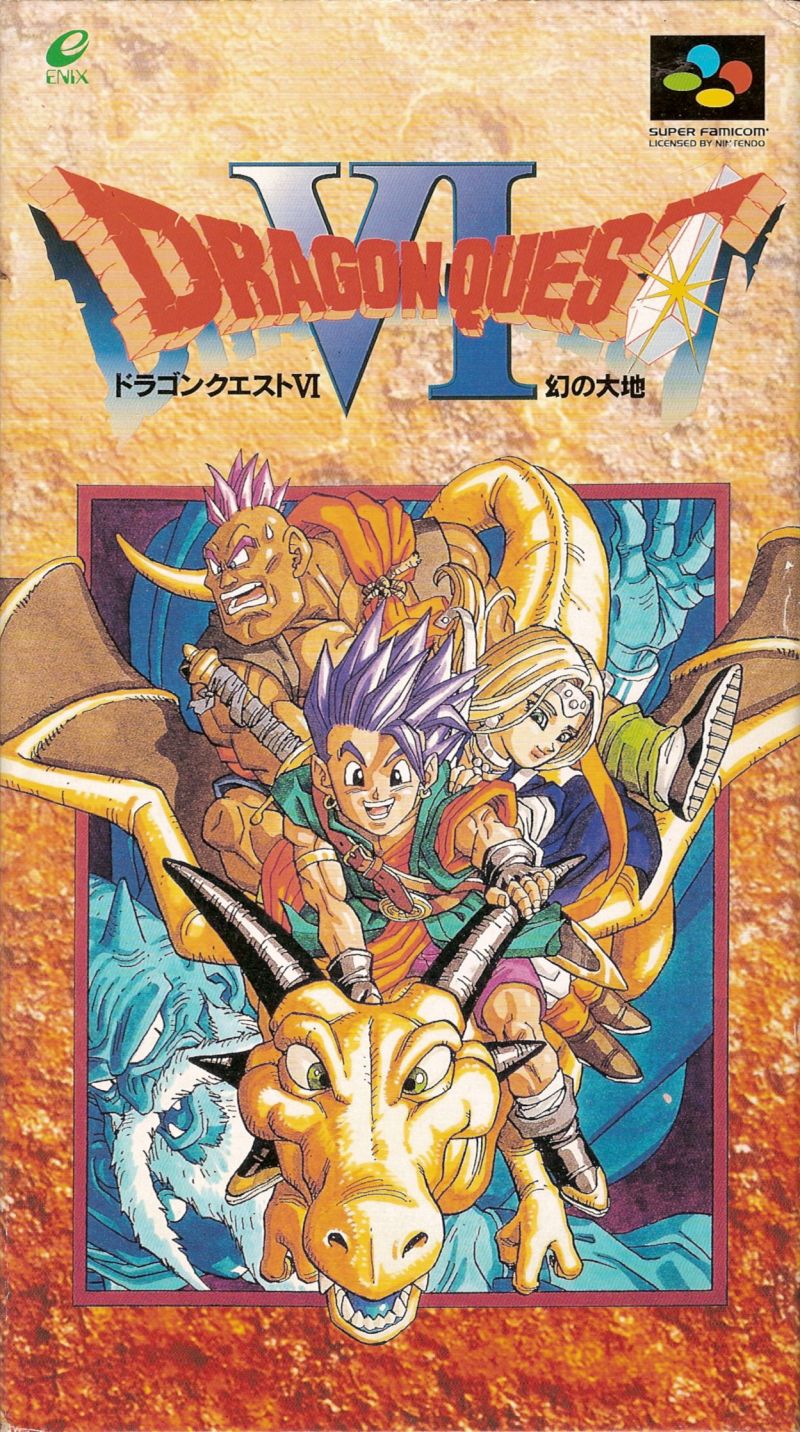
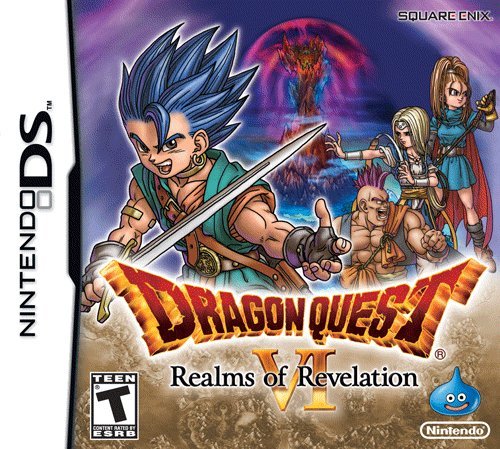
Dragon Quest VI: Realms of Revelation

Dragon Quest's sixth entry had a tough act to follow after the strong reception of V, but tries its best to put a new spin on the format with a new take on the class system and some seemingly Zelda-inspired world exploration.  But does it prove to be another worthy Quest, or is this one dream that should be forgotten?


Dragon Quest V brought the series to a new console generation in style, with a layer of emotional and very personal storytelling not yet seen in the franchise to that point; to this day it remains a fan favorite, and series creator Yuji Horii has even cited it as his favorite story in the entirety of the franchise.  But of course, setting a high bar comes with an equally hefty price - trying to top or even equal it in later entries without feeling too derivative of that previous high point is a tricky endeavor, and of course you'll never be able to satisfy all of a particular game's fans no matter how hard you try; ask any Final Fantasy fan where the series' highest point was and you'll get answers going all the way back to the 8-bit days.

Dragon Quest VI follows in its predecessors footsteps by setting up a mystery right off the bat, then having the player slowly uncover what it all means over the course of the adventure.  It plays out quite differently here, though, seemingly beginning in medias res with the hero and two companions facing the main villain and being soundly defeated, then trying to play it off as simply a dream.  As the story unfolds you begin to encounter the characters from said dream (though they have no recollection of this event at first), and find yourself traveling between two parallel worlds - a more idyllic and happy one where you preside, and a more dystopian and ruined world where you at first appear intangible and are unable to interact with people on any meaningful level until certain events pass.  Throughout the game you frequently travel between both worlds, making progress in one to reach new areas in the other - not unlike A Link to the Past, released a couple years prior.

Dragon Quest VI marks a return to the party customization of 3, though in a slightly different form.  Each character you recruit fits a particular archetype similar to previous DQ games - The hero is a good all-around fighter and caster, Carver is a tough but slow fighter, Ashlynn is a powerful but physically unimpressive mage-type, et cetera - but after a point in the story you gain access to Alltrades Abbey and can take on Vocations - essentially a second job class to accompany your primary one.  Your character keeps their innate abilities, but as they level up their vocation by fighting battles they will gain new abilities.  While equipped, their vocation will also grant percentage bonuses and penalties to stats as well as an innate trait- for example, the Marital Artist class will give a boost to Agility and a hefty MP penalty, but while equipped that character will also have a greater chance to land a critical hit based on the vocation's level (maxing out at a 1/8 chance at rank 8).  Merchants are a relatively weak vocation with substantial penalties to all stats (except Wisdom), but grant a bonus to earned money from battles, and the infamous Gadabout class returns as well, with enormous penalties to stats, a tendency to goof off during battle and several skills of dubious quality, but the are a prerequisite to a powerful intermediate vocation called the Luminary.

Intermediate and Advanced vocations are another new twist on this system.  After mastering two (or three) specific basic Vocations, that character will have the chance to take on an Intermediate vocation, which is typically a hybrd of the prerequisite classes; not unlike the prestige classes in games like Wizardry.  Dragon Quest III's Sage class is one of them, combining the Mage and Priest together into a powerful and versatile caster class.  Others include the Armamentalist (Warrior + Mage), Gladiator (Warrior + Martial Artist with a bonus chance to dodge attacks), Paladin (Martial Artist + Priest, with a chance to instantly kill on a melee hit), and the aforementioned Luminary (Dancer + Gadabout).  Each advanced vocation also gets its own skill sets, and maxing out its level will grant a bonus to that character - for example, maxing out Sage grants that character a permanent 20-point increase to their maximum MP.  Going even further beyond that, there is a special advanced class called the Hero which is quite powerful, but requires mastery of four Intermediate vocations to equip and use, as well as two hidden ones that are more gimmicky by design, but grant hefty bonuses when mastered.

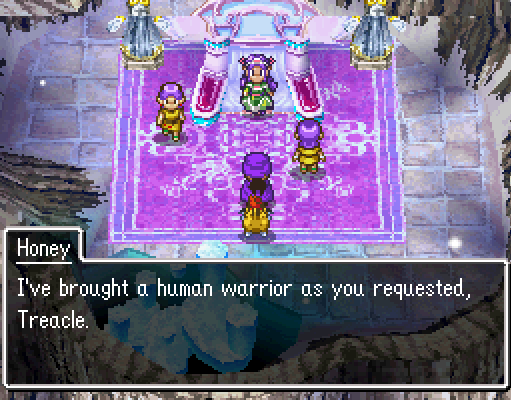
In the original Super Famicom version of the game, the monster recruiting mechanic returns, though with the prerequisite of having a Monster Master in your party; something a lot of players dismissed as superfluous in light of the vocation system making characters much more powerful and versatile than any monster in the game.  As a result of this, the DS (and mobile) ports did away with that aspect, instead relegating the Monster Master to more of a status/elemental attack themed support class and having a small number of optional recruitable allies in the form of "Slime Buddies" - all are variants of the series' iconic Slime monsters, and while some can become surprisingly strong, I mostly just stuck to keeping Healie the Healslime in my party as a between-battle healer and ignoring the rest.  Moreso because you only have space for one monster in your party by the end if you keep all the human characters in your active team.

Perhaps as a means to try and further distinguish Dragon Quest VI from its predecessors, a new level of polish was added to the game's interaction element.  Characters in towns almost always have new dialog after major story events, which does have the nice effect of making your actions feel like you're having a tangible effect on the world.  The infamous "but thou must" choices of earlier games are also done away with - you actually get different bits of dialog depending on your choices, and at times they even may make events play out slightly differently - for example, if you agree to help Madame Luca early on, she'll give you ten free herbs and Milly will join you as a temporary ally, whereas if you refuse you'll get no reward and have to brave the next dungeon with just the hero and Carver.  You end up following the same overall plotline regardless of your choices, but it is a nice touch at least; not to mention a bit self-aware given how much of a mocked trope inconsequential choices in JRPGs have become.

So, while Dragon Quest VI is something of a forgotten middle child for the series, that doesn't mean it's a bad game; not at all.  It's got no shortage of content, more character customization than any prior game in the series and they went all-in with the polish, adding a sense of immersion and palpable consequence that even most modern games lack.  It just doesn't quite have the strong emotional hook that 5's story had, and the later games on optical disc based platforms would of course offer far greater length and depth than could be provided on a 4 MB cartridge.  Still, DQ6 is another solid, entertaining Dragon Quest game that's worth playing if you have the means.

Developer: Heartbeat, Square Enix
Publisher: Enix, Square Enix
Platform: Super Famicom, Nintendo DS, iOS, Android
Released: 1995, 2011, 2015
Recommended Version: The DS version is a substantially upgraded improvement over the original Super Famicom version, though it is a bit hard to come by these days (and usually goes for hefty prices when you do).  The mobile versions are based on the DS port, though, so that may be the best way to buy it until it gets another rerelease.

Monday, December 19, 2022

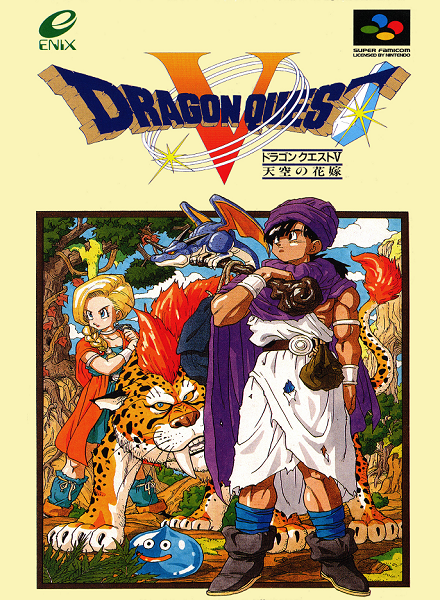
Dragon Quest V: Hand of the Heavenly Bride

The fifth game in the Dragon Quest series marked its first entry on a 16-bit platform, and fittingly, it attempted to change things up both narratively and in terms of design.  But does it prove to be another engrossing entry in a legendary franchise, or does this prove to be an unworthy Quest? 


Dragon Quest is of course an extremely popular series in Japan, but didn't fare nearly as well in North America.  Despite its relative unpopularity overseas, though, it still attained enough of a following for Enix to localize all four entries on the Famicom, with the last coming as late as September 1992 - just over a year into the Super Nintendo's lifespan.  Dragon Quest V was the first not to be localized, reportedly due to programming issues that couldn't be resolved, and wouldn't be until many years later on the Nintendo DS; in the meantime, Enix mostly became known as a publisher of other company's games (mostly RPGs) until the early 2000s, when they would merge with Square to become the single biggest name in Japanese RPGs, Square Enix.

Dragon Quest V was one that intrigued me for a while; series creator Yuji Horii cited it as his favorite on at least one occasion, and it was said to turn a lot of the series' tropes upside-down in its story.  This is certainly evident right away as the story starts off with your main character as a young child, following his father around the world on a search for the Legendary Hero who will save the world.  The story is considerably more grounded and personal this time, centering on a lifelong trial for the protagonist and everyone who comes into his life - friendships and alliances are forged, he marries and has a child, learns the secrets of his family's past, and undergoes very personal hardships and tragedy before the game ends.  While not the first JRPG to introduce such a personal element to its storytelling, it certainly set a trend, seemingly inspiring some story beats and character building in later games like Final Fantasy VI and VII.  Having a multi-generational dynamic as part of its storytelling would also become a somewhat common trope in Japanese RPGs after this one, seen in games like Lunar, Suikoden, Harvest Moon and Fire Emblem, so Dragon Quest V seems to have been a pretty influential title in more ways than one.

Fitting its more personal and turbulent nature, the game's playable cast is also much larger than any prior game in the series.  Many allies join throughout the journey, coming and going as the story dictates.  As mentioned, your main character also marries during the game, and his wife becomes a playable character - all three choices (two in the original SFC version) have slightly different playstyles and equipment choices too, and you're locked out from recruiting the other two on that playthrough once you've made your choice.  In a new twist for the series, you can also recruit monsters to your side - after defeating them in battle, they have a chance to ask to join your party, at which point you can then add them to your wagon or drop them off at a "Monster Den" for potential later use.  This is a surprisingly full-featured addition, too - each monster has unique equipment choices, stats, learns unique sets of spells and even have widely varying max levels, though they may ignore your commands if their Wisdom is a very low amount (below 20).  Some prove to be rather gimmicky - the Goodybag monster is resistant to many elements and status effects and has quite high stats, though a low level limit of 7 and a capped Wisdom of 5 limit its long-term usefulness.  Slimes are another example; being the archetypal low-level mook enemy of the series, they have unimpressive stats and low growth per level, but surprisingly can equip some of strongest gear and, should one raise a Slime to level 99, they will learn one of the most powerful attack spells in the game.  Metal Slimes and their variants also make very powerful allies, though the odds of recruiting one are extremely low (1/1024 according to most guides), so it's highly unlikely you'll get one without copious amounts of farming.  They do still retain all of their usual resistances and weaknesses, too, so that can give you an edge or become a liability in certain scenarios.

So, there's a lot there in terms of storytelling, emotional impact and nitty-gritty party customization for the powergamers in the audience, but of course Dragon Quest V doesn't skimp on the side-content either.  The series mainstay of collecting Mini-Medals to trade for rare prizes persists in all versions, as does the casino where one can win medals to trade in for powerful items.  From the PS2 remake on, several more get added - a game-spanning quest called "The Knick-Knackatory" where you basically inherit a museum and put various artifacts from your adventures on display is probably the centerpiece there.  The Pachisi board game returns from Dragon Quest III as well, though under the name "Treasures n' Trapdoors", serving as both a means to acquire rare items as well as tweak your characters' stats with a hefty luck element involved.  A small bonus dungeon is added too, which ties the story back to Dragon Quest IV a bit and adds some powerful recruitable monsters to play with in the post-game.

So, having now played it, I can see why Dragon Quest V is considered a high point for the series.  While the core gameplay remains essentially unchanged from the 8-bit entries, it definitely upped the stakes in terms of storytelling and forging an emotional connection therein, giving the player character a very personal stake in the adventure and making its twists and turns that much more gripping.  Monster recruiting added an interesting if slightly underdeveloped new element, though it was relatively novel in RPGs of the time; though predated by Shin Megami Tensei and later taken to runaway success with Pokemon, it did also lay some of the groundwork for Dragon Quest Monsters, a game focused entirely on recruiting and training DQ's iconic critters which has become a fan-favorite franchise in its own right.  But beneath it all, Dragon Quest's high degree of polish, refinement and developer passion makes it shine, taking the player on an engrossing adventure that ranks among the best of its time period and a high standard which many other Japanese RPGs aspire to equal.  It's been criminally overlooked in the west for ages, but any serious fan of the genre should strongly consider giving it a playthrough.


Developer: Chunsoft, ArtePiazza, Matrix Software
Publisher: Enix, Square Enix
Platform: Super Famicom, Playstation 2, Nintendo DS, Android, iOS
Released: 1992, 2004, 2009, 2015
Recommended Version: The later versions add a number of tweaks over the Super Famicom version, including some extra content (mentioned above), having a party size of four rather than three, and some extra items and weapons to utilize.  The only version to be released physically in the west was the Nintendo DS port, though the later Android and iOS ports are based on this version as well, which make it the most affordable way to play the game in English.

Tuesday, August 24, 2021

Dragon Quest XI S: Echoes of an Elusive Age Definitive Edition

After more than thirty years of uneven success in the west but massive popularity in Japan, Dragon Quest's eleventh numbered entry was released to considerable worldwide acclaim.  But does the series' long-standing traditional design still pay off after three decades, or does it just begin to fall by the wayside after a slew of changes and innovations in its competition? 


It's been 35 years since the Dragon Quest franchise's debut, and surprisingly little has changed for its eleventh numbered entry. Even with a leap to gorgeous HD, some excellent orchestral music and high quality voiceover, it's instantly recognizable as Dragon Quest. Akira Toriyama's character designs, writing and design by Yuji Horii, the punny enemy and spell names, many of the music cues and sound effects, and the combat still being relatively simple turn-based fare with a party of up to four characters haven't changed a bit. Combat is visually three-dimensional and you and enemies move freely around the field, though this is purely a visual effect and has no bearing on the gameplay whatsoever. But if even the modern aesthetic is too much, you have the option to change the game to a 2D art style reminiscent of the Super Famicom Dragon Quests; even mid-run if you wish.

However, some nice quality of life changes are made for Dragon Quest XI S.  You can speed up battle animations and assign each character AI patterns to quickly deal with random encounters, then toggle them off at any time when you need to deal with tougher fights or bosses.  Healing after a fight is condensed into one simple menu command, which saves quite a bit of hassle, particularly later in the game.  Monsters are visible on the map, doing away with the irritation of frequent random fights and letting you engage on your terms.  You can give yourself a slight edge before a fight as well - if you approach an enemy in the field and then strike them with your weapon, you'll sneak in a free hit before the fight even properly begins.  Some added challenges are available right from the get-go too, labeled in the startup menu as "Draconian Quests"; things like making all the enemies stronger, causing an instant defeat if the main character is defeated, not being able to equip armor or use shops, or the rather annoying effect of "Shypox" which causes characters to randomly lose turns.  A nice way to give genre veterans more of a challenge, and the game even notes on the menu when you've completed a playthrough with one or more of these activated for the duration so you have the bragging rights.  (You can also deactivate them at any church if you find them to not be to your liking.)

It's not all standard '80s RPG fare, though.  After gaining levels you will earn Skill Points; these allow you to customize your party by unlocking bonuses, depicted in the form of grid with panels that flip over when you spend points (not dissimilar to Final Fantasy XII's License boards).  Generally speaking, these let you give your characters greater attributes, bonuses when using specific weapon types (extra damage, chance to parry or get criticals, et cetera) or learn new attack skills.  Some panels with particularly strong bonuses are also locked at first, and can only be opened (and points spent on them) when you unlock at least four panels surrounding them.  One can also freely respec their characters if a current build isn't working (or they just want to use a particular skill temporarily) by visiting any goddess statue or church, though this does carry a small fee.

Another prominent mechanic is "Pep".  During battle, and after taking several hits in a row, using a particular skill, or just randomly as a fight starts, your character may become Pepped Up, which gives them a boost to their stats for a few turns;  the exact stats boosted vary from character to character, but generally emphasize their abilities.  Pep wears off after a few turns, but it does carry over between battles as well, so any turns you have left on it after winning a fight don't go to waste.  Some particularly skills are also only available during Pep status, and generally (but not always) require two or more participants to be in Pep at the same time to use them.  Generally, these are quite powerful attacks that use every character's turn (somewhat similar to the Dual/Triple techs in Chrono Trigger), but the sheer power they offer makes them worth using when the opportunity arises.

Crafting returns again for this entry, this time in the form of the Fun-Size Forge, a minigame that allows you to turn various items into new weapons, armor and accessories. It's largely optional (unless you're playing with shops disabled), but generally worth doing, as items you can forge at a given stage will often be better than what you can buy at shops. If you do well at the forging minigame, they'll get some nice bonuses on top too, even boosting innate abilities like status resistances or stat bonuses.  It's worth it to explore around a bit whenever you reach a new area - gather up items you find in the field and scavenge for more jars/pots/chests whenever you hit a new town or dungeon.  Sidequests frequently award uncommon or rare crafting components too, so keep an eye out for those.

While the franchise is still quintessentially old-school in design even three-and-a-half decades out, Dragon Quest XI manages to stand out as distinct and memorable regardless.  Its traditional, yet highly polished gameplay remains its strongest asset, ensuring it's a game easy enough for newcomers to get into while long-time genre fans can tweak settings to give themselves more of a challenge or find obscure tricks to give themselves an edge.  The world of Erdea is brought to life in 3D in brilliant form, its environments managing to look like a gorgeous modern game, yet losing none of the colorful cartoon style and personality of Akira Toriyama's distinct art.  All the familiar sound effects and music cues that have been here since day one return, but the new stuff is great too - the voice acting is perfectly on-point, while the music is beautifully composed and adds tremendously to the atmosphere of any given area.  Dragon Quest takes relatively few risks with its fundamental gameplay, but when it takes care to hone the format it's followed for over thirty years to virtual perfection, it's hard to complain.  Whether you love DQ's adherence to tradition or hate it, it's one franchise that's here to stay.


Developer: Square Enix, Orca, Toylogic, Artepiazza
Publisher: Square Enix
Platform: Nintendo 3DS, Playstation 4, PC, Switch, Xbox One, Stadia
Released: 2017, 2019, 2020, 2021
Recommended version: Any of the later versions (released as "Definitive Edition") are the ones to go with, as they add new content and the redone orchestral soundtrack which sounds much better than the synthesized one.  The Playstation 4 version has this available as a downloadable upgrade to the original version (as well as a physical release), while the PC, Switch, Xbox One and Stadia versions all have it packaged in by default.

Tuesday, July 21, 2020

Dragon Quest IV: Chapters of the Chosen

The fourth game in the Dragon Quest franchise and the last to be released on the NES/Famicom changed up the format once again, going for a chpater-based approach that would later be copied in games like Wild Arms.  But does Dragon Quest IV prove to be another worthwhile entry to the classic franchise, or does it just fizzle out compared to other games from the era?


Dragon Quest continued on with no sign of stopping throughout the 80s and 90s, getting four entries in as many years on the Famicom and NES alike.  This would be the last one localized for a good while, though, as Enix passed on bringing over 5 and 6 from the Famicom and 7 would see release on the Playstation, while an advertised remake of 4 for the platform would go unreleased due to the company set to localize it going out of business.

The fourth game is also one of the rarer games on the NES platform; little surprise as it saw release in 1992, when the Super Nintendo and Sega Genesis rivalry was reaching new heights.  Even RPG fans tended to overlook it, as games like Phantasy Star II and III and Final Fantasy II (actually IV) were coming out on those platforms.  But of course, those who only had an NES to play found a surprisingly good game if they picked up Dragon Warrior IV.

The first three Dragon Quest games all were set in the same world, but this was not the case for the fourth entry, which is set in an entirely new one (albeit retaining many of the series' iconic monsters).  Still, while the core gameplay and overall presentation remain much the same as previous Dragon Quest games, the fourth entry definitely changes up the format in an interesting way.  Rather than just having one story to experience, Dragon Quest IV has five.  The first four are short stories each featuring a different protagonist pursuing their goals, while the fifth and sixth star the game's protagonist and have him allying with the protagonists of the other stories throughout the game.  Later remakes add another chapter to the game as well, serving as an alternate ending and having the heroes ally with the game's final boss to defeat the true antagonist behind all of the game's events (a concept that many of the Final Fantasy remakes would also utilize).  Interestingly, one of these characters in particular (Torneko) would later become something of a face for the series, even getting his own spinoff on the Playstation called "Torneko: The Last Hope" that utilized the engine from the Mystery Dungeon franchise.

Some new elements are added to the gameplay too.  One prominent change (at least in the original NES/Famicom release) is that the player can only control the main character in the latter two chapters; the rest are simply commanded by the AI, though the player can give them general commands to heal, cast spells or simply attack, et cetera.  While this does speed up the game a bit by cutting down on the amount of time you spend inputting commands, the option to assume manual control would be nice; indeed, most of the remakes do allow this, so it seems even the developers heard a lot of fan complaints about it.  The player can now search bookshelves, jars, and so forth to find items, in particular the series staple of "Hero Medals" that can be traded for rare items.  A casino appears that allows the player to gamble and earn some extra cash and prizes.  Finally, the player is given a "Wagon" for use on the overworld, which allows them to swap party members on the fly, rather than having to return to town to do so.

Being a game of the era, though, it does fall prey to a few of the same pitfalls.  The game is still a long and grindy one, with frequent encounters that give only a pittance of XP, requiring you to stop at several points and farm experience and gold for a good while before you stand a chance against a particular boss (which really got me at the end for the final boss; I had to gain at least five levels before I stood a chance, and with battles only giving about 100 experience a pop, that took almost a full day to do).  Limited inventory space is also an issue, particularly as you can only carry a small handful of healing items at a time and have to rely on magic for the rest, so dungeons are a test of your level and endurance than anything else.  Save points are also relatively few and far between in the original release, though some later versions do add a quick save feature that let you save progress from almost anywhere (but erase your save on load).  Thankfully grinding is less of an issue in the remakes too.

Even with a few shortcomings, though, Dragon Quest remains one of the standout RPGs of its time period.  With a narrative unlike anything else seen on the NES and quite a lot of content to explore, it was a fine last hurrah for big-name RPGs on the system.  Later remakes only did it more favors, adding in a few modern conveniences, cutting down on the grinding element and even expanding its story, and its legacy was enough to get the hero included in the new Super Smash Bros. game as a downloadable character.  Definitely worth a look.


Developer: Chunsoft (NES), Heartbeat/ArtePiazza (Playstation), Cattle Call (Nintendo DS)
Publisher: Enix
Platform: Famicom/NES, Playstaiton, Nintendo DS, Android/iOS
Released: 1990, 1992, 2001, 2007, 2014
Recommended Version: I've only played the NES version personally, though I am aware that most later ports make significant improvements to the game's presentation and gameplay style, as well as allowing you manual control over your allies.  The iOS and Android ports are currently the cheapest ones available and the most fully-featured.