Final Fantasy Dimensions II was released five years after the first game, and despite being developed by the same team it has a completely different look and feel to the original. Evident right away is that it has a much higher budget than the first game, with an animated intro and an original song, as well as a revamped visual style a bit reminiscent of Square Enix's late-00's fare on the DS with higher-resolution sprites, some gorgeous 2D backdrops, character portraits and much flashier spell effects. Combat is also overhauled to be more reminiscent of Final Fantasy X - a straight turn-based system with turn order management as a focus of its strategy. The game is also much more stripped-down in terms of design, having you click on destinations marked on a map containing story events and/or strings of battles to complete, with your HP and MP restored to full after each battle string. Rather than the classic Final Fantasy based system you also get something more akin to Final Fantasy IX, equipping "signet stones" that grant abilities which you can then learn permanently by earning enough points through battles. Signet Stones can also be powered up by using certain items, boosting all of the abilities they contain. As one deals and receives damage they also charge up a meter which can be used to summon creatures for various effects like dealing damage or buffing the party, with more powerful effects requiring more filled pips. Equipment is similarly simplified too, with each character just getting one weapon, armor and accessory slot apiece. When originally launched the game was a free-to-play title with episodic design, microtransactions and an "energy" mechanic that ensured you would have to wait several minutes of real time in between combat challenges, but the subsequent release of a pay-up-front version seems to have completely removed all this. Even with the change though it's not a particularly great game - far from awful, but it's all a bit shallow and insubstantial unless you're really invested in the storyline, and doesn't even attempt to recapture the look and feel of a 16-bit FF like its predecessor did. Dimensions II might be worth a purchase to die-hard Final Fantasy fanatics if you can get it on sale for a couple bucks, but otherwise I'd say it's one you can safely skip.
RPG reviews from actual RPG fans, not fanboys or paid shills in the pockets of industry giants!
Saturday, June 1, 2024
Final Fantasy Dimensions II
Final Fantasy Dimensions
Initially released as an episodic title similar to Final Fantasy IV: The After Years (and sharing many of the same developers), Final Fantasy Dimensions is a 16-bit styled Final Fantasy in just about every respect - familiar monsters, job classes and abilities appear, there are numerous familiar character names and story beats, and the combat system feels remarkably similar to Final Fantasy IV and V with its five-character teams, active time battles and customizable character classes. The story also plays with an idea only briefly touched upon in Final Fantasy III - there being a parallel team of Warriors of Darkness that serve as a counterbalance to the Warriors of Light, splitting the narrative between two separate parties that eventually coalesce into a larger plot. There are also (quite frequent) random battles and a lot of dungeons to get through, so while the game does last a good 50 hours, it does get pretty monotonous to play. The game controls adequately for touch-screen based platforms, although talking to wandering NPCs can be a bit irritating, and if you're on a smaller device it's easy to fat-finger and hit the wrong command at a bad moment. All in all though, Dimensions is a decent 2D Final Fantasy that obviously draws inspiration and numerous elements from the series' roots, but has enough fresh ideas to become a distinct and memorable title its own right. If you're one of those fans who has lamented the lack of turn based Final Fantasy games in recent years, Dimensions is one you may want to give a try.
Thursday, May 11, 2023
Alundra
The debut game of Matrix Software, a company that would later work on remakes and side-games in several prominent franchises like Final Fantasy, Dragon Quest and Professor Layton, and would produce a few hits of their own. Alundra was a modestly successful "Zelda-Like" on the Playstation, putting a heavy focus on puzzles and personal interactions with a village of NPCs who are attacked in their dreams by demons. Alundra himself has the ability to enter their dreams and vanquish these demons, saving them from their fates, and uncover the truth of what's really happening on the island. It also carries a rather dark and heavy mood overall, which was a pretty stark contrast compared to the Zelda games but it became a hallmark of the Playstation in its early days. This is aided in no small part by some talented sprite work, smooth animation and strong, moody music from Kohei Tanaka; mostly known for anime soundtracks but also for games like Just Breed, Sakura Wars and the two Gravity Rush games. It's not quite as well-refined as a good Zelda, though - dungeon puzzles often aren't intuitive (and indeed, there were many times I wasn't aware there was even supposed to be a puzzle in a room until I checked a guide), combat is somewhat cumbersome and tends to drag since every enemy soaks up tons of hits before dying, and treasures earned from solving puzzles often just reward more healing items, which you can only carry a limited supply of anyway (often just one of each), so if you're not using them up almost constantly it can be a chore to backtrack and retrieve them later. It also only had a few months to shine before Ocarina of Time hit the scene, setting a high standard for not just future Zelda games, but 3D action-adventure titles in general. Matrix Software and Contrail tried to compete with a 3D adventure of their own called "Alundra 2" the following year, but its clunky controls, disconnected storyline and lackluster presentation spelled the end of the series.
Developer: Matrix Software
Publisher: Sony Computer Entertainment, Working Designs, Psygnosis
Released: 1997, 1998, 2007
Platforms: Playstation, Playstation Network
Saturday, March 25, 2023
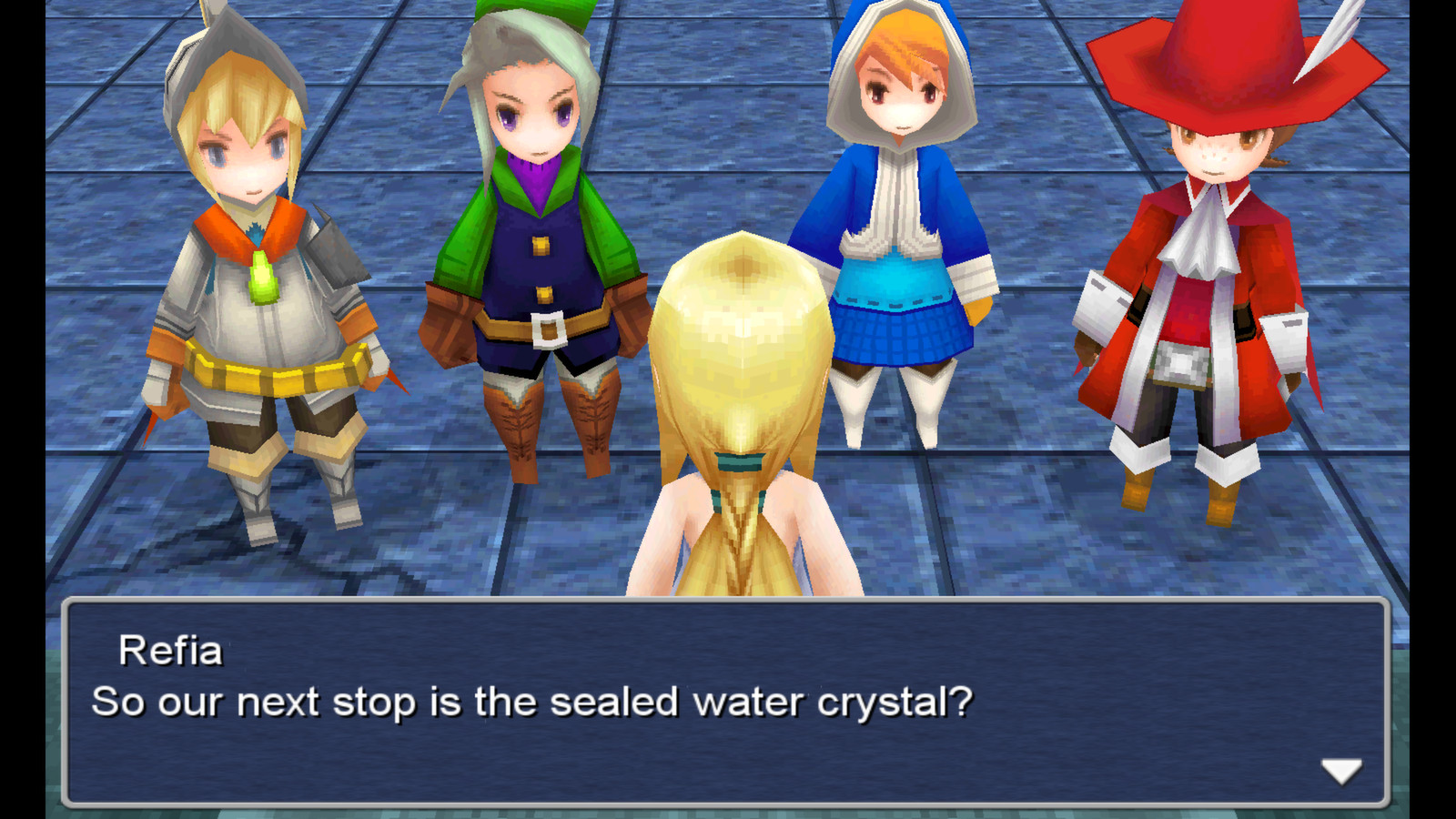
Final Fantasy III (3D Remake)
Publisher: Square Enix
Platform: Nintendo DS, iOS, Android, PC
Released: 2006, 2012, 2013, 2014
Monday, December 19, 2022
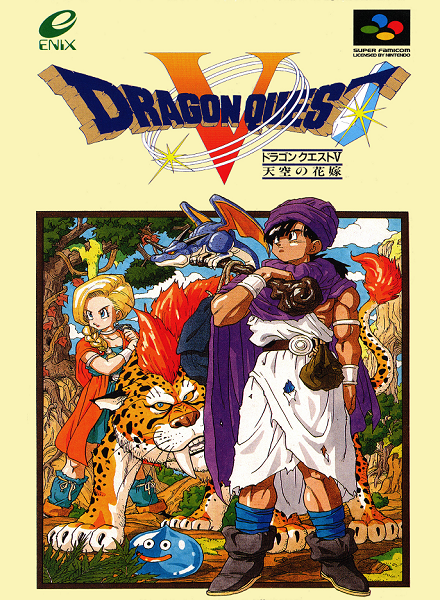
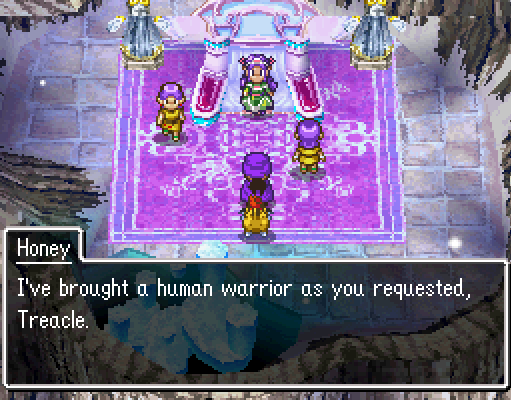
Dragon Quest V: Hand of the Heavenly Bride
The fifth game in the Dragon Quest series marked its first entry on a 16-bit platform, and fittingly, it attempted to change things up both narratively and in terms of design. But does it prove to be another engrossing entry in a legendary franchise, or does this prove to be an unworthy Quest?
Dragon Quest is of course an extremely popular series in Japan, but didn't fare nearly as well in North America. Despite its relative unpopularity overseas, though, it still attained enough of a following for Enix to localize all four entries on the Famicom, with the last coming as late as September 1992 - just over a year into the Super Nintendo's lifespan. Dragon Quest V was the first not to be localized, reportedly due to programming issues that couldn't be resolved, and wouldn't be until many years later on the Nintendo DS; in the meantime, Enix mostly became known as a publisher of other company's games (mostly RPGs) until the early 2000s, when they would merge with Square to become the single biggest name in Japanese RPGs, Square Enix.
Dragon Quest V was one that intrigued me for a while; series creator Yuji Horii cited it as his favorite on at least one occasion, and it was said to turn a lot of the series' tropes upside-down in its story. This is certainly evident right away as the story starts off with your main character as a young child, following his father around the world on a search for the Legendary Hero who will save the world. The story is considerably more grounded and personal this time, centering on a lifelong trial for the protagonist and everyone who comes into his life - friendships and alliances are forged, he marries and has a child, learns the secrets of his family's past, and undergoes very personal hardships and tragedy before the game ends. While not the first JRPG to introduce such a personal element to its storytelling, it certainly set a trend, seemingly inspiring some story beats and character building in later games like Final Fantasy VI and VII. Having a multi-generational dynamic as part of its storytelling would also become a somewhat common trope in Japanese RPGs after this one, seen in games like Lunar, Suikoden, Harvest Moon and Fire Emblem, so Dragon Quest V seems to have been a pretty influential title in more ways than one.
Fitting its more personal and turbulent nature, the game's playable cast is also much larger than any prior game in the series. Many allies join throughout the journey, coming and going as the story dictates. As mentioned, your main character also marries during the game, and his wife becomes a playable character - all three choices (two in the original SFC version) have slightly different playstyles and equipment choices too, and you're locked out from recruiting the other two on that playthrough once you've made your choice. In a new twist for the series, you can also recruit monsters to your side - after defeating them in battle, they have a chance to ask to join your party, at which point you can then add them to your wagon or drop them off at a "Monster Den" for potential later use. This is a surprisingly full-featured addition, too - each monster has unique equipment choices, stats, learns unique sets of spells and even have widely varying max levels, though they may ignore your commands if their Wisdom is a very low amount (below 20). Some prove to be rather gimmicky - the Goodybag monster is resistant to many elements and status effects and has quite high stats, though a low level limit of 7 and a capped Wisdom of 5 limit its long-term usefulness. Slimes are another example; being the archetypal low-level mook enemy of the series, they have unimpressive stats and low growth per level, but surprisingly can equip some of strongest gear and, should one raise a Slime to level 99, they will learn one of the most powerful attack spells in the game. Metal Slimes and their variants also make very powerful allies, though the odds of recruiting one are extremely low (1/1024 according to most guides), so it's highly unlikely you'll get one without copious amounts of farming. They do still retain all of their usual resistances and weaknesses, too, so that can give you an edge or become a liability in certain scenarios.
So, there's a lot there in terms of storytelling, emotional impact and nitty-gritty party customization for the powergamers in the audience, but of course Dragon Quest V doesn't skimp on the side-content either. The series mainstay of collecting Mini-Medals to trade for rare prizes persists in all versions, as does the casino where one can win medals to trade in for powerful items. From the PS2 remake on, several more get added - a game-spanning quest called "The Knick-Knackatory" where you basically inherit a museum and put various artifacts from your adventures on display is probably the centerpiece there. The Pachisi board game returns from Dragon Quest III as well, though under the name "Treasures n' Trapdoors", serving as both a means to acquire rare items as well as tweak your characters' stats with a hefty luck element involved. A small bonus dungeon is added too, which ties the story back to Dragon Quest IV a bit and adds some powerful recruitable monsters to play with in the post-game.
So, having now played it, I can see why Dragon Quest V is considered a high point for the series. While the core gameplay remains essentially unchanged from the 8-bit entries, it definitely upped the stakes in terms of storytelling and forging an emotional connection therein, giving the player character a very personal stake in the adventure and making its twists and turns that much more gripping. Monster recruiting added an interesting if slightly underdeveloped new element, though it was relatively novel in RPGs of the time; though predated by Shin Megami Tensei and later taken to runaway success with Pokemon, it did also lay some of the groundwork for Dragon Quest Monsters, a game focused entirely on recruiting and training DQ's iconic critters which has become a fan-favorite franchise in its own right. But beneath it all, Dragon Quest's high degree of polish, refinement and developer passion makes it shine, taking the player on an engrossing adventure that ranks among the best of its time period and a high standard which many other Japanese RPGs aspire to equal. It's been criminally overlooked in the west for ages, but any serious fan of the genre should strongly consider giving it a playthrough.
Developer: Chunsoft, ArtePiazza, Matrix Software
Publisher: Enix, Square Enix
Platform: Super Famicom, Playstation 2, Nintendo DS, Android, iOS
Released: 1992, 2004, 2009, 2015
Recommended Version: The later versions add a number of tweaks over the Super Famicom version, including some extra content (mentioned above), having a party size of four rather than three, and some extra items and weapons to utilize. The only version to be released physically in the west was the Nintendo DS port, though the later Android and iOS ports are based on this version as well, which make it the most affordable way to play the game in English.
Saturday, April 2, 2022
Nostalgia
An original RPG offering from Matrix on the DS sounded like a promising idea. After all, they were behind the Alundra series and several remakes for the Final Fantasy and Dragon Quest franchises, so they clearly have an eye for what makes RPGs work. But what makes an RPG function and what makes one distinct and memorable are two very different realms of expertise. Like many, Nostalgia's developers don't seem to recognize that the appeal of classic RPGs was not in looking a certain way or adhering to rigid design customs even to the detriment of the gaming experience, but because they made efforts to stand out from the pack. Whether a strong presentation or an engrossing storyline or gameplay that felt more streamlined while losing none of the depth, they all stood out in their own ways; old and new RPGs alike are scarcely remembered for going through the motions. Hell, even long-running formulaic franchises like Mario, Zelda, Mega Man, Castlevania and Dragon Quest have to add new twists in every now and then and maintain a high quality standard to stay relevant. Nostalgia never got that memo, proving its dated design philosophy right away with all-too-frequent random encounters, unengaging mash-A-to-win battles and the all time low bar for introductory quests, killing rats in a switch-flipping sewer maze level. But even if you somehow still keep playing after that, the lack of any decent story hooks, interesting characters or anything else to do other than more tiresome monster-bopping quests in the same vein quickly made me put this one down and never look back. Nostalgia certainly isn't the word I would choose for this title; maybe they should have gone with "Ennui" instead. Or perhaps "BlasΓ©".

Developer: Matrix Software/RED Entertainment
Publisher: Ignition Entertainment
Released: 2009
Platforms: Nintendo DS
Monday, May 4, 2020
Dragon Quest III: The Seeds of Salvation
Dragon Quest was huge in Japan and still is today, continuing to get numerous spinoffs and sequels and having surprisingly few changes to its core gameplay despite leaps in technology. It was not nearly as big in the west, though that didn't stop Enix from localizing three more games on the 8-bit systems alone, and while they may not have been hugely popular (particularly compared to the likes of Zelda), they nevertheless attracted a sizable following.
Dragon Quest III is regarded as one of the best RPGs on the NES platform by many, though, and it isn't hard to see why. Taking the polished design of the previous two Dragon Quest games and incorporating some elements of the Final Fantasy series into the mix, it managed to introduce some replay value to its format on top of the lengthy adventure it already provided. It even had a pretty clever twist at the end to tie it into its two predecessor games, though I won't give that away here.
The most significant addition to Dragon Quest III was that it contained a Final Fantasy styled class system. While the main character themself has a fixed "hero" class, they could visit the guild hall and recruit up to three allies of any class they chose, letting them customize their party for the adventure ahead. Several of these have direct equivalents to Final Fantasy classes - Soldier is basically equivalent to the Fighter, for example, wielding heavy weapons and armor but being unable to cast spells, while the Pilgrim casts healing spells, similar to the White Mage. A few are unique, though, like the Merchant class; in addition to being decent fighters, they cause enemies to drop extra items and gold after a party victory, and in the remakes, even get some useful supportive skills like being able to call shops in the field and dig to find random items or money. A class of dubious value in itself is the "Goof-off" or "Jester", which is a weak class that can randomly decide to take no actions during battle, making them unreliable and not particularly useful; however, they do have high Luck and are the only class that can upgrade to the powerful Sage class without requiring a special item, so keeping one around can be very beneficial in the long run. Later ports of the game also add the Thief class, who again serves a powerful supportive role, letting the party steal items from enemies as well as temporarily disable encounters and find hidden treasures.
Later ports of the game also add much in the way of new content. Not only are visual and music greatly overhauled, but much more is added to the gameplay, too. More than 80 pieces of equipment are added, many of which are tied to finding hidden medals throughout the game world. Bonus dungeons are added with many new monsters to battle and treasures to find, and the player can now search bookshelves, pots, barrels and the like to find hidden goodies. Probably the most significant change, though, is that each character now has a "personality" based on a starting quiz which affects their stats, raising some and lowering others by a small percentage. Some items and accessories found throughout the game can temporarily or permanently alter a character's personality as well, letting the player tweak the party to get more mileage out of their innate abilities.
The core gameplay of Dragon Quest remains essentially the same despite these changes, though - simplistic, turn-based action is the order of the day here. It also thankfully is not nearly as grindy as its predecessors, though I still found myself hitting a brick wall boss at times and having to break away and level up for a few hours before I could beat them. This got particularly frustrating toward the end, as I had to spend almost a full day of time farming Metal Slimes to get experience and levels so that I could stand a chance against the final boss. This may have been addressed in some of the later ports as well (I mostly played the NES version), but I still found it to be a frustrating ordeal.
Despite that, though, I can't deny that this is probably the best of all the Dragon Quest games I've played. It added some new twists on the format and lets the player customize their party to their liking, giving it an edge over most other RPGs of the era and some pretty good replayability. The overall length of the journey, plus the amount of grinding and frequent encounter rate, make it one I wasn't overly keen on revisiting, though I imagine this situation is better in the remakes with some of the improvements made to them there. Regardless, Dragon Quest III is a solid 80's RPG and worth a look for any serious genre fan.
Developer: Chunsoft, Heartbeat, TOSE, Matrix Software
Publisher: Enix
Platform: NES, Super Famicom, Game Boy Color, Mobile, Android, iOS, Switch
Released: 1988, 1992, 1996, 2000, 2009, 2014, 2017, 2019
Recommended Version: The remakes all have a lot more to offer in terms of content and game balance, though there isn't really a clear consensus on which is the best as they all offer some exclusive content of their own. The Super Famicom and Game Boy Color versions do seem to have the best value for your dollar though, in the form of a new minigame ("Pachisi") that can affect your characters' stats, animations for monsters and some extra music tracks. However, the GBC version is the only one of the two that is (officially) available in English; this version also adds a new playable class (the Thief) and some exclusive side content in the form of the Medal Album and a new optional dungeon and boss.
Tuesday, July 10, 2018
The Nightmare of Druaga: Fushinigo Dungeon
Druaga is one of Namco's earliest franchises, seeing a number of releases in arcades throughout most of the 80s, but despite it appearing on several Namco Museum compilations and even being referenced in a couple of other Namco-published games like Tales of Destiny and Baten Kaitos, not too many people still talk about it today. Fewer people still talk about the attempt to revive the series on the Playstation 2, which saw overall low sales and little coverage from gaming magazines owing to its punishing difficulty.
It was a difficult game by design, though, in no small part because it was another offshoot of Chunsoft's Mystery Dungeon roguelike series. To that end, it features many hallmarks of the genre - having to identify items before they become usable, a large number of status-inflicting enemies and traps on each floor to trip up the player, and of course, very unforgiving deaths which force the player to redo the entire dungeon and rob them of all of their items (save for a small handful they may have "engraved" beforehand in town, which doesn't come cheap). In short, a large part of the game is not only knowing how to deal with hazards, but deciding whether it's worth the risk to press on or whether to make a prudent retreat in order to minimize risk, even if that comes at the cost of having to retread all of the dungeon thus far.
Naturally, being an ostensible sequel to the Druaga franchise, Nightmare works in some elements of those games as well. The player can actually knock down walls by attacking them with their weapons, which can give them a shortcut to their destination or allow them to make a quick escape from enemies; however, this also depletes 5% of their maximum HP every time they do so, so it's best used only as a last resort. A persistent mechanic is that the lighting in the dungeon will slowly weaken, eventually leaving the player completely in the dark, unless they periodically Offer an item to Ki to restore the light; the rarer the item, the longer the light will come back on for. Dungeon floors, unlike most roguelikes, are not fully randomized, but do have the player and enemies start in a different position each time they re-enter. Each floor also has two hidden chests to find - one silver, one gold - and they will only appear after meeting specific conditions, such as defeating a particular type of foe or collecting the door key without smashing any crates. Each one is different (and the game rarely provides clues for what will make them appear), but as they often contain powerful equipment or just useful items, they're worth getting nonetheless. Several iconic Druaga enemies appear as particularly dangerous hazards as well - Will-o-Wisps will explode and reduce the player's HP to 1, while Ropers tend to be high-leveled for the dungeons in which they appear and drain HP with each hit they land, making them very dangerous and difficult to kill alike. Having a good supply of potions on hand, as well as throwing items to destroy dangerous enemies before they get a chance to attack you, is an essential part of the overall strategy.
Sidequests can occasionally grant you some extra gold and items, though they are somewhat strangely handled as well in that you must undertake them with a completely empty inventory. Your level is also temporarily reset while on a quest and any experience earned is not carried over when you complete it, making them useless for gaining experience and powering through the game and more as a last-ditch way to build back up your gold and equipment after you get wiped out in the dungeon during the main quest.
Thrillseekers can also elect to take on Bonus Dungeons, which can be undertaken in any dungeon floor the player has already completed by approaching the exit and choosing to "break down the door". This puts the player in a mirror of the next dungeon floor with far higher-leveled enemies and more dangerous traps (and no option to easily escape using a Feather), but the tradeoff is that they have a much higher chance of dropping rare and powerful items. In essence, a high-risk, high-reward excursion.
Of course, like any good roguelike, Nightmare of Drauga has an in-depth item combining/crafting system as well. This time it comes in the form of combining equipment of like type (weapon+weapon, helmet+helmet, etc), sacrificing one piece of gear to power up another. This affixes a numbered modifier to the equipment as well as adding some of the sacrificed items' stats and attributes to the primary gear. Once a particular piece of equipment reaches "+15" (having added other weapons' attributes to it at least fifteen times), the player acquires the ability to transfer over abilities as well. Abilities come in the form of either attack skills (for weapons) or defensive abilities on armor such as making certain status effects less likely to affect the player. But like any other equipment in the game, the player must take care to engrave them or retreat from a dungeon if they are in danger of dying, because they are just as much at risk of being lost forever as any other piece of equipment.
A more traditional crafting system also appears in the form of the Alchemy shop, letting the player combine leaves, roots and other items together to make potions. There are two characters who do this for the player; Aziel is the cheaper option and will reliably produce useful items, while Sajia costs much more and has a high probability of creating something weak or even entirely wortheless; however, she also has a small chance to craft rare and powerful items that Aziel cannot create at all, so it may be worth taking a chance on her if you have the cash and items to spare.
Nightmare of Druaga is also wise to the fact that difficult games tend to invite savescumming to circumvent some of the challenge. As a result, the game auto-saves each time the player transitions between screens, and if they reset the console without doing a hard save, the player will be greeted with a long and unskippable dialog scene upon loading that makes save scumming both annoying and inefficient. One can also make temporary saves as they progress through a dungeon, but these are erased as soon as they are loaded from the memory card, preventing them from being abused as well. One nice detail is that after creating a hard save, the player is disallowed from continuing the game right away; instead, they must either reset the console or power it down entirely and turn it back on to continue playing, a la several old RPGs from early computer platforms and the NES.
In conclusion, it's not hard to see why many console gamers and gaming journalists alike shunned Nightmare of Druaga; its punishing design, only passable aesthetics, somewhat slow gameplay and heavy emphasis on random elements is very unlike the Japanese-styled RPGs that were the hallmark of home consoles at that point, and it didn't even play a whole lot like the Druaga series it was allegedly a followup to. Regardless, it is a very competently-made title, capturing the feel of an old-school roguelike to a T, even its more detrimental elements. Certainly not a game for everyone, but those looking for a title with a lot of content and some steep old-school challenge should definitely give this one a go.
Developer: Arika, Chunsoft, Matrix Software
Publisher: Arika, Namco
Platform: Playstation 2
Released: 2004
Recommended version: N/A