RPGreats now has a Discord! Come on in to talk about game music, games in general, submit reviews or just hang out!
Showing posts with label Series: Mega Man Legends. Show all posts

Thursday, November 3, 2022

The Misadventures of Tron Bonne

A prequel to Mega Man Legends starring the series' breakout character, Tron Bonne.  While it does still utilize the same engine as the other two games, weird control scheme, stiff physics and all, the gameplay here is changed up quite a bit, broken up into a mission structure (with each mission having three sub-levels) rather than being an open-world game.  You play as Tron, of course, piloting a mecha called the Gustaff and commanding a small squad of Servbots via "beacon bombs" to carry out various tasks - looting buildings, attacking enemies or disabling hazards temporarily, and whatever else needs doing.   Some missions are pretty straightforward action segments, while others change things up quite a bit.  The closest it comes to MML's overall gameplay is a search through a labyrinthine pyramid in search of a legendary treasure, but others include a battle through a city to rob a bank, stealing livestock and carting them off in a truck, a puzzle game of sorts where you load cargo containers onto a ship in a set number of moves, a first-person dungeon crawl, and even a casino where you can play Bingo and High-or-Low.  The strangest thing, though, is that Misadventures has a slight X-COM vibe to its design - your Servbots' stats can be improved by going on missions and playing minigames, which not only give them new combat capabilities, but can unlock hidden potentials in them that allow for customization options and can even unlock upgrades to the Gustaff.  If you don't take them on missions for a good while they'll also fill up their "Sloth" meter and refuse to work, which can only be lowered by sending them to the torture room and playing another minigame to sort them out.  While Misadventures ultimately isn't particularly deep and retains the series' usual weird quirks with hit detection, awkward controls and stiff movement, it once again gets by on the merits of its sense of humor and by having a lot of charm, and the general 'variety show' feel of its design ensures it doesn't wear out its welcome.  It's also a very expensive game these days, going for well over $500 online, but thankfully Capcom saw fit to release it on the Playstation Network, so you can still play it without breaking the bank; it takes a bit of doing these days, but for only $6 it's hard to argue against at least trying it.

Developer: Capcom Production Studio 2
Publisher: Capcom, Eidos Interactive
Platform: Playstation, Playstation Network (PS3/Vita)
Released: 2000

Wednesday, August 3, 2022

Mega Man Legends 2

The second entry in the Mega Man Legends series followed the series' usual trends, keeping the core gameplay relatively intact but adding some improvements and general polish to try and make a more balanced game overall.  But does Mega Man Legends 2 succeed in being a more satisfying game experience, or does it spoil the broth?

Mega Man Legends wasn't a success for Capcom, being met with relatively average reviews and mediocre sales, but it still found a following among enthusiasts of Zelda-likes as well as long-time Mega Man fans.  This prompted Capcom to try their luck at a spinoff game starring the series' breakout antihero, Tron Bonne, and later a followup to the first game.  While both games met with more positive reviews, they still didn't do particularly well in terms of sales, which ended up pushing the franchise into a long dormancy that continues today.

Something you'll notice right away is that Mega Man Legends 2 carries on the polished presentation of the original, with quite a lot of voice-acted cutscenes, expressive characters and an intriguing storyline building up to a large mystery.  The anime-like aesthetic returns, though now with more polished models and far less jagged edges and ugly, stretched textures.  Several music tracks return from the original game in addition to numerous new ones (replacing the conspicuous absent noise in most of the original game's dungeons), and all of them sound quite good; I especially like how each major area in the game has a leitmotif that carries between all the songs you'll hear there.  Even most of the same voice cast from the original game returns here, with the baffling exception of Mega Man having a new actor; he's not a bad actor or anything, but it's a bit jarring if you're coming straight in from the first game.  Load times have also been tightened up considerably, resulting in transitions between areas and save screens being much smoother than the original game. 

The gameplay remains mostly the same, retaining the same awkward "tank control" movement and rotation even if you use the analog stick, but some improvements are made nonetheless.  Mega Man's movement is a bit sharper now, with less noticeable delay between pressing a direction and moving, and you can actually move while locked on to enemies now, making combat more fluid (and your sub-weapons considerably more useful), though it does have two irritating bugs - one is that there's seemingly no rhyme or reason to what enemy it will lock on to any time you press the button, which can be particularly annoying during the more chaotic battles, and the second is that if you take even the slightest of hits, you'll lose your lock-on and it will probably snap onto another random enemy; this can get extremely frustrating at times.  On the upside, the lock-on does introduce a useful bug, too - if you lock on to an enemy, hold down the fire button and tap Up on the D-pad, you'll reset your gun's cooldown and fire again immediately as soon as your stepping animation stops, effectively letting you fire as quickly as you can tap the Up button and rendering the Rapid and Energy stats mostly irrelevant.  They've also done away with the redundant 'shield' system from the first game; you no longer have to worry about it breaking mid-fight and taking more damage from subsequent attacks until you get it repaired.

Special weapons have seen some significant overhaul too.  While you can still only equip one at a time, enemies will occasionally drop powerups that refill their energy, so you don't have to get through an entire dungeon on one bar.  Or rather, two bars, as the game implements a mechanic where you can only use a weapon so much at a time, draining the green bar on the left half of the gauge; once you stop firing, it will draw from the larger blue bar to refill it.  As mentioned above, most weapons now also work in tandem with the lock-on, making you less likely to waste shots, although many of the stronger ones still plant you in place when you fire them.  Fitting the larger scale of the game, weapons generally cost much more to upgrade now, with some reaching well into the millions.  On the other hand, you have the opportunity to take timed trials to upgrade your Digger License, which makes the enemies in the game tougher but also causes them to drop more Zenny, in effect letting you adjust the game's difficulty and risk/reward ratio to your liking.  

As mentioned above, Mega Man Legends is a considerably bigger game than its predecessor, having you explore numerous islands across the world, discover their secrets and undertake a number of optional side-quests throughout.  Dungeons are considerably more varied and hazardous too, with plenty of traps, more aggressive enemies and a couple of irritating 'status effects' you can be inflicted with; fire is a particularly bad one as it will continuously drain your health for upwards of thirty seconds, and there doesn't seem to be any way to put it out early (not even the otherwise-useless fire extinguisher weapon used to clear the intro mission, or taking a cue from Ocarina of Time and letting you roll to put the flames out).  You can also be 'paralyzed' by electrified floors, greatly slowing your movement speed and jump height and making it very difficult to avoid enemy attacks until it wears off (which also takes an irritatingly long time), or "decayed", which prevents you from firing your buster, also for an irritatingly long time.  On the other hand, you do get a greater variety of armor pieces this time; some of which help with avoiding status effects like these (though in the case of fire, not until after you've gone through the game's first major dungeon and probably been ignited several times throughout).  Seemingly taking a cue from Zelda, you can access consoles in major ruins to fully reveal the area map and point out the location of treasures within it, which definitely helps keep you caught up on potential equipment upgrades; a good thing, as some fights are very difficult without the right special weapon at your disposal.  Also like Zelda, there are underwater segments now, and one of the game's most irritating dungeons is one where you have to fill and drain the water to progress, with movement while submerged being very slow without the use of special boots.

Seemingly acknowledging the repetitive nature of the first game's boss battles, Mega Man Legends 2's boss fights are considerably more involved.  Circle-strafing still works on occasion, though many bosses are now fought in trap-laden rooms, cramped quarters or on small platforms that make it implausible.  The first boss fight in particular is a good example - a frog-bot that hops between several elevated platforms above a floor with constantly-respawning grub robots, and there are also robotic flies in the room that it can eat to regain health - destroying those, staying out of reach of the grubs and avoiding the frog's attacks all have to be juggled to win.  Other missions have a bit more strategy, like having to defend an air-dock from attacking robots, with your own shots able to damage or destroy barriers that prevent them from getting in.  One fight is even a direct reference to The Misadventures of Tron Bonne, with Tron utilizing similar tactics to the ones the player uses in that game.

So, while Mega Man Legends 2 does have some irritations with its long-lasting status effects, unpolished mechanics and being more grindy than the original in some ways, it is a substantial improvement in most others.  It's bigger, longer, has more boss battles, addresses several prominent shortcomings of the original game's design, and like the original, ends up being an enjoyable action-adventure-RPG experience despite its flaws.  It's a shame it never got much of a chance to shine, being released over a month after the debut of the Playstation 2 and the followup to an already relatively unpopular game, but it has quite a lot to offer any discerning fan of Zelda-likes.  It's gotten pretty scarce and expensive in recent years, but if you happen across a copy or are looking for some good PS1 classics to download to your Playstation 3, PSP or Vita, it's well worth picking up.

Developer: Capcom
Publisher: Capcom
Platform: Playstation 1, PC, PSP, PSN
Released: 2000, 2003, 2005, 2016
Recommended Version: I've only ever played the original PS1 version, both as a disc game and emulated on PSN, but from what I've read the PSP and PC ports are mostly identical (though the former was only released in Japan, and the latter only in Japan and Asia).

Sunday, January 30, 2022

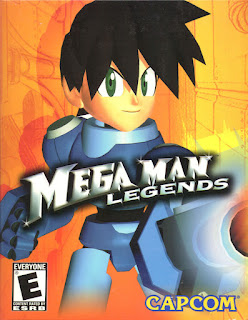
Mega Man Legends

The second spinoff of the ever-popular Mega Man franchise was a very different turn, going from a 2D linear action game to a 3D open-world story-driven experience set in a very different universe from the earlier games; seemingly an intended competitor to the highly successful Ocarina of Time on Nintendo 64.  But does Mega Man Legends prove to be a worthy adventure, or do the PS1's limitations simply bog it down?

Mega Man began in the '80s and quickly became a fan favorite franchise, with five sequels on the NES alone and numerous spinoff series in subsequent years that took it in all sorts of different directions - from open-world action titles to choose-your-own-adventure games to card-collecting RPGs.  It's mostly fallen off in recent years save for the token compilation rereleases, but the dozens of games and spinoffs the franchise has spawned continue to have a strong fan following to this day for their formulaic, yet effective design and charming scenarios.

Mega Man Legends got attention for being the first series spinoff to debut on the Playstation, as well as the first Mega Man branded game to make the leap to 3D; not an easy thing for many fans to swallow after no less than seventeen previous games stuck to a 2D format.  It was another spinoff game too, seeming to take place in an entirely separate universe from Mega Man and Mega Man X, which led many to question why they didn't just make a new IP instead. 

Upon starting up the game, you quickly learn that it doesn't follow the Mega Man format very closely at all; there's no Robot Masters to fight, special weapons are assembled from parts and upgraded with money (dropped by defeating enemies) rather than through boss battles, and in true RPG fashion, MegaMan starts off with rather rudimentary equipment that you gradually upgrade over the course of the game; said upgrades are built from parts (including your helmet), purchased or found as the adventure goes on.  Even your basic mega Buster is pretty weak at first, gradually being upgraded with parts that improve its specs - Attack, Energy, Range and Rapid - which fit into two slots (later upgraded to three). 

Another thing you notice immediately is the very awkward control setup the game uses.  As it was built for the original Playstation before analog controls became standard, it uses a similar awkward "Tank Control" setup to the Resident Evil games - you turn left and right via the shoulder buttons, move forward and back with Up and Down on the D-Pad, and can sidestep via Left and Right.  Fortunately, this can be made slightly less awkward via the Options Menu, which allows you to sidestep via the shoulder buttons and rotate via the D-Pad, but it still feels a bit off, especially if (like me) you played Ocarina of Time on the Nintendo 64 beforehand.  Aiming is similarly awkward; like OOT you can lock on to your enemies, but bafflingly you cannot move while locked on at all, which leaves you very vulnerable to attack.  Fortunately your shots will automatically hone in on enemies that are centered on the screen even as you side-strafe, so there is little reason to use the lock-on save to occasionally hit an enemy above or below you.  Because of the digital controls, jumping is awkward too - you basically jump straight up or forward a fixed distance with no in-between.  Thankfully there isn't a lot of precise platforming in the game, but it is annoying when that comes up.

Where the game does shine, though, is in its presentation.  The game goes for an anime-esque presentation with colorful visuals, a striking style of design and characters that manage to be surprisingly distinct and expressive despite the low-poly aesthetic.  While there are no pre-rendered FMVs, there are quite a lot of cutscenes with full voiceover (which is surprisingly good for the time) and even some solid motion-captured animation for all the characters in them.  The Bonnes - recurring antagonists with an antihero bent - are easily the show-stealers, with some downright hilarious scenes and great acting every time they're onscreen - they even got their own spinoff game later with "The Misadventures of Tron Bonne", and Tron also appeared as a playable character in two of the Marvel VS Capcom games, so I'm definitely not the only one who thought so.  Even the music is quite nice - while nothing amazing, it's fitting, distinctive and catchy, though oddly most dungeons don't have it and simply utilize ambient noise instead. Basically, it feels like a good late '90s anime in video game form, so that keeps you playing through the gameplay frustrations.

There are quite a few of said frustrations throughout to be sure.  There are some pretty abrupt leaps in difficulty even early on - you go from a pretty easy starter dungeon straight into three consecutive missions topped off with boss battles, which is a pretty awkward way to start off any game, let alone one where you've had little chance to learn the mechanics and upgrade your character yet.  Normal enemies take similar leaps too - you go straight from weakling bots that die in only a few shots to gigantic monstrosities that take dozens of hits and will constantly knock you around, all requiring that you defeat them through long periods of circle-strafing or heavy subweapon fire.  Weapon upgrades can also be extremely expensive, requiring you to grind money for long periods of time to afford them.  There is also at least one instance where you can save in a place before another series of difficult boss battles, potentially making the game unwinnable if you don't have the parts on hand to defeat all three of them back-to-back.

Mega Man Legends is a relatively short game, clocking in at about eight to ten hours for a first playthrough - slightly more if you make a point of doing all the side content and minigames.  There is a fair amount of things to do not strictly related to the main quest - numerous characters will give out side missions and rewards once you complete them, and though there are not many dungeons in the game, each has quite a bit of hidden treasure to find, both in chests and hidden in various holes in the walls (which can be a bit hard to spot at first, as they don't look much different from the normal wall textures).  Minigames include a TV game show where you burst balloons, kick balls at targets or maneuver through obstacle courses with your rollerskates, and there are two difficulties to unlock after you finish the game; strangely, you're required to beat the game on Hard mode to unlock Easy mode.

All in all, Mega Man's leap to 3D isn't the smoothest, but far from the worst I've seen (and still leagues better than Mega Man X7 on the Playstation 2 - a game I've gone on record as saying is worse than the infamous DOS Mega Man games).  Its gameplay is rather awkward, clunky and weirdly balanced and the overall short length a bit offputting, but the strong presentation, captivating characters, interesting (and surprisingly detailed) setting and quite a lot of customizable weapons and pieces of gear make it a standout title regardless.  It's one I would love to see get a remake with some extra content and quality of life improvements, but as Capcom only seems to care about Monster Hunter, Street Fighter and Resident Evil these days, it seems increasingly unlikely to happen with each passing day.  Still, if you can find a copy, Mega Man Legends is worth a look as a flawed, but charming and quirky new spin for a fan-favorite franchise.

Developer: Capcom
Publisher: Capcom
Platform: Playstation 1, Nintendo 64, PC, Playstation Portable
Released: 1998, 2001, 2005, 2015
Recommended Version: The Nintendo 64 port (released as "Mega Man 64" per the platform's naming trend) offers surprisingly little improvement over the original PS1 version; while it does look a bit sharper owing to having antialiasing and less polygon clipping, it suffers from a worse draw distance, choppier framerate and significantly lower audio quality, though it does surprisingly retain all of the voiceover from the PS1 release.  The analog stick isn't utilized well either; you still move and turn "tank control" style with it, which is pretty awkward.  There is also a PC version which runs a bit smoother and at a higher resolution, though it has some problems of its own - it's a straight port of the PS1 game, even retaining the same (redundant) messages about needing memory cards to save.  It also lacks many of the lighting effects of the original and the music doesn't loop properly (it's just stored as low-quality .wav files on the disc, which does at least make it upgradable or even replaceable).  Grab the PS1 version if you can; it's available both physically and as a digital download on the PS3/Vita store.  The PSP version is also worth a look (and bundled with 2 on the same UMD), though it's only available in Japanese.