RPGreats now has a Discord! Come on in to talk about game music, games in general, submit reviews or just hang out!
Showing posts with label Developer: Hudson Soft. Show all posts

Sunday, March 12, 2023

Neutopia

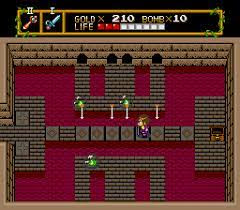
 The Legend of Zelda was without a doubt one of the defining games on the Famicom and gaming as a whole in the mid '80s, so when NEC launched their PC Engine console in 1987 (later released in North America as the TurboGrafx-16), it made sense to have their own answer to Zelda on it.  Hudson Soft stepped up to develop the game, releasing it in 1989 in Japan and the following year in North America.  For what is likely the first 16-bit Zelda clone, it does its job pretty admirably, with plenty of secrets to uncover and several dungeons to complete over the course of the story.  There are quite a few similarities to Zelda - health restoring potions, bombs to blow open walls, and a fire rod as both a weapon and a means of burning down trees to uncover secrets - as well as some new ones, like rings that transform enemies into weaker enemies.  It does have quite a lot more dialog than Zelda does, though, as well as some interesting cultural influences, like a golem for a boss (complete with a giant Star of David) and a bizarre Star Wars reference or two.  Interestingly the game also has two ways to save - either via a password system or, if you have a Turbografx-CD addon, to that system's internal RAM.  The Turbografx didn't get too many RPGs of its own (not outside of Japan, at least), but Neutopia is a good one if you have the means to play it.

Developer: Hudson Soft
Publisher: Hudson Soft, NEC
Platform: TurboGrafx-16, Wii Virtual Console, Wii U Virtual Console, PSN
Released: 1990, 2007, 2011, 2017

Neutopia II

 Neutopia proved to be a moderately successful game on the PC Engine/TG16, so it ended up getting a sequel two years afterward, retaining largely the same style of gameplay as its predecessor, though with a considerably higher degree of polish.  A few new items are added - boomerangs that can be caught on the return arc and reused, a flail that has quite long range but costs 10 gold every time you swing it, and not one, but three types of magic staff - the fire, wind and lightning staves, all of which have slightly different effects depending on how much health you have left when you use them.  The story also picks up in a pretty clever way, having the hero of the last game (Jazeta) go missing and his son setting out on a new quest to find him.  It's another solid enough Zelda 1 copy for the TG16, though the fact that Link to the Past came out only two months after in Japan (and several months earlier in North America) kinda doomed it to be forgotten.  If you have the means, though, it's still worth playing.

Developer: Hudson Soft
Publisher: Hudson Soft, Turbo Technologies
Platform: TurboGrafx-16, Wii Virtual Console, Wii U Virtual Console, PSN
Released: 1990, 2007, 2011, 2017

Sunday, March 5, 2023

Takahashi Meijin no Bōken Jima IV (Adventure Island 4)

The fourth game in the Master Takahashi's Adventure Island series (localized as just "Adventure Island", with the character's name changing to "Master Higgins") was the final 8-bit game in the series and indeed the very last game released for the Famicom in the summer of 1994, so it's little surprise it never got ported over.  It's a definite changeup from the series norm though, going from a linear, fast-paced action platformer to more of an open world adventure a la Zelda II or Castlevania II.  You collect various items throughout to open new paths, like a torch to light up braziers and see in dark caves or a hammer to smash down various rocks, and there's now a traditional health bar rather than the constantly-depleting health of earlier games (with one hit from an enemy killing you instantly).  Collecting heart containers will extend your health meter and allow you to take more hits before dying, while collecting eight pieces of fruit will restore one heart on the gauge.  Minigames also appear throughout, allowing you to earn use-on-demand items to restore health, protect you from death once, or instantly teleport back to your house.  There are six islands in total to explore, and progress is tracked via a password system, ensuring you don't have to complete the whole game in one session (or worry about a dead battery in the cart).  It's a pretty scarce and expensive game to come by these days in its original form, but fans of well-made, enjoyable 8-bit adventures owe it to themselves to check it out.


Developer: Now Production
Publisher: Hudson Soft
Platform: Famicom
Released: 1994

Super Adventure Island II

Adventure Island was a pretty popular series back in the early '90s, noted for its fast paced platforming action, dinosaur allies and a fun tropical setting, (as well as its complex relationship with the Wonder Boy franchise, but that's a tale for another time).  Super Adventure Island 2 definitely changed up the format, though, reworking it into more of a Zelda II style adventure, complete with having a top-down view world map (with "Random encounters" and dungeons with a sidescrolling perspective.  The game still progresses in a relatively linear fashion, with most areas gated off until you find the right key to enter them, but you can also collect money to buy upgrades, find various new weapons, armor and shields in chests (some of which remove obstacles and open new paths) and collect life containers and spells to cast.  Fittingly for this type of game, several rooms in each 'dungeon' are also not accessible the first time you visit, requiring that you collect items from later areas and come back later if you want to pick up everything.  The presentation is quite solid, with a charming and exaggerated cartoon style, and it has a catchy, upbeat calypso soundtrack to accompany the series theme.  It never got a lot of attention as a relatively late comer to the SNES scene and the series has largely fallen off the gaming radar since then, but it's a fun little game if you can come across a copy at a decent price.


Developer: Make Software, Inc.
Publisher: Hudson Soft
Platform: SNES
Released: 1995

Thursday, May 12, 2022

Faxanadu

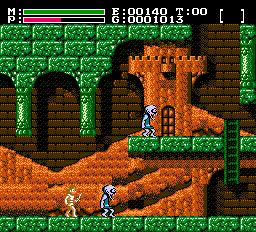
As much as people like to rag on Zelda II these days, those who were around in the '80s and early '90s will be glad to point out that it was quite an influential game in its own right. Westone's Monster World franchise drew inspiration from it, as did several prominent NES copycats.  One of the best of these was Hudson Soft/Falcom's Faxanadu (itself a spinoff of Xanadu, the second game in the Dragon Slayer series).  Faxanadu works in a few more RPG elements than Zelda II did, most prominently in having money and shops to purchase items from, and more focus on item-farming and key purchasing to get into various places.  Having some delightfully grotesque monster designs, detailed character portraits and backgrounds and a downright bizarre storyline all help to make it a unique and entertaining experience, though the weird hit detection and inordinately large number of cheap hits you take definitely put a damper on the experience.

Developer: Hudson Soft
Publisher: Hudson Soft, Nintendo
Platform: NES, Wii Virtual Console
Released: 1989, 2011

Monday, April 18, 2022

Wonder Boy in Monster World

The fifth Wonder Boy game overall and the third in the Monster World subseries, and like its two predecessors, it's a side-scrolling open world platformer with some RPG elements, not unlike Zelda II on the NES.  This game also marked Monster World's debut on the Genesis, and as one would expect, it definitely takes advantage of the hardware with large sprites, popping colors and some fluid animation for Shion as well as his enemies.  Gameplay-wise it's quite similar to its predecessors - exploring a big 2D world, discovering secrets, battling the odd boss - but it adds a couple of twists.  Spells are now found and purchased, but are no longer limited-use items, and the various types of boots you collect give you advantages on different types of terrain, letting you climb, walk or jump higher, as well as granting special properties like faster swimming or being able to walk on ice without slipping.  Some annoyances do crop up, though, like unclear plot flags (I got stuck in the castle of Purapril until I figured out I had to talk to the first servant, then the princess, before leaving the screen.  One or the other doesn't cut it), or the puzzles with the Ocarina; there don't seem to be any clues to the songs you have to play, so you just have to puzzle them out through trial and error.  (And yes, ironically it was Wonder Boy, not Zelda, that made ocarina-playing into a major puzzle element first.)  Not quite as groundbreaking as Dragon's Trap nor as well-polished as Monster World IV, Wonder Boy in Monster World is nevertheless another adventure worth taking.  


Developer: Westone Bit Entertainment, Hudson Soft
Publisher: Sega
Released: 1992, 1993, 1994
Platforms: Sega Genesis*, Sega Master System, Turbografx-CD**

*This version is also on several digital platforms and compilations.  In addition, the Genesis and SMS versions were released as part of the Sega Ages 2500: Monster World Complete Collection for Playstation 2, and the Genesis verson will be part of the upcoming Wonder Boy Collection for Playstation 4 and Switch.
**A remake titled "The Dynastic Hero".  This version was also available on Wii Virtual Console.

Tuesday, March 12, 2019

Suikoden V

After a few entries that attempted to rework the gameplay and storytelling format with decidedly mixed results, Suikoden V was a return to form for the franchise, going back to a linear narrative and a more traditional style of gameplay overall.  But does Suikoden V bring back fans that were driven away by the series' new turn, or does it just go too far in this direction and feel like a retread?


Suikoden's leap to the Playstation 2 was a mixed bag; for newcomers to the series, the third game provided a relatively fresh RPG experience with its multiple-path narrative and engrossing storyline, though long-time series fans were somewhat let down by its flagging pace and changed-up gameplay mechanics.  Suikoden IV, created after long-time series director Yoshitaka Murayama left Konami, proved to be an overall mediocre entry with a generic story and little connection to the rest of the series (being a prequel set 150 years prior to the first game).  Suikoden Tactics, while a competent spinoff, proved to be short and, again, a mixup in gameplay that more traditional RPG fans didn't care much for.

So, as franchises often do when they begin to drop in sales, Suikoden V attempted to take things back to basics with a design philosphy more in line with the first two games - traditional turn-based RPG combat, a crisper pace and a more focused storyline.  It does admirably well on the final point, showing a queendom divided between two rival factions and strife among its populace as their queen slowly slips into madness.

But while the game does go back to the style of the originals in many ways, some elements of the later games are retained as well.  The player now has the choice of several formations in basic battles, allowing them to arrange their party in various ways to gain stat bonuses and put fewer characters in harms way.  For example, the Cross formation puts only one character on point, making them the target for most enemy attacks, but grants everyone in the party a bonus to their attack.  Double Arm puts two characters on point, gives all characters in the party a small defensive boost, and enables the use of the Guardian ability, which boosts the party's defense further for a single turn.  The player starts with just one basic formation that grants no bonuses, but more are found throughout the game, both in chests and as rewards for meeting certain requirements during war battles or particular quests.

The "Convoy" position of early games (here called "Entourage"), formerly just a place to put story-relevant characters until they could serve their plot purpose, now plays a more significant role in Suikoden V.  One can have not just their basic party of six in combat, but up to four more can be part of the Entourage, with the player able to swap them with active characters mid-battle to give their party more longevity in boss battles, or versatility in dangerous areas.  This also affords ways for non-combat characters to prove useful, as several will grant bonus effects when placed in the Entourage.  Egbert, for example, will cause the party to gain more gold from combat, while Marina will allow them to restore a small amount of HP each turn.  Not all necessarily pertain directly to battle, either; for example, Shinro's ability replaces the "Drop" command in the item menu with "Trade In", allowing the player to earn money for items they drop as if they'd sold them at shops.  In various ways, all of these things make life easier for the player, allowing to earn cash and battle enemies more efficiently.

Skills are another returning element from the newer games, this time from Suikoden III.  As in that game, one can spend points earned through battle to bolster specific stats or, in the case of certain characters, unique abilities like Long Throw (giving ranged attacks a chance to hit an entire row, rather than a single target).  One also has a pool of "Party Points" that are stored separately and can be spent on any character, even those that haven't had an opportunity to see much battle yet, which can help to get weaker characters caught up (particularly later in the game).  Throughout the game, one can also find "Epic Skills" that effectively serve as all-in-one skills, bolstering multiple stats at once instead of one at a time

As in prior Suikodens, the game has three different combat systems for one-on-one duels, small-scale battles and large-scale battles.  While duels and small-scale battles remain relatively similar to the first two Suikodens (save for a few aforementioned differences), duels do have a couple of small changes.  First is that there is a time limit per turn; if no action is input within 3 seconds, the player will take a random action, which can prove hazardous to them.  The other prominent change is that if both players choose to Attack or Special attack, their attacks will clash; the player can then mash the button at this point to overpower the opponent and damage them without being harmed themselves.  Regardless, the overall strategy remains much the same - try to predict what the opponent will do based on their words, then counter it accordingly.

War battles are relatively similar to Suikoden II's, with a defined rock-paper-scissors weakness/strength hierarchy for units, though battles now work something like the Active Time Battle system in Final Fantasy, being in real-time save for when the player brings up the menu to take an action (at which point time pauses to let them make their decision).  Sea battles from IV return as well, though in a simplified format - similar to ground battles, there is a defined rock-paper-scissors heirarchy, with a few special units mixed in and individual characters' special abilities lending them unique tactics (such as healing some of their injured soldiers or damaging foes over an area of effect).

Suikoden V is a well-made game on the whole, but a few elements may be off-putting to some.  Probably the most prominent of these is the game's overall pacing, with a relatively slow start to the storyline proper (taking ~10 hours before you have a proper war battle and even longer before you get your castle), frequent load times and a rather irritating encounter rate.  Second, while the game overall has quite good production values (with nearly every character having a unique voice actor and well-animated cutscenes), the game does have a fairly drab color palette overall, with a lot of rather bland gray and brown towns and dungeons.  Even the more colorful cities, plains and forests have a relatively washed out palette, making the world feel bleaker than was probably intended.  Towns and dungeons can also at times be excessively large and confusing to navigate, which led me to some frustration as I played.

In spite of a few shortcomings, though, Suikoden V proves to be another worthwhile entry in the series, returning its design to form for fans of the original PS1 games while working in elements of the later titles to give it broader appeal.  Its engrossing story, a large yet distinct and fun cast of characters and a surprising amount of variety lend it much appeal, as does having multiple endings and plenty of hidden secrets for diligent RPG players to enjoy.  It really is a pity that this was the last proper Suikoden game and, aside from a mediocre spinoff game on the DS, the franchise hasn't really been heard from since.


Developer: Konami, Hudson Soft
Publisher: Konami
Platform: Playstation 2
Released: 2006
Recommended version: N/A
Tuesday, April 17, 2018

Ys IV: The Dawn of Ys

One of four different imaginings of the fourth game in the Ys franchise, Dawn of Ys was the first to see a release on a CD-based format.  But does Hudson's take on the series do the franchise justice, or is this one Ys game that's remained in relative obscurity for a good reason?


The history of Ys IV is an odd one, with two different versions developed by different companies and released on separate platforms in the mid 1990s only a month apart from one another.  A third version followed years later on the Playstation 2, developed by yet another company (Taito), and finally, nearly a decade after that, Falcom created their own version, replacing all of the previous Ys IV games as part of series canon.  But while all four versions of the game follow more or less the same storyline, they are all very different in terms of how the world is laid out and how the story is presented.

Hudson's interpretation on the PC-Engine CD-ROM2 (Japanese Turbografx-CD) is easily the more impressive of the two 1990s versions, however.  Not only does it utilize the capabilities of the CD-based format to add CD music (overall very nice, though it oddly resembles music from the early Pokemon games at times), animated cutscenes and voiceover to key moments of the narrative, but the extra storage space is put to good use to deliver a grandiose game in almost every respect.  The amount of equipment to find, items to buy and utilize, and areas to explore is easily on par with other highly-regarded RPGs like Dragon Quest, Phantasy Star and Final Fantasy II, but without losing any of the distinctive feel of Ys.

The game also feels like a reunion of sorts with the first two Ys titles.  Not just in the fact that it does away with the sidescrolling platformer layout of Wanderers from Ys, but in many of its core game mechanics.  Touch-based combat returns, requiring that the player attack enemies from a favorable angle or potentially have their health drained at a staggering rate.  Proper spells and magic return from Ys II as well, allowing the player to do things like fast travel, throw fireballs at enemies or even temporarily transform into a monster to avoid combat or occasionally get useful clues and items by talking to monsters.  Even the magic rings return from Ys I, allowing for elements like a steady magic recharge or HP regeneration in dungeons while they're equipped.  The player even briefly returns to Esteria - Ys 1's setting - for a couple of story events, seemingly some reassurance from Falcom that yes, Wanderers's format is not coming back.

For all of its content, however, Dawn of Ys is also a well-paced and intuitive game.  There were few times where I was left wondering where to go next, and as ever, the fast-paced gameplay ensures that, though you do end up doing quite a lot of backtracking and wandering through convoluted maze dungeons, the game never feels especially tedious.  Even gold and experience grinding, while still a common element of the game (and genre as a whole) in this time period, goes at a surprisingly fast clip, and I actually didn't mind doing it whenever it came up.

Not to say that the game does not contain some frustrating elements.  As is standard for early games in the series, enemies can very quickly drain your health if you're caught off-guard or pushed into a corner, as can some of the nastier boss attacks.   Trying to attack them during a moment when they're not vulnerable and coming in contact with their hurtbox will also deal massive damage to the player. For these reasons, learning where and when to attack enemies, and being constantly on guard, are key parts of the game's strategy.  One particularly frustrating segment involves a small escort mission over a series of flame traps, requiring the player to not only avoid being caught by them (which results in instant death), but making sure the character following them is squarely on a safe zone before the fires flare up as well, because if he gets hit, it's game over for you.   While thankfully not overly long (and you only have to do it twice, the second time without the escort aspect), I nevertheless got pretty annoyed with it.

Some other elements at work help to mitigate the frustration factor of Ys's notoriously quick deaths.  The player is still able to save their game at any time (sans during boss battles) and you are given a whopping fifteen slots to use, allowing you to easily return to an earlier point if you somehow get yourself into a situation you can't easily get out of.  More importantly, the game actually has the courtesy to skip leading cutscenes and dialog after dying to a boss - a very big plus that, for some odd reason, wouldn't become a standard feature of the genre for almost a decade after.

 In the end, Ys IV is not just a return to form for the series, but a significant step forward as well.  While it hits many of the earlier games' familiar cues, each one is accompanied by a step forward, resulting in a game that, while it retains the fast pace and actiony nature of the franchise, also provides enough content to keep the player entertained for a good while.  It was even one of the first games I know of that contained a "new game plus" feature - by completing the game, the player gets access to a Developer's Room full of commentary from the game's creators, and they are given the option to restart with the Gold and Silver bracelets in their inventory from the outset (which double experience and money earned, respectively).  Even the fanbase for the Ys series recognizes this one is something special, as it's a rare instance of a game that has not only had its text fan-translated into English, but its voiced dialog dubbed to match.  While said voiceover isn't of the highest quality (and is at times hard to make out over the in-game music), the fact that there is enough love for this game to put in that level of effort to localize it, even in an unofficial capacity, really speaks to its quality.  Highly recommended.


Developer: Hudson Soft
Publisher: Hudson Soft
Platform: PC Engine CD-ROM2 (Turbografx-CD)
Released: 1993
Recommended version: N/A